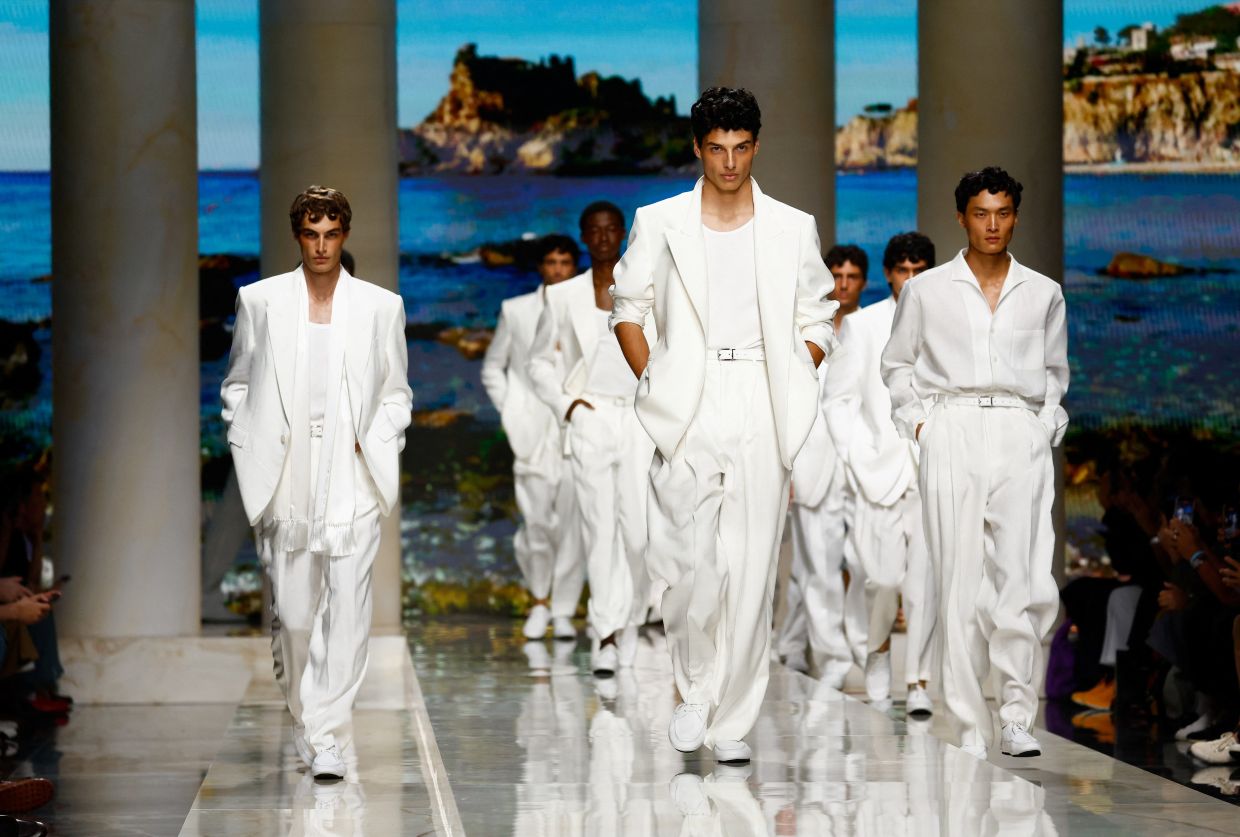
As global anxieties mount over economic instability and geopolitical conflict, Milan's fashion establishment chose to retreat into simplicity. The menswear collections that dominated Milan Fashion Week, which concluded on Monday, June 22, reflected a collective desire to strip away excess and return to fundamentals—though the execution revealed how complex achieving ease truly is in contemporary fashion. Rather than abandoning sophistication, designers reinvented it through proportion, material innovation, and strategic tailoring adjustments designed to acknowledge the realities of summer dressing in an increasingly warm world.
Prada's direction, steered by co-creative directors Miuccia Prada and Raf Simons, became the season's philosophical anchor. Their argument for simplicity was neither naive nor nostalgic; instead, it represented a deliberate reimagining of familiar garments through unexpected proportions and unconventional fabrication choices. This approach suggested that in uncertain times, consumers and designers alike seek comfort in recognizable forms—but ones that have been thoughtfully interrogated and refined. The message resonated across the Milanese schedule, establishing a dominant aesthetic centered on reduction and clarity that many houses either embraced or, through their rebellion against it, validated through contrast.
Yet the pursuit of lightness in design confronted an uncomfortable paradox: the materials dominating Milan's runways were decidedly heavy. Leather appeared with striking persistence, a choice that initially seemed counterintuitive for a summer season. Prada's leather combinations drew inspiration from the democratic universality of denim, manifesting as slim five-pocket trousers paired with cropped, flat-pocketed jackets that functioned as hybrid shirts. Other designers tackled the inherent warmth of leather through woven and perforated techniques, creating breathable iterations that acknowledged fashion's material constraints while refusing to abandon leather's tactile richness and symbolic weight. This tension between luxury and practicality defined much of the week's most compelling work, suggesting that contemporary menswear must balance aesthetic ambition with the unglamorous reality of perspiration and discomfort.
After years of menswear's cultural embrace of oversized, almost shapeless silhouettes, Milan signaled a deliberate recalibration toward the body. The shift represented more than aesthetic preference; it reflected evolving attitudes toward masculinity and formal dressing at a moment when traditional tailoring faces genuine pressure from casualization. Designers broadly consensus that the suit remains fundamental to masculine formal presentation, yet they grappled with the essential challenge: how to maintain sartorial authority while remaining wearable in escalating heat. The answer emerged through strategic ventilation—dress shirts left deliberately unbuttoned, rendered transparent, or eliminated entirely. Necklines widened, construction methods softened, and fabrications were selected for maximum airflow, creating a new category of tailoring designed explicitly for rising temperatures without sacrificing formality.
Dolce & Gabbana pushed the body-conscious agenda furthest with microshorts that deliberately showcased muscular definition, a choice that reflected contemporary attitudes toward physique display in luxury menswear. Some brands experimented with exposed torsos, challenging conventional notions of what constitutes acceptable formal presentation. Yet even these experiments remained tethered to tailoring's essential vocabulary, suggesting that fashion's elite are engaged in sophisticated dialogue about masculinity rather than wholesale rejection of established codes. Thom Browne, operating now under Zegna ownership, returned to Milan for the first time since 2008, presenting layered suiting that drew heavily on seersucker and pleated skirts for men—constructions traditionally associated with leisure wear recontextualized as high fashion.
This democratization of construction techniques and the softening of previously rigid tailoring rules created space for emerging designers to achieve prominence alongside established houses. Martin Quad made his Milan debut with unusual tailoring manipulations that had garnered attention in his native Copenhagen, while Domenico Orefice worked leather and richly woven textiles into a co-ed collection that suggested fashion's future increasingly recognizes gender fluidity. Japanese designer Shinya Kozuka's label Shinyakozuka made its Milan debut with one of the season's most poetic offerings: a bare-chested model styled in a billowing sheer teal coat worn with baggy white trousers, a composition that somehow achieved both vulnerability and elegance.
Yet reduction and restraint did not represent unanimous design philosophy. While Prada advocated for visual economy, Philipp Plein presented crystal-encrusted denim requiring days of labor-intensive handwork, and Dolce & Gabbana leaned unapologetically into embellishment, incorporating beaded accents that evoked organic forms and recalled the visual texture of coral. These designers articulated an alternative vision in which maximalism and glamour persist as legitimate formal responses, suggesting that menswear need not choose between ease and exuberance. The coexistence of these contradictory impulses—simplicity and decoration, ventilation and weight, restraint and bling—indicates that fashion remains fundamentally pluralistic, capable of accommodating multiple truths simultaneously even in moments of collective uncertainty.
The lighter Milan calendar, a deliberate curatorial decision, created operational advantages for emerging talent to gain meaningful visibility. This structural change, coupled with digital accessibility and the week's dominant aesthetic of clarity, may accelerate industry recognition of designers working outside traditional power structures. The Spring/Summer 2027 collections ultimately conveyed a singular message: the suit endures, but it is actively evolving. For Malaysian and Southeast Asian menswear consumers, this suggests that formal dressing need not mean discomfort, and that tailoring houses increasingly recognize regional climate realities as central rather than peripheral considerations. The collections imply investment in quality fabrics engineered for heat, strategic silhouette choices that acknowledge physiology alongside aesthetics, and a broader cultural recognition that contemporary masculinity accommodates both polish and pragmatism.

