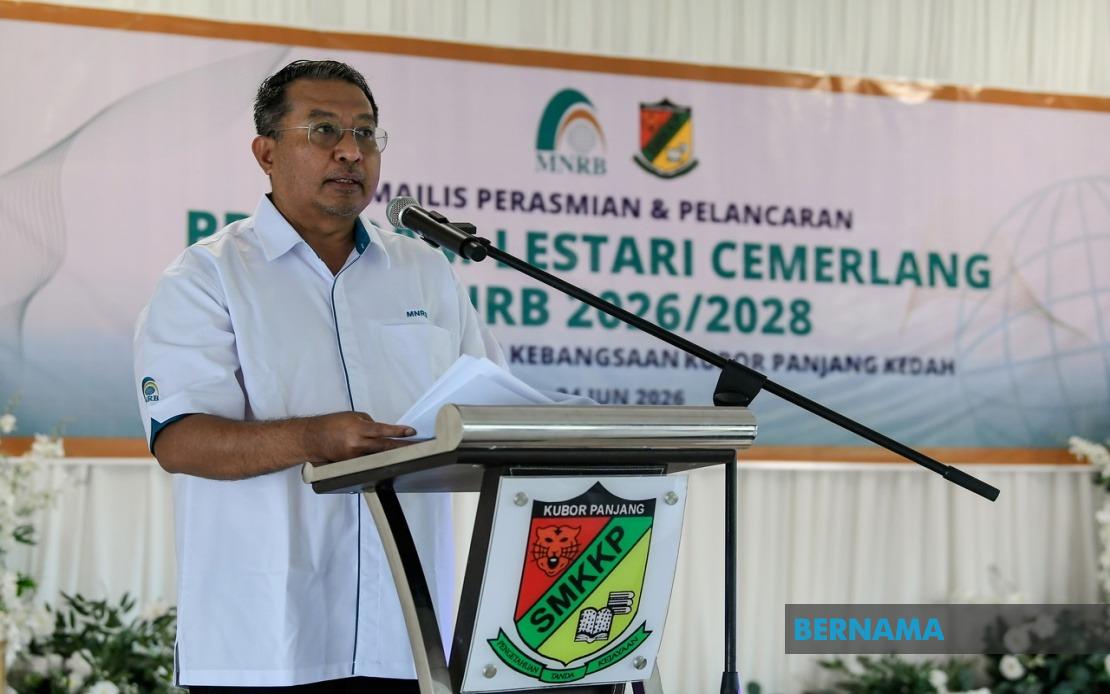
MNRB Holdings Berhad, an investment holding company, has directed nearly RM600,000 into educational development through its Lestari Cemerlang Programme, extending support to six schools nationwide. The initiative was formally launched at Sekolah Menengah Kebangsaan Kubor Panjang in Pendang, Kedah, marking the programme's expansion into the northern state following its earlier implementation in Perak, Pahang, Negeri Sembilan, Melaka and Selangor.
Datuk Rudy Rodzila Che Lamin, interim president and group chief executive officer of MNRB, described the adopted school programme as a cornerstone of the company's corporate social responsibility strategy since its introduction in 2011. The initiative represents a deliberate commitment to strengthening educational outcomes in communities where the company operates, with particular emphasis on reaching rural institutions that often lack sufficient resources for comprehensive student development.
The programme's architecture addresses multiple dimensions of school improvement rather than focusing narrowly on academic metrics alone. MNRB has prioritised character building alongside examination performance, recognising that comprehensive school excellence requires attention to students' personal development, leadership skills and ethical formation. This integrated approach acknowledges the reality that sustainable educational progress depends on nurturing well-rounded individuals capable of contributing meaningfully to society beyond their academic credentials.
Implementing initiatives across the six adopted schools, MNRB has introduced remedial and accelerated classes targeting Form Five students preparing for national examinations, motivational programmes designed to boost student aspirations, and structured student development activities that extend beyond the traditional classroom. The company has also invested in physical infrastructure improvements, upgrading learning facilities and sponsoring sports equipment to encourage participation in co-curricular activities.
A particularly noteworthy contribution has been the establishment of MNRB Smart e-Learning Rooms equipped with smart televisions and internet connectivity. These facilities represent recognition that digital literacy and online learning capability have become essential components of contemporary education. By providing technological infrastructure, MNRB addresses a persistent gap in rural Malaysian schools where digital resources remain limited, thereby enhancing classroom interactivity and creating environments conducive to modern pedagogical methods.
The scholarship dimension of MNRB's engagement extends beyond the Lestari Cemerlang Programme itself. Through the Tabung Biasiswa MNRB initiative, the company sponsors outstanding students from adopted schools pursuing higher education in sectors aligned with MNRB's business interests—specifically insurance, takaful and finance. Five top students from SMK Kubor Panjang have been selected as recipients, with support extending through diploma, bachelor's and master's degree levels.
Hazlina Hazani, MNRB Group chief people officer, highlighted that this targeted scholarship approach has already yielded tangible outcomes. Fourteen students from previously adopted schools have received sponsorship, with eight subsequently securing employment within MNRB Group upon graduation. This employment pipeline demonstrates how strategic educational investment can create pathways from secondary schooling through tertiary education into meaningful career opportunities, particularly benefiting students from institutions in less economically developed regions.
For Malaysian schools operating in rural or disadvantaged areas, corporate partnerships of this nature address structural inequalities in educational access and quality. Government allocation constraints mean that many secondary institutions struggle to fund enrichment activities, technology integration, or competitive scholarship schemes. MNRB's sustained commitment since 2011, now extending into its sixth adopted school, illustrates how private sector engagement can complement public education investment without replacing government responsibility.
The expansion to Kedah represents strategic geographic diversification, bringing the initiative to Malaysia's northern corridor. SMK Kubor Panjang's selection reflects deliberate targeting of institutions serving communities where educational aspirations might be constrained by geographic isolation or limited awareness of career pathways. By establishing presence in diverse states across Peninsular Malaysia, MNRB signals commitment to equitable development rather than concentrating resources in more affluent urban centers.
This model of corporate education engagement has acquired increased relevance as Malaysia grapples with post-pandemic learning recovery, rising youth unemployment and skills misalignment between educational outputs and labour market demands. MNRB's emphasis on character development and co-curricular engagement acknowledges that competitive examination results alone insufficient for graduate employability. The integration of soft skills development, digital competency, and career exposure within the overall programme framework addresses these broader workforce preparation challenges.
For other Malaysian corporations, MNRB's sustained investment offers a template for meaningful educational partnership. The programme demonstrates that effective corporate social responsibility in education requires multi-year commitment, diverse intervention strategies, and direct engagement with school communities rather than one-off donations. The documented employment outcomes for scholarship recipients provide quantifiable evidence that such initiatives generate returns extending beyond immediate academic metrics.
Looking forward, the programme's success in placing graduates into MNRB positions creates potential for deepening school-to-work pipeline development. As awareness spreads among Form Five and Form Six students that excellence in these institutions opens pathways to employment with a major national company, aspirational impacts beyond direct programme participants may emerge. The visibility of successful alumnus increasingly employed within MNRB serves as powerful motivation for younger cohorts.
Malaysia's education system benefits substantially from such collaborative approaches that combine government provision with private sector capability and resources. MNRB's investment in rural school excellence, when replicated across multiple corporations and sectors, contributes meaningfully to reducing regional educational disparities that perpetuate broader socioeconomic inequalities across the country.

