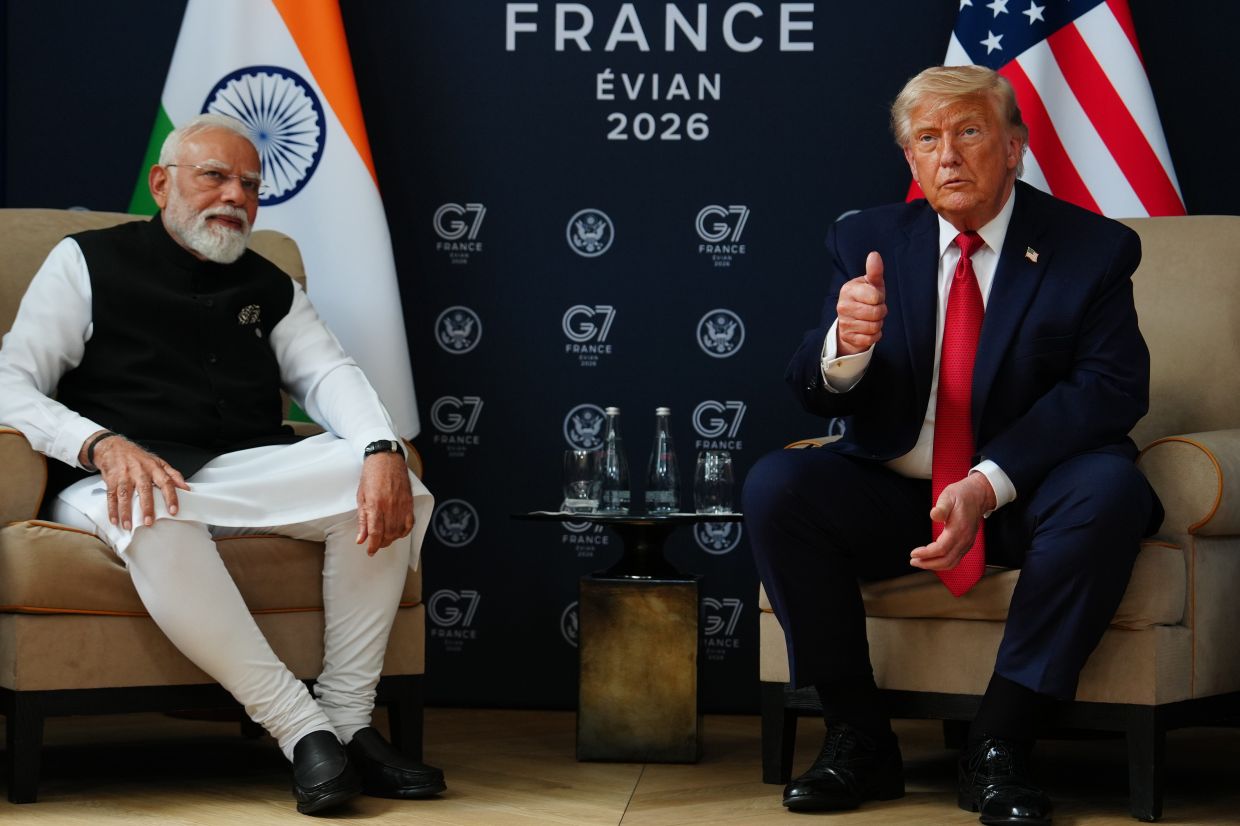
Indian Prime Minister Narendra Modi declared "significant progress" in trade negotiations with Washington following a face-to-face meeting with President Donald Trump at the G7 summit in Evian, France, marking their first in-person talks since February 2025. The two leaders, who have pursued an ambitious bilateral trade agenda for nearly two years, signalled that a commercially meaningful interim agreement could materialise in the coming weeks as high-level officials prepare for the next round of discussions. Trump's enthusiastic endorsement of the negotiations—telling reporters the two countries are "very close" to a deal—reflects a strategic pivot in US-India relations amid broader geopolitical realignment in the Indo-Pacific region.
The formal readout from India's foreign ministry emphasised that Modi and Trump "noted with particular satisfaction the significant progress made in negotiations towards an interim Bilateral Trade Agreement", language suggesting both delegations view a settlement as increasingly feasible. The leaders directed their respective officials to accelerate discussions with the goal of securing a "commercially meaningful agreement at the earliest", acknowledging that momentum exists but concrete terms remain under refinement. US Trade Representative Jamieson Greer is scheduled to visit India within days, underscoring the urgency both capitals have attached to finalising terms that have been negotiated across multiple rounds over the past eighteen months.
Context for this breakthrough lies in the ambitious US$500 billion bilateral trade target by 2030, a figure that would more than double current commerce levels and represent one of Washington's most significant trade partnerships in Asia. The two sides initially reached preliminary understandings in February, but progress stalled following the Supreme Court's invalidation of Trump's sweeping tariff measures, a setback that prompted the administration to launch fresh investigations into alleged unfair trade practices by numerous countries, including India, whilst simultaneously imposing a broad 10 percent tariff. This turbulent period created uncertainty about whether negotiations could resume productively, yet the G7 meeting suggests both governments have found pathways around those obstacles.
India's Commerce Minister Piyush Goyal provided additional momentum in early June when he disclosed that negotiators were "about 99 per cent" complete with the first tranche of a comprehensive trade agreement, indicating that remaining disagreements centre on relatively narrow technical and tariff issues rather than fundamental structural questions. Trump's characterisation of Modi as "one of the toughest" negotiators—a backhanded compliment wrapped in unusual hyperbole about Modi's appearance—suggests the US president views the Indian leader as a formidable interlocutor who has secured favourable terms. The specificity of Greer's imminent visit implies that both trade offices have cleared major obstacles and now require only high-level political sign-off on final language.
For Malaysian and Southeast Asian observers, the accelerating US-India trade relationship carries significant implications. A comprehensive bilateral trade pact strengthens Washington's strategic footprint in Asia whilst simultaneously elevating New Delhi's standing as a consequential economic partner rather than merely a geopolitical counterweight to China. Malaysia, which competes with India across sectors ranging from petrochemicals to digital services, will need to monitor how tariff concessions or market-access provisions in any US-India agreement might affect competitive positioning in the American marketplace. Additionally, deeper US-India economic integration could reshape supply chains and investment flows across South and Southeast Asia, potentially redirecting capital and manufacturing capacity away from established hubs.
Beyond trade mechanics, Modi used his Evian encounter to raise urgent security concerns affecting Indian interests in the volatile Middle East. The Prime Minister pressed Trump to ensure protections for Indian seafarers as part of implementing an Iran-US agreement aimed at de-escalating Middle East hostilities, following the deaths of three Indian sailors in a US military strike against a commercial vessel off Oman on June 10. This appeal reflects India's acute vulnerability to regional instability, particularly given that Indian mariners constitute a significant portion of global shipping crews and Indian supply chains depend heavily on Middle Eastern energy and raw materials. The incident underscores how geopolitical tensions translate into direct human costs for Indian nationals working in strategic maritime corridors.
India's exposure to Middle East disruptions extends well beyond seafaring concerns. Modi warned that the ongoing conflict continues to disrupt critical supply chains for fuel, fertiliser, and food—sectors where India faces particular dependencies and where price volatility directly impacts agricultural productivity and consumer costs across the subcontinent. The closure of the Strait of Hormuz by Iran has throttled energy supplies and raised transportation costs for Indian importers, whilst fertiliser shortages threaten agricultural productivity during crucial growing seasons. Modi's explicit statement that these "disruptions... will continue to impact the Global South for a considerable period" signals India's frustration with the pace of de-escalation and implies that New Delhi expects extended economic headwinds regardless of whether formal hostilities cease.
For Malaysia and other ASEAN members, Modi's concerns about Middle East instability carry direct relevance. Southeast Asia shares India's dependency on energy imports from the Persian Gulf and faces similar vulnerabilities to supply chain disruptions emanating from the region. Malaysian shipowners, traders, and energy importers all face increased insurance costs, longer transit times, and price uncertainty when geopolitical risks elevate in Middle Eastern waters. The G7 forum provided Modi an opportunity to elevate these concerns before major Western powers, implicitly requesting that any new Iran-US arrangements adequately address the legitimate security interests of third-country nationals and trading partners dependent on the region.
The timing of trade progress announcements against the backdrop of Middle East security discussions reveals how Modi carefully deployed the G7 venue to advance multiple Indian interests simultaneously. By securing Trump's public acknowledgement of trade momentum, Modi strengthened his domestic political position ahead of potential announcements in India. By raising seafarer safety and supply chain concerns, he positioned India as a voice for Global South perspectives within the G7, a grouping traditionally dominated by wealthy Western economies. This dual-track diplomacy reflects Modi's sophisticated understanding of how bilateral negotiations intersect with multilateral forums and how economic and security issues inform one another in India's strategic calculus.
Looking forward, successful conclusion of a US-India trade agreement would represent a pivotal moment in reshaping Asia's economic architecture. Such an accord would institutionalise the warming of US-India relations that has gathered pace since 2017 and would signal Washington's serious commitment to developing alternatives to over-reliance on Chinese manufacturing and supply chains. For Malaysia and Southeast Asia more broadly, the deal's architecture—particularly provisions addressing intellectual property, digital trade, and services—will offer instructive models as ASEAN members individually and collectively negotiate their own trade relationships with major powers. The coming weeks will determine whether Modi and Trump's optimistic rhetoric translates into binding commitments or whether familiar negotiating obstacles resurface during the technical finalisation phase.

