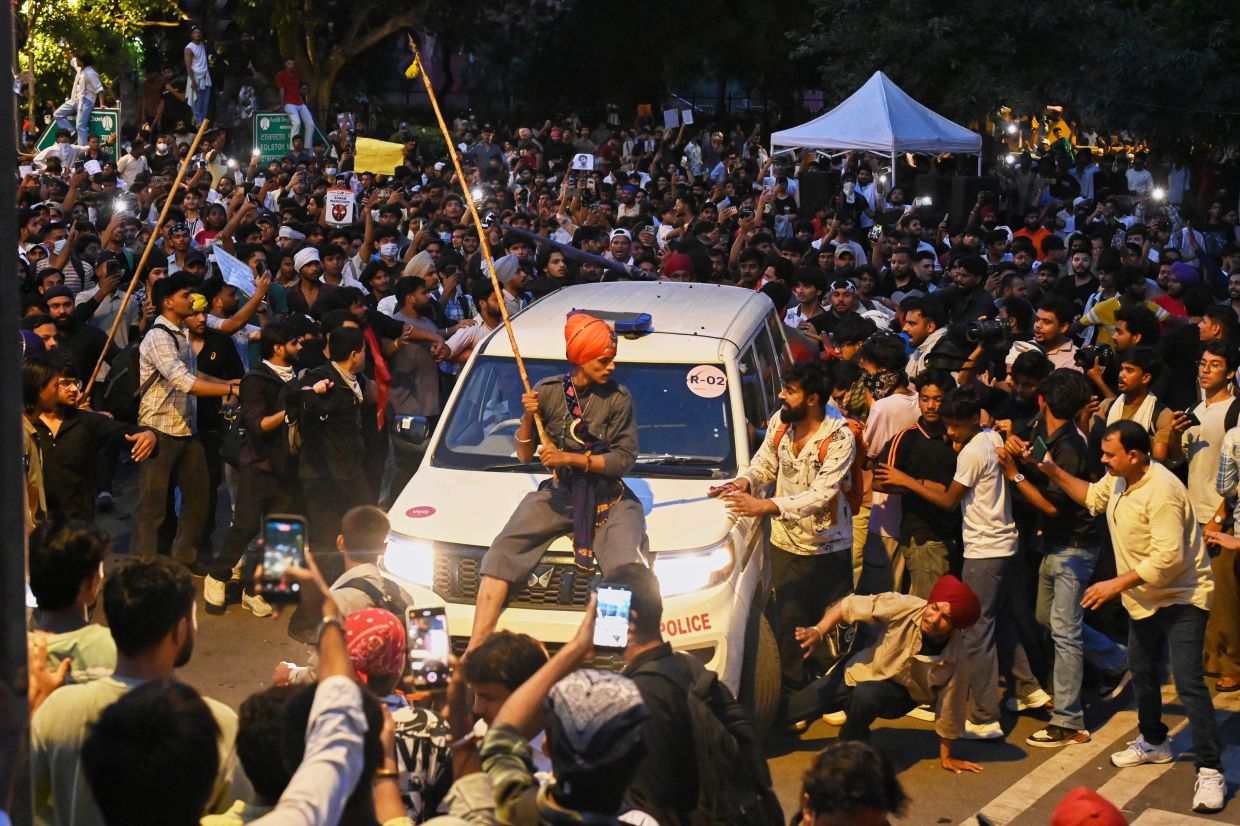
India's education system has become the flashpoint for a broader political crisis as Prime Minister Narendra Modi sought to contain mounting public anger over examination irregularities. On Thursday, Modi issued his first direct response to the escalating student demonstrations, promising swift and severe consequences for those responsible for question paper leaks. His carefully worded social media statement acknowledged the central grievance fuelling the unrest—that institutional failures in conducting national examinations had jeopardised the futures of millions of young Indians—while pledging the establishment of expedited court proceedings to prosecute the guilty parties.
The scale of discontent has caught observers by surprise, representing perhaps the most serious grassroots challenge to Modi since he secured a third consecutive electoral mandate in 2024. What began as scattered complaints about examination mismanagement has morphed into a sustained mobilisation of youth, coordinated largely through digital platforms and embodied by the Cockroach Janta Party movement. The CJP, which emerged in May as a satirical rejoinder to remarks allegedly made by Chief Justice Surya Kant characterising young people unfavourably, has evolved into a broader vehicle for airing youth frustrations about unemployment, economic opportunity and governance concerns. On Wednesday, tens of thousands converged on New Delhi's streets, with confrontations erupting outside the Jantar Mantar protest site as darkness fell, resulting in numerous injuries to both demonstrators and security personnel.
The initial violence occurred on Monday when authorities deployed tear gas and physical force to prevent demonstrators from reaching parliament as the monsoon legislative session commenced. Protesters retaliated by throwing stones at security personnel, producing scenes of urban upheaval not witnessed in the capital for approximately five years. Official figures documented at least 178 injured in the clashes, though independent observers have suggested the toll may be higher. Internet connectivity was suspended in certain areas as authorities sought to disrupt protest coordination, a tactic that has attracted criticism from civil liberties advocates and opposition parties alike. The heavy-handed security response, rather than suppressing momentum, appeared instead to energise the movement and attract broader sympathy, particularly among opposition politicians who have seized upon the unrest to challenge the government's credibility.
The immediate trigger for the demonstrations—examination irregularities undermining public confidence in educational assessment systems—reflects genuine systemic failures that have cascaded across India's massive education infrastructure. A catastrophic leak of medical school entrance examination papers forced over two million test-takers to sit the examination again, an enormous logistical nightmare affecting candidates and institutions nationwide. Separately, disputes surrounding the computerised marking of results for approximately two million high school students further corroded trust in the testing regime. These incidents have been compounded by apparent administrative incompetence and, in some instances, alleged corruption, raising questions about institutional capacity and oversight mechanisms within the education ministry.
Opposition political parties have seized the moment to redirect public ire toward the government, with Congress leader Rahul Gandhi delivering pointed accusations that Modi's administration has presided over the degradation of India's education system whilst protecting officials responsible for failures. The coordination between the grassroots CJP movement and established opposition politicians suggests the protests may evolve beyond immediate demands for ministerial accountability into a broader referendum on governance and institutional integrity. Youth-focused messaging from opposition figures has aimed to position the demonstrations as emblematic of wider governmental failures affecting young Indians' life prospects, employment prospects and educational quality.
Demonstrators have explicitly called for the resignation of the education minister, viewing individual culpability as insufficient remedy for systemic failures. The CJP spokesperson, Ashutosh Ranka, has characterised police conduct as excessively brutal, with allegations that officers used disproportionate force against largely peaceful gatherings. Delhi Police counterarguments that protestors initiated violence by hurling projectiles and bottles have failed to quell public perception that security responses were heavy-handed. The deployment of contentious crowd-control methods has itself become a focal point for criticism, overshadowing official claims that the security response was proportionate and justified.
The geographical spread of demonstrations beyond the capital underscores the movement's resonance across India's major urban centres. Secondary protests materialised in Mumbai, Bengaluru and Patna on Wednesday as the momentum built, indicating that discontent transcends localised grievances specific to Delhi. The movement has attracted international attention, with Bangladeshi students organising a solidarity torch rally in response to the Indian demonstrations. This gesture carries symbolic weight given that youth-driven protests in Bangladesh in 2024 successfully toppled the government of Sheikh Hasina, potentially emboldening Indian activists to perceive mass mobilisation as a tool capable of forcing governmental response.
For Malaysia and Southeast Asian observers, the Indian upheaval offers instructive parallels regarding youth political engagement and the vulnerabilities of education systems to administrative failure. The CJP movement demonstrates how social media platforms can rapidly translate localised grievances into sustained political mobilisation, a phenomenon with obvious implications for the region's own youth constituencies. The examination fraud episodes highlight challenges common across South and Southeast Asia where examination systems serve as gatekeepers to educational and economic opportunity, making the integrity of these systems crucial to public legitimacy of state institutions.
Modi's response, whilst acknowledging the legitimacy of public concerns through promised reforms and prosecutions, may prove insufficient if underlying structural deficiencies in the education system persist. The government faces a credibility challenge: whether commitments to fast-track justice will translate into meaningful accountability or be perceived as token gestures designed to defuse immediate pressure. The opposition's framing of education system failures as symptomatic of broader governmental inadequacies threatens to establish a narrative wherein this episode becomes evidence of systemic decline rather than isolated malfunction. How Modi's administration navigates this political moment—whether through genuine institutional reform or performative responses—will likely shape public confidence in governmental capacity for the medium term.

