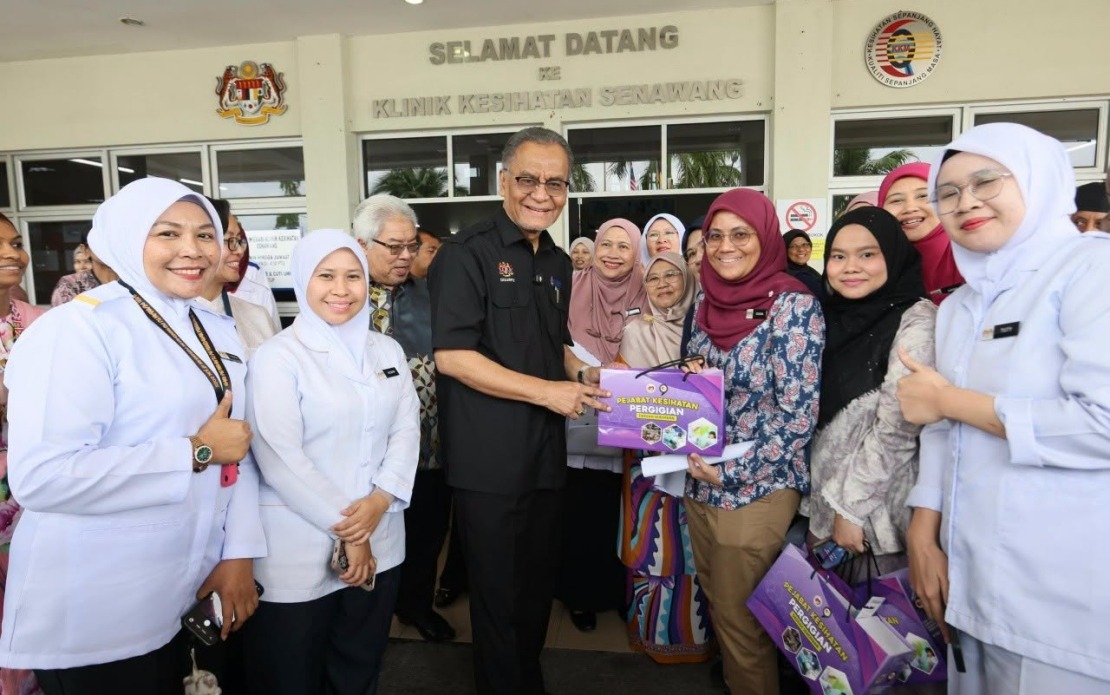
The Ministry of Health has committed RM805,700 towards strengthening operational capacity at Senawang Health Clinic in Seremban, with Health Minister Datuk Seri Dr Dzulkefly Ahmad announcing the allocation on June 25. The funding represents a strategic investment in primary healthcare infrastructure in Negeri Sembilan, addressing growing demand at a facility that has become a cornerstone of community health delivery in the region.
The allocation splits into two distinct components aimed at addressing different facility needs. The Health Clinic itself will receive RM588,400, representing the larger share of the budget and reflecting the scale of improvements required for the main clinic operations. The Dental Clinic division will be allocated RM217,300, a substantial commitment that underscores recognition of dental health as an integral component of comprehensive primary care. Both funding streams are earmarked for capital works and equipment procurement rather than recurrent expenses, indicating a focus on permanent capacity enhancement.
The investment encompasses multiple categories of improvement designed to modernise the facility. Renovation work features prominently, particularly the upgrading of the Dental Clinic building structure to enhance patient experience and clinical working conditions. Beyond physical infrastructure, the allocation supports procurement of medical technology that will expand diagnostic capabilities. A new ultrasound machine represents a significant addition that will reduce reliance on referrals to higher-level facilities for certain imaging-dependent diagnostic pathways, potentially improving efficiency within the primary healthcare network.
Equally important to the equipment and building upgrades is the allocation designated for transport assets. The funding includes purchase of two new vehicles intended to bolster field operations and outreach capacity. Healthcare personnel conducting community-based activities, immunisation drives, and surveillance work will benefit from improved mobility, allowing the clinic to extend its reach beyond the fixed facility location. This reflects contemporary understanding that primary healthcare effectiveness depends not only on clinic-based services but also on active community engagement and mobile service provision.
Senawang Health Clinic operates under considerable service pressure. The facility functions as a primary healthcare hub serving a resident population exceeding 220,000 people across the surrounding districts, making it one of the high-volume clinics within the state health system. Daily patient attendance routinely reaches 1,000 visits, demonstrating consistent demand that reflects both population growth and community reliance on the clinic for first-contact healthcare. These utilisation figures underscore why infrastructure and equipment investment has become operationally critical.
The substantial footfall creates legitimate concerns about service quality maintenance and staff efficiency under existing constraints. Aging equipment, crowded facilities, and limited transport options inevitably compromise the capacity to deliver the equitable and comfortable healthcare experience that modern patients rightfully expect. The RM805,700 commitment directly addresses these operational bottlenecks by enabling the clinic to handle current demand more effectively while building capacity for future population growth in the Seremban catchment area.
For Malaysian healthcare observers, this funding decision carries significance beyond Seremban itself. Primary health clinics form the foundation of Malaysia's three-tiered health system, yet chronic underfunding and deferred maintenance have plagued many facilities nationwide. Investment in Senawang signals potential policy momentum towards strengthening primary care infrastructure during a period when the Health Ministry is attempting to rebalance resource distribution across the system. Such commitments are essential if Malaysia hopes to prevent unnecessary escalation of cases to overburdened secondary and tertiary facilities.
The upgrade is particularly timely given post-pandemic healthcare demands and the ongoing strain on clinical staff. Better equipment and improved facilities enhance work environment quality, potentially supporting staff retention and morale at a time when healthcare worker burnout has become an industry-wide concern. Reduced pressure on individual practitioners through improved tools and infrastructure may also translate to improved patient safety outcomes and better quality interactions.
Fully utilising the allocated funds will require coordinated implementation planning. Equipment procurement timelines, construction sequencing, and staffing arrangements for new assets must align to maximise operational impact. The Health Ministry's project management capacity at state level will be tested in translating budget allocations into tangible service improvements within reasonable timeframes. Transparent communication about implementation milestones would help build community confidence in the ministry's commitment to delivery.
Looking forward, the Senawang investment may establish precedent for similar interventions at comparable clinics across Malaysia serving high-population areas with limited infrastructure. The clinic's demonstrated service load and geographic situation make it a logical candidate for development, but the same principles apply to numerous other facilities operating under similar constraints throughout the country. Systematic needs assessments could identify other high-priority clinics deserving comparable investment, ensuring that funding decisions reflect evidence-based prioritisation rather than sporadic announcements.
The funding approval reflects the Health Ministry's recognition that primary healthcare quality directly influences overall health system performance and population health outcomes. By investing in Senawang's operational foundations, MOH is investing in disease prevention, early detection, and appropriate management of common conditions at the population's first point of contact with the formal healthcare system. These interventions, though less visible than major hospital announcements, ultimately shape whether Malaysia achieves its health equity and accessibility objectives across all communities.

