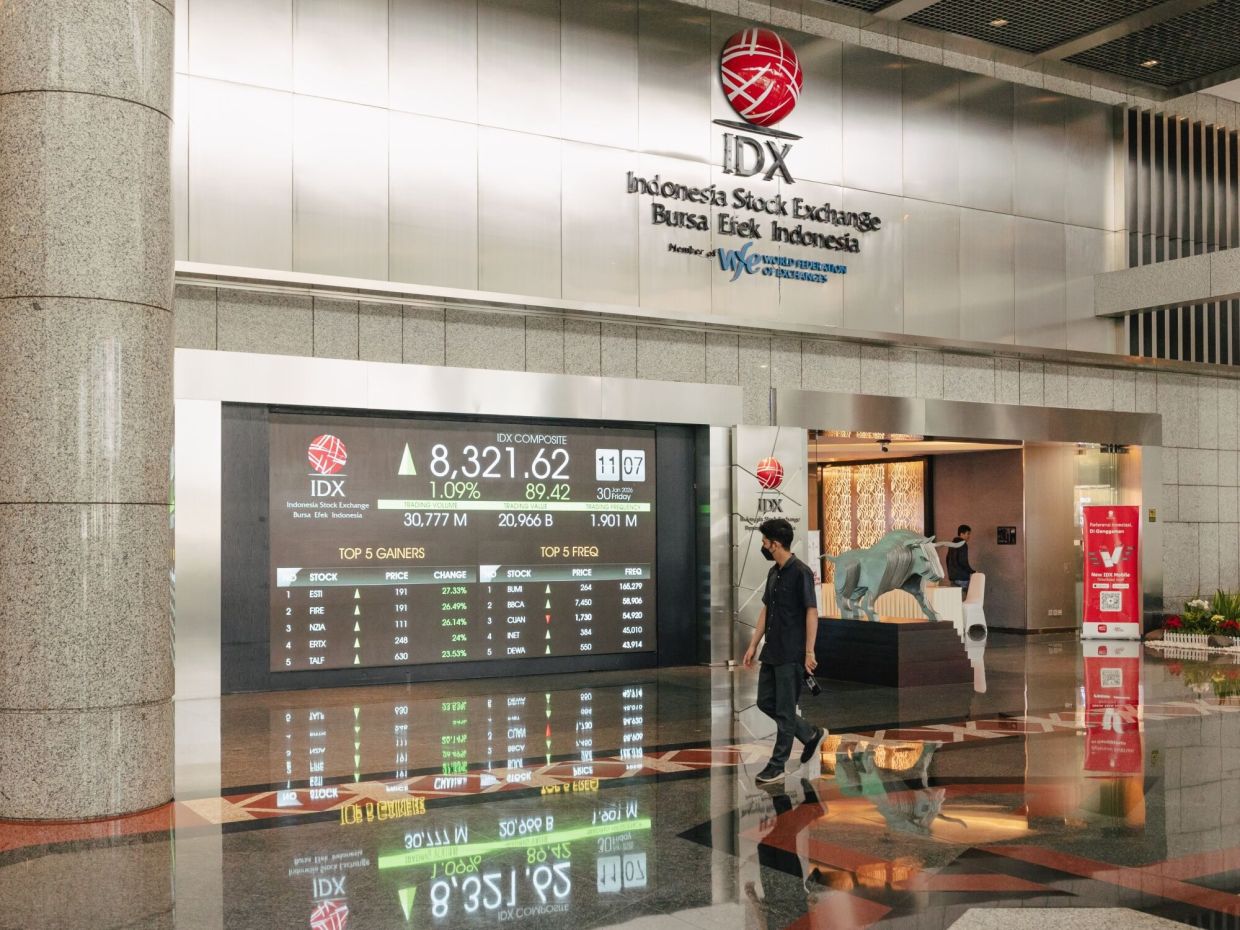
Index provider MSCI has ratcheted up criticism of Indonesia's capital markets by identifying fresh transparency deficiencies ahead of a consequential decision on whether to strip the nation of its emerging market classification. The warning, contained in MSCI's latest market accessibility review, spotlights opacity surrounding shareholdings and suspicious trading activity that complicates price discovery and makes it harder for international fund managers to gauge the true free float available to foreign investors. This development represents another setback for Indonesia's beleaguered equity market, which has endured relentless selling pressure since MSCI first signalled alarm in January about governance shortcomings.
The stakes for Indonesia are substantial. MSCI will announce within days whether to downgrade the market from emerging to frontier status, a reclassification that analysts estimate could precipitate outflows as large as $13 billion. Many of the world's biggest institutional investors track MSCI indexes through low-cost passive funds, meaning a formal downgrade would force automatic selling and compel active managers tied to MSCI benchmarks to cut their exposure sharply. For a nation desperately seeking to rebuild investor confidence, such a move would deliver a severe blow to market sentiment and economic fundamentals.
MSCI's most recent criticism specifically targets information flow metrics, which the index provider downgraded to negative following detailed assessment of how shareholding information circulates and trading behaviour unfolds on Indonesian exchanges. The rating agency noted that inadequate visibility over who owns what in listed companies, combined with patterns of coordinated market activity, creates structural impediments to fair price formation. These are not minor technical quibbles but fundamental issues that affect whether international capital can confidently enter or remain invested in the market. Without clarity on ownership structures and genuine trading patterns, overseas funds struggle to comply with their own internal governance requirements and fiduciary duties to beneficiaries.
Not all market observers view MSCI's latest review as uniformly damning. Mohit Mirpuri, a fund manager at SGMC Capital based in Singapore, contended that the assessment reflects more nuance than headlines might suggest. He pointed out that only a single accessibility criterion deteriorated during this review cycle, whereas Indonesia continues to rank competitively against major regional peers including South Korea, China and India across several crucial yardsticks. Mirpuri's central thesis is that one negative measure does not constitute systemic collapse of the market's accessibility framework, and he maintains his baseline expectation that Indonesia will retain emerging market status when MSCI renders its verdict.
Indonesia's regulators and exchange operators have not yet publicly addressed the fresh concerns raised by MSCI, though the silence itself speaks to the gravity of the situation. Earlier efforts at remediation included an ambitious program of reforms initiated after the January warning, with authorities doubling the minimum free float requirement for listed companies to 15 percent. This manoeuvre required coordinated executive departures as both the stock exchange and financial services regulator replaced their top officials in a single afternoon, signalling the urgency with which Jakarta treated the downgrade threat.
Yet these reform attempts have failed to fully reassure the market or MSCI. In April, the index provider extended its review timeline, effectively postponing final judgment while continuing investigation. By May, MSCI took concrete action by removing six companies from its indexes, most of which were connected to prominent tycoons or had opaque ownership structures. This corporate purge triggered another sharp selloff as investors repositioned portfolios and reassessed exposure to Indonesian equities. The cumulative impact of multiple rounds of criticism and remedial action has eroded confidence in both the regulator's ability to enforce standards and the market's ability to meet international norms.
The broader economic context surrounding MSCI's concerns extends well beyond technical market infrastructure. Under President Prabowo Subianto, Indonesia faces mounting investor apprehension tied to expansionary fiscal policies and currency stability questions. The rupiah has weakened to record lows as foreign capital has retreated, forcing the central bank to raise interest rates in recent weeks in a defensive effort to support the currency. These macroeconomic crosswinds reflect deeper anxieties about policy coherence and fiscal health in Southeast Asia's largest economy, concerns that complement and reinforce the microstructural worries MSCI has identified.
MSCI separately noted critical gaps in Indonesia's currency infrastructure, observing that the nation lacks an efficient offshore market for rupiah trading while simultaneously facing constraints in the onshore market. This limitation reduces the operational flexibility available to international investors who wish to hedge currency exposure or efficiently execute large positions, creating a friction cost that diminishes the attractiveness of the market relative to competing emerging destinations. For regional investors managing pan-Asia portfolios, such logistical disadvantages can prove decisive in capital allocation decisions.
Rating agencies have independently validated the seriousness of Indonesia's governance and credibility challenges. Both Moody's and Fitch adjusted their debt outlooks for Indonesia to negative earlier in 2024, explicitly citing deteriorated policymaking credibility. This parallel criticism from credit rating firms underscores that concerns about Indonesia extend far beyond equity market mechanics and into broader perceptions of state capacity and commitment to orthodox economic management. The $1.4 trillion economy, once regarded as a frontier market success story and darling of emerging market investors, now confronts skepticism previously reserved for much riskier jurisdictions.
The market toll has been substantial and visible. Indonesia's primary stock index, the Jakarta Composite, has fallen 29 percent during 2024, decimating the year-to-date returns of any investor who remained committed to the market. International investors have accelerated their exit, with foreign selling reaching approximately $3.65 billion in the year to date, reflecting a wholesale reassessment of Indonesia's place within global portfolio frameworks. This outflow represents not merely profit-taking on previous positions but a genuine loss of confidence in the market's trajectory and governance standards.
The timing of MSCI's decision carries profound implications for Indonesia's economic and political landscape. A downgrade would vindicate the market's pessimism and likely trigger additional outflows beyond the initial forced selling from passive funds. Conversely, a decision to maintain emerging market status would validate authorities' remedial efforts and potentially stabilize sentiment, though only if accompanied by demonstrable progress on transparency and currency stability. For Malaysia and other Southeast Asian markets, Indonesia's outcome serves as an important reminder that market access and international capital flows depend fundamentally on institutional credibility, regulatory transparency, and macroeconomic discipline.

%22%2F%3E%3C%2Fpattern%3E%3C%2Fdefs%3E%3Crect%20width%3D%22100%25%22%20height%3D%22100%25%22%20fill%3D%22url(%23ph3xuh4g)%22%2F%3E%3Crect%20width%3D%22100%25%22%20height%3D%22100%25%22%20fill%3D%22url(%23ph3xuh4p)%22%2F%3E%3Ctext%20x%3D%2250%25%22%20y%3D%2250%25%22%20text-anchor%3D%22middle%22%20dominant-baseline%3D%22central%22%20fill%3D%22rgba(255%2C255%2C255%2C0.95)%22%20font-family%3D%22Georgia%2C%20'Times%20New%20Roman'%2C%20serif%22%20font-weight%3D%22700%22%20font-size%3D%22272%22%20letter-spacing%3D%22-0.02em%22%3EAnwar%3C%2Ftext%3E%3C%2Fsvg%3E)