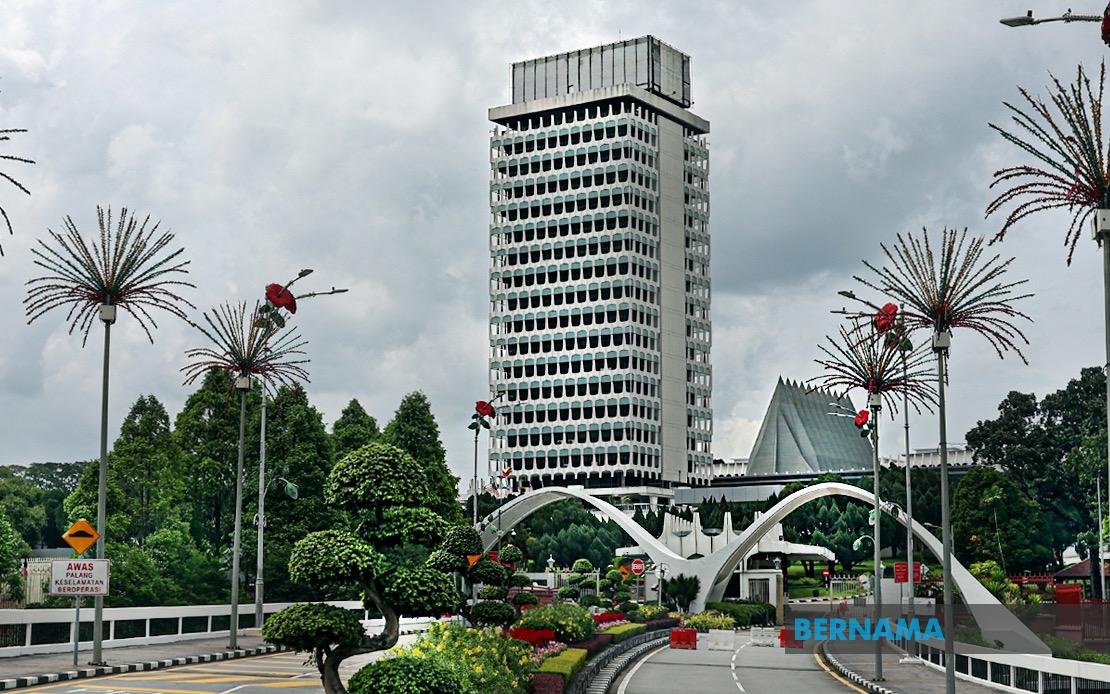
Legislators are set to raise urgent concerns about Malaysia's small business sector and democratic institutions as Parliament convenes for Minister's Question Time this morning. The session will bring to the fore two pressing national challenges: the persistent struggle of micro, small and medium enterprises to access financing, and the government's response to a significant decline in the country's international media freedom standing.
The financing difficulties facing MSMEs represent a longstanding structural problem in Malaysia's economy. Lee Chuan How, the Ipoh Timor representative from Pakatan Harapan, will press the Prime Minister on whether the MADANI Government acknowledges the mounting frustration among small business owners who face barriers when seeking credit to keep their operations afloat. Access to capital remains a critical bottleneck for entrepreneurship in Southeast Asia's third-largest economy, where MSMEs constitute the backbone of employment and economic dynamism yet frequently lack collateral or credit history to satisfy conventional lending criteria.
The questioning reflects broader concerns within the business community about whether current government policies and financial sector practices are sufficiently responsive to MSME needs. Credit availability shapes not only individual firm survival but aggregate economic resilience, particularly as Malaysia navigates post-pandemic recovery and regional competition from neighbouring economies that have invested heavily in alternative financing mechanisms such as crowdfunding platforms, government-backed guarantee schemes, and fintech lending.
Equally significant is the parliamentary attention to Malaysia's international reputation for press freedom. Ahmad Fadhli Shaari from Pasir Mas, representing Perikatan Nasional, will demand clarification from the Prime Minister on the country's descent to 95th place in the 2026 World Press Freedom Index, a decline from 88th position the previous year. This 18-position slide carries considerable diplomatic and domestic implications, signalling to international observers potential concerns about the operating environment for journalists and news organisations.
The fall in rankings reflects assessments by international media watchdogs of how freely journalists can report, investigate, and comment on matters of public interest without fear of legal harassment, censorship, or violence. Malaysia's standing in global press freedom indices carries weight far beyond numerical rankings, affecting the country's soft power, investor confidence, and its credibility as a multicultural democracy in a region where media independence remains contested terrain. The parliamentary inquiry into remedial measures suggests recognition that current policies may not be adequately protecting journalistic freedom or enabling robust public discourse.
Beyond these headline concerns, the session will address a more localised but nonetheless important matter affecting vulnerable populations. Aminolhuda Hassan, representing Sri Gading under Pakatan Harapan, will ask whether the government intends to establish a Senior Citizens-Friendly Fund designed specifically to finance accessibility improvements at mosques and suraus, including wheelchair ramps and adapted toilet facilities. This question highlights the intersection of ageing demographics, religious institutions, and inclusive infrastructure—a trio of challenges becoming increasingly salient across Southeast Asia as populations age and societies grapple with making public spaces genuinely accessible.
The infrastructure access issue resonates particularly within Malaysia's Muslim-majority society, where mosques and prayer halls serve as essential community anchors for worship and social cohesion. Elderly worshippers frequently encounter physical barriers that limit their participation in religious life, and targeted funding mechanisms could meaningfully enhance inclusion without imposing burdensome obligations on relatively resource-constrained religious organisations.
Following Minister's Question Time, the parliament will examine the annual report and financial accounts of the Human Rights Commission of Malaysia, or SUHAKAM. This examination of the commission's audited accounts and operational performance ensures accountability and allows legislators to assess whether the institution's work and resource allocation align with its mandate to investigate human rights violations and advise the government on rights-related policy.
The legislative agenda will then pivot to constitutional reform as the Dewan Rakyat resumes debate on the Constitution (Amendment) (No. 2) Bill 2026. This amendment seeks to fundamentally restructure Malaysia's prosecutorial apparatus by severing the historical fusion of the Attorney General and Public Prosecutor roles, making these positions constitutionally distinct. The reform carries profound implications for Malaysia's justice system, potentially affecting the independence and political accountability of criminal prosecutions.
The separation reflects international best practice in many common-law democracies and acknowledges concerns that concentrating both roles in a single office can create risks of prosecutorial decisions being influenced by broader political considerations. Constitutional amendments in Malaysia require two-thirds parliamentary majorities, making successful passage a substantive achievement rather than routine legislative business. The amendment's progress through debate today indicates the government views prosecutorial independence as a priority reform meriting constitutional entrenchment.
Together, today's parliamentary agenda reveals a legislature grappling with interconnected challenges spanning economic inclusivity, democratic freedoms, vulnerable populations, institutional accountability, and fundamental constitutional structure. The breadth of these concerns underscores the multifaceted pressures confronting Malaysia's governance institutions as the nation balances economic competitiveness, democratic legitimacy, social cohesion, and institutional integrity.

