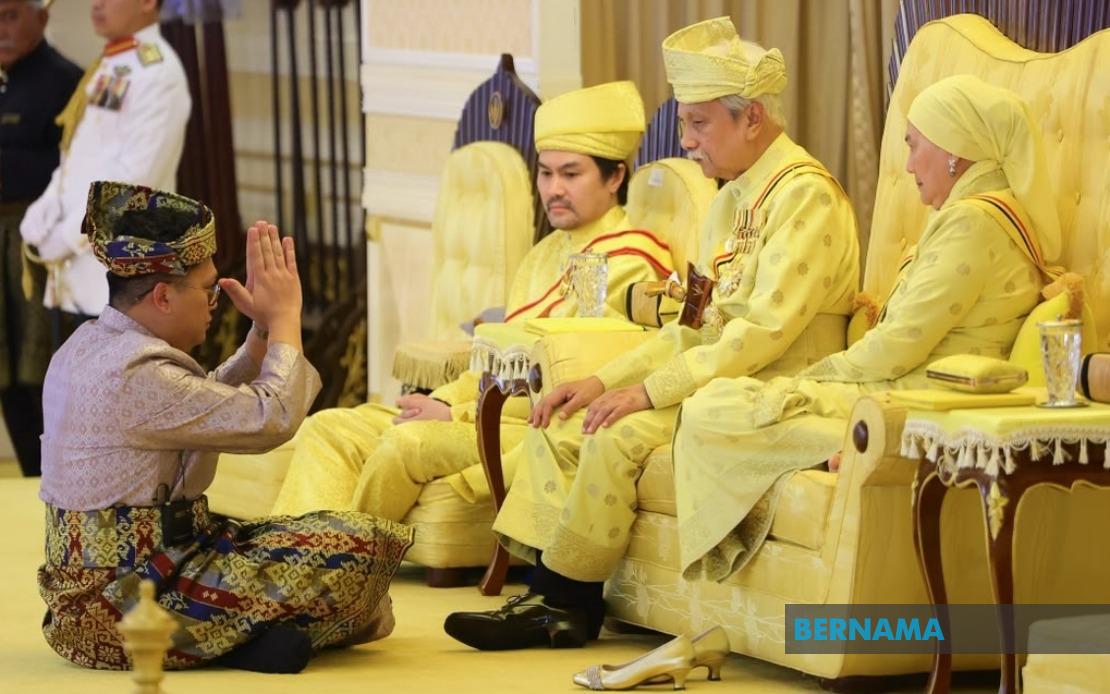
The Yang Dipertuan Besar of Negeri Sembilan, Tuanku Muhriz Tuanku Munawir, has formally installed Muhammad Faris Johari as the 11th Undang of Luak Sungei Ujong during a traditional ceremony held at Istana Besar Seri Menanti on the morning of June 27. The installation of the 28-year-old accountant marks a significant moment in the state's system of customary leadership, reinforcing the institutional continuity of the traditional Negeri Sembilan governance framework that has endured for generations.
The ceremonial proceedings followed the protocols deeply embedded within Negeri Sembilan's unique Adat Perpatih system. The Orang Empat Istana first sought the consent of the ruler to initiate the formal installation process, a ritualistic step that underscores the hierarchical relationship between the palace and the territorial chieftaincy. Following this approval, Muhammad Faris made a solemn pledge of allegiance to the ruler, reaffirming the fundamental bonds of loyalty that characterise the state's feudal-inspired administrative structure.
Upon completion of these traditional formalities, Tuanku Muhriz formally proclaimed Muhammad Faris as the 11th Undang of Luak Sungei Ujong and conferred upon him the title Datuk Klana Petra, a designation that carries considerable prestige within the Negeri Sembilan hierarchy. This conferment of title represents not merely a ceremonial gesture but rather a formal recognition of his authority to govern and represent the interests of the Sungei Ujong district within the broader framework of state administration.
In his address to the assembled gathering, the Yang Dipertuan Besar emphasised the paramount importance of maintaining the integrity and sincerity that must accompany the pledges undertaken during such occasions. Tuanku Muhriz articulated a vision of governance predicated upon genuine commitment to constitutional principles, underscoring that the sustainability of the royal institution depends fundamentally upon the steadfast dedication of all participants to their prescribed roles and responsibilities. The ruler's remarks served as both an exhortation and a reminder of the mutual obligations that bind the palace, the territorial leadership, and the broader state apparatus together.
The royal address further reinforced the palace's expectations regarding the conduct of the Orang Kaya, or chieftains, in their relationship with the Yang Dipertuan Besar and the state institution. Tuanku Muhriz called for unwavering loyalty to the constitutional framework while maintaining respectful and harmonious relations with the palace, thereby establishing a clear framework of accountability for those entrusted with traditional leadership roles. This emphasis on institutional respect reflects broader concerns about preserving the relevance and authority of customary leadership structures in contemporary Malaysian governance.
The significance of the ceremony was underscored by the presence of senior members of the royal household and key state officials. Tuanku Aishah Rohani Tengku Besar Mahmud, the Tunku Ampuan Besar, attended alongside Tunku Besar Seri Menanti Tunku Ali Redhauddin Tuanku Muhriz and Tunku Panglima Besar Tunku Zain Al-'Abidin, all principal figures within the state's traditional hierarchy. The attendance of Menteri Besar Datuk Seri Aminuddin Harun and heads of various state government departments demonstrated the interconnection between customary and formal administrative structures in Negeri Sembilan's governance apparatus.
Tuanku Muhriz leveraged the occasion to articulate a broader philosophy regarding the preservation of constitutional monarchy and customary traditions in contemporary Malaysia. The ruler stressed that relationships built upon mutual respect, trust, and consensus serve as essential pillars for maintaining both the institution of the Yang Dipertuan Besar and the customary traditions that define the state's unique identity. This perspective suggests an understanding that the legitimacy and effectiveness of traditional institutions rest upon maintaining strong relationships with both government and civil society.
The ruler's remarks also emphasised the critical role of the people and the customary leadership in working in concert to fulfil their respective responsibilities to the state. By urging the population to collaborate closely with traditional chieftains, Tuanku Muhriz underscored the role that customary leadership continues to play in the practical governance and social cohesion of the state, even within a modern constitutional framework. The appeal to preserve and uphold the values of Adat Perpatih reflects a conscious commitment to maintaining the distinctive cultural and governance traditions that differentiate Negeri Sembilan from other Malaysian states.
Muhammad Faris, the newly installed Undang, brings contemporary professional credentials to his role as a territorial chief. Born on October 30, 1997, he obtained a bachelor's degree in accountancy from Universiti Teknologi MARA and subsequently completed the professional qualification programme offered by the Association of Chartered Certified Accountants in 2022. At 28 years of age, his appointment represents a generational transition in the state's customary leadership, introducing younger individuals educated in modern professional disciplines into traditional administrative roles. His marriage to Sharifah Amirah Syed Ismail Ash-Shahab further situates him within established networks of nobility and influence within the state.
The presence of younger, professionally qualified individuals within the customary leadership structure suggests an evolutionary adaptation of traditional governance systems to contemporary contexts. Muhammad Faris's background in accounting and finance positions him to potentially bring modern administrative practices and financial management principles to the traditional role of Undang, potentially bridging the gap between contemporary governance expectations and customary practices. This generational and professional dynamic may influence how traditional leadership roles engage with pressing issues of district development and resource management.
The installation ceremony's scheduling alongside preparations for the installation of the 22nd Undang of Luak Rembau indicates that the state is systematically undertaking transitions within its territorial leadership structure. These successive ceremonial occasions demonstrate the ongoing vitality of Negeri Sembilan's customary institutions and the state's commitment to maintaining the institutional continuity of its distinctive Adat Perpatih governance system. The formal nature of these installations, involving the Yang Dipertuan Besar and senior state officials, underscores the enduring importance ascribed to customary leadership roles within the state's political and administrative framework.
For Malaysian observers interested in federalism and state-level governance, Negeri Sembilan's approach to preserving and renewing its customary institutions offers a distinctive model. Unlike states that have substantially eroded or marginalised traditional leadership structures, Negeri Sembilan maintains visible institutional spaces for customary chiefs within formal governance. The installation of Muhammad Faris as the 11th Undang of Sungei Ujong exemplifies this commitment, demonstrating how Malaysia's constitutional monarchy accommodates multiple layers of traditional and constitutional authority, creating governance arrangements that remain attentive to historical precedent while adapting to contemporary administrative requirements.

