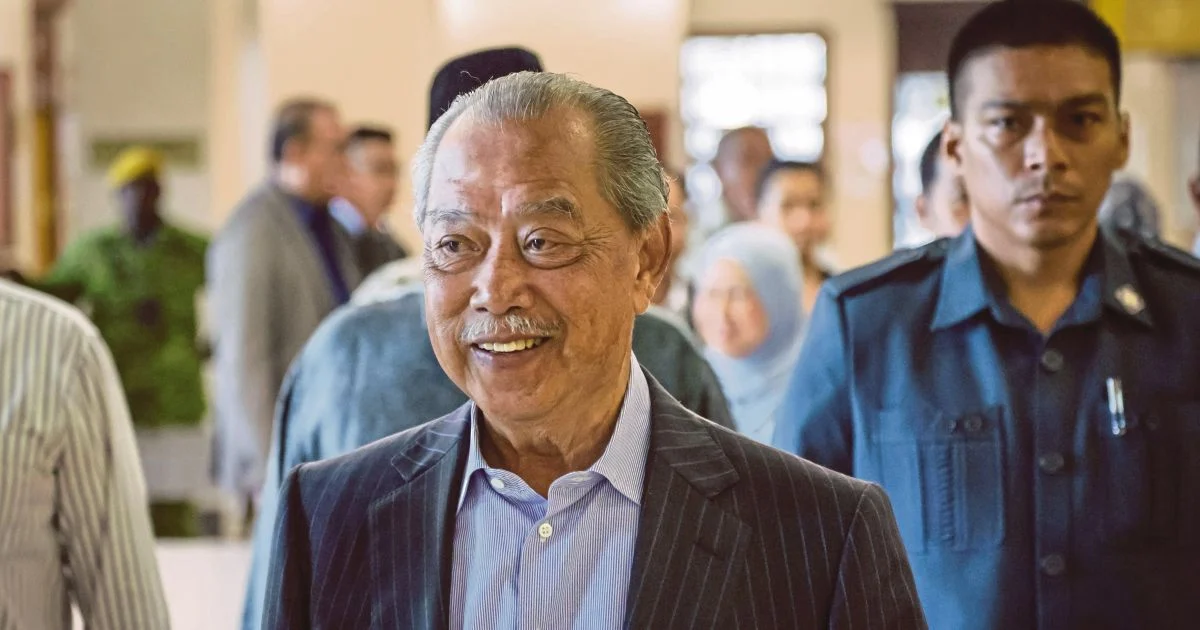
Tan Sri Muhyiddin Yassin, steering the Bersatu party and its Perikatan Nasional alliance, has refused to be discouraged by the coalition's decision to field candidates in only 33 of Johor's 56 state assembly constituencies. Speaking in his home constituency of Pagoh, the Bersatu president articulated a measured but resolute confidence that his political vehicle remains positioned to capture the state's top administrative office when voters go to the polls.
The mathematics of Malaysia's state-level politics have shifted considerably since the conclusion of the 15th general election in November 2022. Then, Perikatan Nasional emerged as a potent force, helping to reshape the federal landscape by playing kingmaker. That experience has equipped the opposition bloc with tactical insights into coalition arithmetic and legislative manoeuvring. In Johor specifically, a state that has remained within the Barisan Nasional orbit for decades, any challenge to the incumbent administration represents a significant undertaking that hinges less on seat quantity and more on strategic negotiations following election day.
Muhyiddin's optimism likely rests upon several calculations. The decision to contest 33 rather than all 56 seats reflects a deliberate strategy rather than resource scarcity. By concentrating resources in constituencies where PN believes its chances are strongest, the coalition aims to maximise seat conversion rates and secure a meaningful parliamentary presence. In Malaysia's system of state governance, where coalition politics frequently determines outcomes, a disciplined slate of 33 contested seats can translate into tangible legislative influence if those seats convert favourably. Moreover, the potential for post-election alliances and seat distribution agreements with independent candidates or smaller parties could provide the additional votes required to form a government.
The Johor state assembly comprises 56 members, necessitating a minimum of 29 seats to command a simple majority. Should PN succeed in capturing a substantial proportion of its 33 contested seats—particularly if it secures 25 or more—the path to negotiating government formation would open considerably. Historical precedent demonstrates that Malaysian state governments have frequently been formed through coalition arrangements that crystallise only after electoral results become clear. Muhyiddin appears to be banking on a competitive showing that positions PN as an attractive coalition partner for independent candidates or as the foundation of an alternative government.
The broader context involves Johor's evolving political dynamics. The state, once considered a Barisan Nasional stronghold, has experienced shifting voter sentiment and increasing competition from opposition groupings. While Barisan Nasional retains structural advantages including incumbency and administrative machinery, the presence of a credible alternative coalition alters campaign dynamics and potentially energises voters disaffected with the status quo. This competitive environment itself validates the viability of Muhyiddin's confidence—PN would scarcely contest Johor without believing substantive opportunities existed.
Peikatan Nasional's experience in other state contests and at the federal level has refined the coalition's understanding of vote efficiency and coalition-building post-election. The alliance demonstrated in recent years that even when minority partners in numerical terms, skilled political negotiation can amplify influence disproportionate to absolute seat counts. Muhyiddin's track record as a coalition operator, despite controversies that have dogged him, suggests he would approach post-election arrangements with experienced calculation.
However, substantial challenges confront PN's ambitions in Johor. The Barisan Nasional coalition, anchored by the established political machinery of component parties, maintains organisational reach that newer or regrouped opposition coalitions often struggle to match. Administrative resources, including the ability to deliver constituency-level services through government machinery, traditionally advantage incumbent blocs. Additionally, Johor's voting patterns have historically reflected relatively stronger loyalty to Barisan Nasional compared with other Malaysian states, though this cannot be treated as immutable.
Muhyiddin's public confidence serves multiple purposes beyond mere optimism. It projects an image of strength and inevitability to PN supporters and potential voters, messaging that the coalition represents a genuinely viable alternative government rather than symbolic opposition. Simultaneously, it signals to potential coalition partners that PN leadership anticipates competitive results and envisions successful formation of state government. Such messaging, whether the electoral outcome validates it or not, influences voter behaviour and shapes pre-election campaign momentum.
For Malaysian observers and particularly Southeast Asian watchers of Malaysian politics, Johor's election outcome carries implications extending beyond a single state. The composition of Johor's government will reflect broader patterns in Malaysian electoral competition, the durability of coalition politics as a governance mechanism, and the capacity of opposition groupings to translate electoral support into administrative control. A strong PN performance would reinforce the coalition's credentials as a federal-level threat and potentially reshape calculations about government formation at the national level when the next general election eventually occurs.
Muhyiddin's confidence, ultimately, rests upon the assumption that PN can convert its contested 33 seats into sufficient quantity to either command majority independently or position itself as an indispensable coalition partner. Whether this assessment proves accurate will depend upon voter turnout, differential campaign effectiveness across constituencies, and the precise seat-by-seat outcomes when ballots are counted. The coming weeks will test whether the Bersatu president's optimism reflects shrewd political calculation or aspirational thinking.

