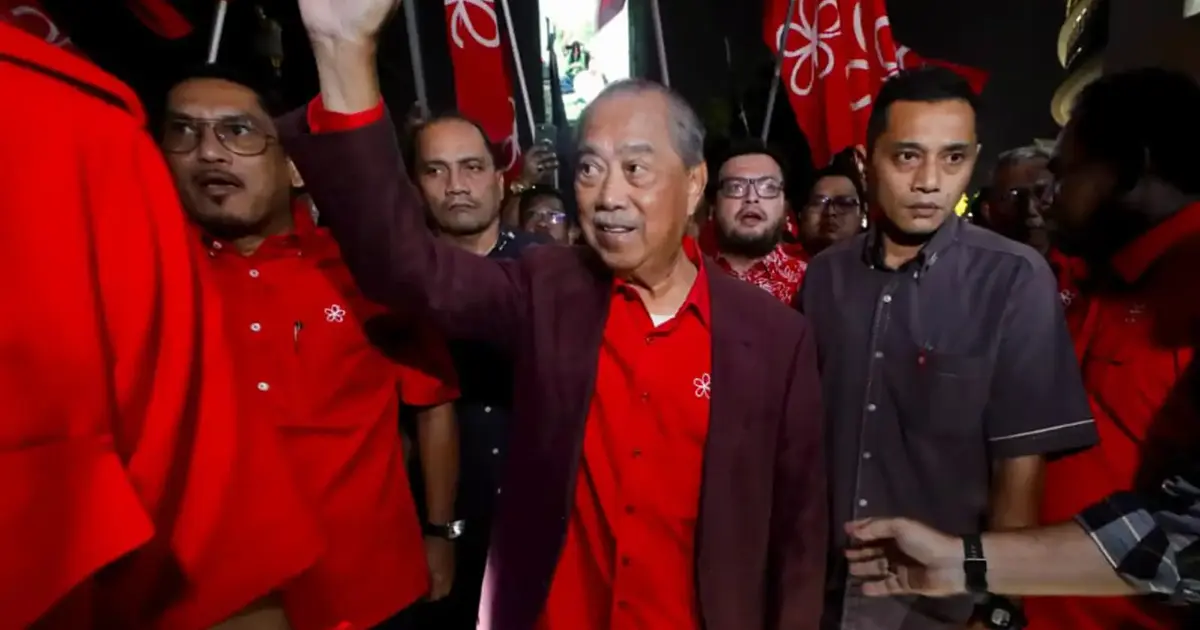
Former Prime Minister Tan Sri Muhyiddin Yassin demonstrated continued grassroots backing when over 200 supporters assembled for a show of solidarity ahead of a pivotal gathering of Bersatu leadership. The rally underscored the faction's determination to project internal cohesion as the party navigates a complex political landscape and significant organisational decisions in the coming weeks.
The upcoming Bersatu meeting carries particular weight for party direction, with multiple critical matters requiring resolution from the party hierarchy. Among the principal agenda items are preparations for two significant state electoral contests—the Johor and Negeri Sembilan state elections—contests that will test Bersatu's organisational capacity and electoral appeal in two strategically important regions. Both states present distinct political challenges and opportunities for the party, which has undergone substantial transformation since its formation in 2016.
Johor remains Malaysia's second-most populous state and a traditional stronghold of the United Malays National Organisation, making electoral performance there a critical benchmark for any national political coalition. Bersatu's ability to compete effectively in Johor will significantly influence perceptions of the party's viability as a component of the federal government and as a force capable of mobilising Malay-Muslim voters in heartland constituencies. Negeri Sembilan, meanwhile, presents a different electoral geography, where Bersatu must navigate between demographic diversity and entrenched opposition presence.
Equally consequential to the party's future trajectory is the relationship between Bersatu and PAS, the Islamist party with which it shares considerable overlap in voter appeal and ideological positioning. This alliance has proven both strategically valuable and occasionally contentious, with questions periodically arising regarding coordination, resource allocation, and policy alignment. The forthcoming deliberation on Bersatu-PAS ties will likely address mechanisms for electoral cooperation, division of parliamentary seats, and alignment on key policy matters affecting the Malay-Muslim constituency.
Muhyiddin's visible mobilisation of supporters suggests he remains a significant figure within Bersatu's internal power dynamics, despite the party's evolution since he stepped down as Prime Minister in 2021. The former premier retains considerable influence over party grassroots, and his continued prominence signals ongoing factional engagement within Bersatu's leadership structure. The assembly of over 200 backers indicates sustained organisational capacity and suggests that sections of the party membership remain responsive to his mobilisation.
For Malaysian politics more broadly, the gathering reflects the complexity of coalition management within Malaysia's multi-party system. Unlike more firmly institutionalised parties with established hierarchies, newer entities like Bersatu operate within fluid internal dynamics where personalities, regional interests, and strategic alliances constantly reshape organisational priorities. The need to prepare for state elections while simultaneously negotiating coalition partnerships demonstrates the multiplicitous demands facing mid-sized political organisations in the Malaysian context.
The timing of these deliberations also coincides with broader shifts in Malaysia's political economy. State elections in Johor and Negeri Sembilan will provide early indicators of voter sentiment following the 2023 federal election, offering insights into the durability of current coalition arrangements and the shifting preferences of different demographic and geographical constituencies. For Bersatu specifically, these contests represent opportunities to consolidate voter bases that proved marginal in federal contests and to establish stronger organisational presence in state-level politics.
Bersatu's internal cohesion will substantially influence its effectiveness in fielding competitive candidates and executing coordinated campaigns in both states. The party's performance in this electoral cycle could reshape its standing within the federal coalition and affect its negotiating position regarding future parliamentary nominations and ministerial positions. A strong showing would strengthen Muhyiddin's hand in internal party deliberations, while disappointing results might trigger reassessment of party strategy and leadership priorities.
The convergence of electoral preparation and alliance management in the upcoming Bersatu meeting illustrates how Malaysian political parties must simultaneously pursue multiple objectives—strengthening internal consensus, preparing for electoral competition, and maintaining coalition relationships. The substantial rally attendance suggests that party members view these deliberations as consequential and that competing perspectives on optimal strategy remain actively engaged within Bersatu's membership base. As the party moves toward key state contests, the outcomes of this gathering will significantly influence both Bersatu's electoral fortunes and its longer-term viability as a meaningful component of Malaysian political coalitions.

