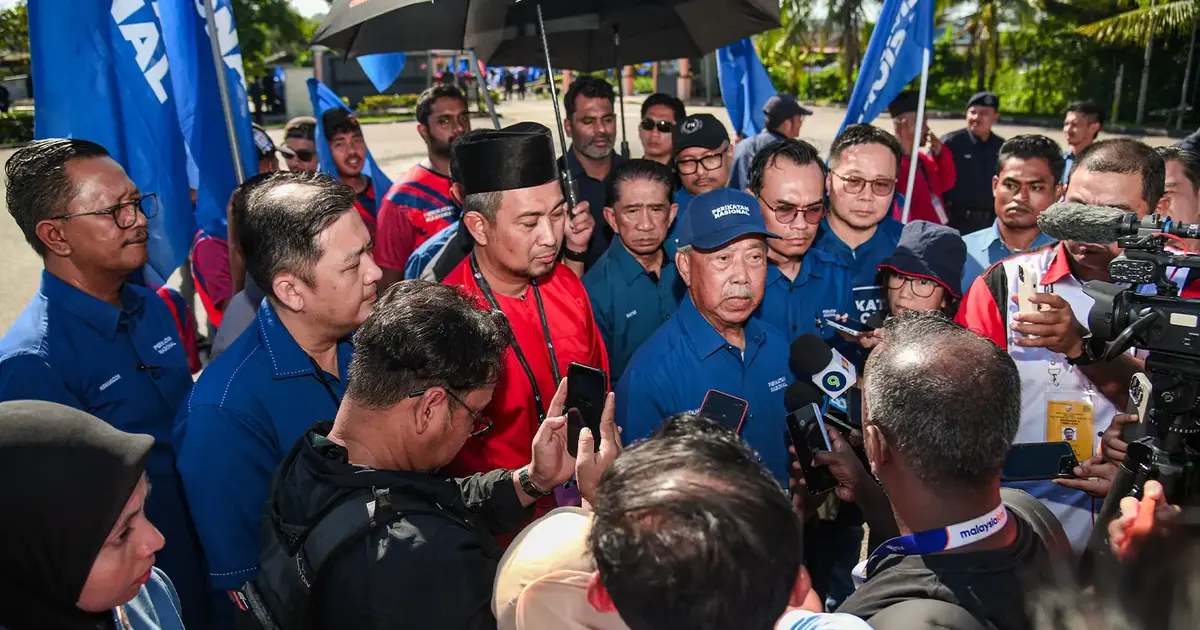
Perikatan Nasional maintains sufficient political momentum to establish control of state governments in upcoming electoral contests, according to Bersatu president Muhyiddin Yassin, who stressed the coalition's expanding network of parliamentary support. The assertion reflects growing confidence within the opposition alliance as political dynamics continue reshaping across Malaysia, with Muhyiddin pointing to collaborative relationships extending beyond the coalition's core membership to bolster its viability.
Muhyiddin's optimism rests substantially on PN's capacity to mobilise both internal and external resources. The coalition comprises established political machinery from Bersatu, PAS, and other component parties, creating a foundation for state-level campaigns. However, the president acknowledged that true electoral dominance requires supplementary backing from sympathetic political forces operating independently of the formal coalition structure.
Among these external partners, the Malaysian United Democratic Alliance (Muda) represents a strategically significant alignment. Founded by Muhammad Azmin Ali, Muda has cultivated a particular appeal among younger voters and urban constituencies dissatisfied with incumbent administrations. Though Muda maintains its organisational independence and distinct political positioning, its leadership has demonstrated willingness to collaborate with PN on specific electoral battlegrounds where mutual interests converge.
The architecture of such cooperative arrangements reflects Malaysia's fractionalised political landscape, where control of state governments often depends on assembling heterogeneous coalitions rather than commanding decisive electoral majorities. Muhyiddin's strategy acknowledges this reality by emphasising PN's flexibility in forging electoral pacts with compatible partners rather than insisting upon formal membership integration. This approach potentially broadens the coalition's appeal whilst preserving the independence that external allies value.
For Malaysian regional politics, this development carries substantive implications. State governments control crucial portfolios including land, Islam, and economic development policies, making them extraordinarily valuable prizes in Malaysia's tiered political system. Should PN succeed in translating its federal opposition presence into state-level governance, it would fundamentally alter the power balance established during the 2022 general election and consolidated through subsequent state contests.
Muhyiddin's confidence also reflects PN's demonstrated capacity for survival and adaptation. Despite fragmentations affecting both Bersatu and PAS at different junctures, the coalition has maintained cohesion superior to some competitors. Internal disagreements have occurred, particularly regarding distribution of candidacies and resource allocation, yet these tensions remain manageable relative to ruptures that have destabilised other political formations.
The reference to Muda and comparable allies signals PN's recognition that contemporary electoral success demands multi-party coordination. Unlike the earlier generation of Malaysian politics, where dominant coalitions sustained themselves through rigid hierarchies and singular-party dominance, modern electoral mathematics require negotiated frameworks accommodating diverse stakeholder interests. This evolution reflects broader democratisation trends observable throughout Southeast Asia.
However, PN's pathway toward state governance contains inherent vulnerabilities. Coalition members harbour occasionally divergent ideological commitments and constituency concerns, creating potential fracture points during governance. PAS's emphasis on Islamic governance sometimes tensions with secular-oriented voters whom Muda and portions of Bersatu attract. Reconciling these programmatic differences within actual government administration presents challenges distinct from coordination during electoral campaigns.
Geographically, PN's capacity varies considerably across Malaysian states. The coalition maintains traditional strongholds in Terengganu and Kelantan, where PAS possesses deep institutional roots. However, winning or retaining control in competitive states such as Selangor, Penang, or Johor demands broader coalition construction and cross-ethnic appeal transcending PN's existing demography. Muhyiddin's invocation of broader partnership networks acknowledges these regional variations.
Muda's participation also represents generational and ideological renewal within opposition politics. The party's emphasis on meritocratic governance, transparency, and institutional reform appeals to constituencies fatigued with traditional political narratives. For PN, incorporating such partners potentially rejuvenates its public image whilst accessing voter segments previously unreceptive to its messaging.
Going forward, the sustainability of PN's coalition architecture depends on translating electoral cooperation into effective governance. State governments led by PN would require demonstrating competent administration, anti-corruption commitment, and responsiveness to constituent demands across religious and ethnic lines. Early performance during such administrations will substantially determine whether the coalition reproduces its current partnership structure or experiences disintegration.
Muhyiddin's public expressions of confidence serve multiple audiences simultaneously. To party supporters and potential allies, assertions of readiness for governance strengthen organisational morale and signal seriousness for political negotiations. To electoral audiences, such rhetoric positions PN as a credible alternative administration. Yet these statements equally invite scrutiny regarding specific policy platforms and governance competence beyond coalition-building mechanics.
Ultimately, Muhyiddin's assertions reflect PN's strategic positioning as opposition attempting to translate parliamentary presence into territorial control. The coalition's willingness to work beyond formal membership boundaries demonstrates political maturity and pragmatism, though sustainability remains contingent upon maintaining internal cohesion whilst satisfying diverse partners' expectations regarding power distribution and policy priorities.

