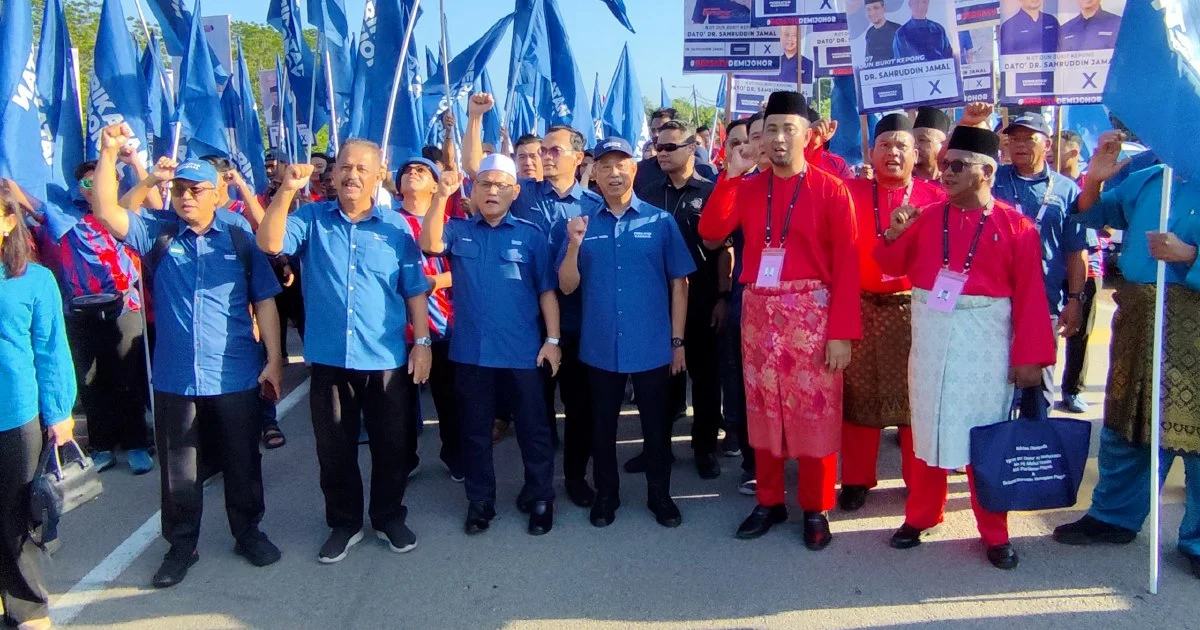
Tan Sri Muhyiddin Yassin, president of Bersatu, made an appearance at the Pagoh Sports Complex Hall on nomination day, demonstrating the party's commitment to contested seats in the Johor state election. The senior politician arrived early in the morning at 8.45 am to show solidarity with the party's campaign efforts in the constituency.
The presence of Bersatu's top leadership at the nomination centre underscores the strategic importance the party places on the Bukit Kepong seat. By accompanying candidate Sahruddin during the formal nomination filing process, Muhyiddin sent a clear signal of party backing and confidence in the candidate's viability in what is shaping up as a competitive electoral battle. Such high-profile support from party presidents often translates into mobilisation of campaign machinery and resource allocation on the ground.
Bukit Kepong represents one of several constituencies where Bersatu is fielding candidates in this election cycle. The party, which has undergone considerable political realignment in recent years, continues to seek to consolidate its presence in Johor, a state where political fortunes have shifted dramatically following the collapse of the Perikatan Nasional coalition. Bersatu's positioning in state elections reflects its broader national strategy of maintaining political relevance while navigating the complex landscape of Malaysian coalition politics.
Muhyiddin's hands-on approach to campaign activities reflects a shift in engagement tactics by Bersatu leadership. Rather than remaining distant from nomination proceedings, the party president's direct involvement signals confidence in the electoral process and the party's candidates. This visible leadership presence often galvanises party members and demonstrates to voters that the party hierarchy takes the contest seriously and is willing to invest personal political capital.
The nomination centre at the Pagoh venue served as the focal point for filing candidatures in this round of Johor elections. The formal nomination process represents the official commencement of the election campaign period, after which strict regulations govern campaign spending, media coverage, and political activities. For candidates and parties alike, the nomination day carries symbolic weight as the moment when aspirations become officially sanctioned candidacies.
Sahruddin's candidacy in Bukit Kepong carries implications for Bersatu's overall performance in Johor. The state has traditionally been a political battleground where multiple coalitions compete fiercely for dominance. Bersatu's ability to retain or expand its seat count will significantly influence its bargaining position in any post-election coalition negotiations at both state and federal levels. Each constituency therefore represents more than a single electoral contest; it contributes to the broader narrative of which party possesses momentum and grassroots support.
The timing and visibility of Muhyiddin's attendance reflects deliberate campaign strategy. By being present at the nomination process, the party leader demonstrates accessibility and active engagement with the electoral machinery. Such actions, when reported in media coverage, reach voters who may be undecided or evaluating party credentials. The implicit message is that Bersatu maintains strong leadership committed to contesting elections with seriousness and resource.
Johor elections carry particular significance within Malaysia's political context. As one of the nation's most populous states and a traditional swing region, Johor's election results influence perceptions of party strength nationally. Bersatu's performance here will be scrutinised by political analysts, coalition partners, and rival parties as an indicator of the party's current electoral fortunes following various political shifts and alliance recalibrations in recent years.
For Sahruddin as the Bukit Kepong candidate, having the party president present during nomination constitutes a valuable endorsement. It provides credibility, signals party investment in the campaign, and offers opportunities for joint media appearances that amplify campaign messaging. Candidates in competitive seats benefit substantially from associating with senior party leaders, as this creates the impression of an official party priority and attracts volunteers and donors seeking to support candidates perceived as having leadership backing.
The broader context of Johor politics shows a state where no single coalition maintains unquestionable dominance. This competitive environment makes each election consequential and each seat contested. Bersatu's approach in Bukit Kepong mirrors its wider strategy across the state: fielding candidates in strategic locations while maintaining flexibility in coalition possibilities. The results in constituencies like Bukit Kepong will help determine Bersatu's leverage in post-election negotiations and coalition formation discussions.
As the election campaign unfolds in Johor, the momentum generated during nomination week will carry through to polling day. Bersatu's visible leadership engagement in Bukit Kepong and other constituencies provides the groundwork for sustained campaign activity. The party's success will depend not only on leadership visibility but also on whether such support translates into effective ground organisation, policy messaging that resonates with voters, and ultimately, electoral support on voting day.

