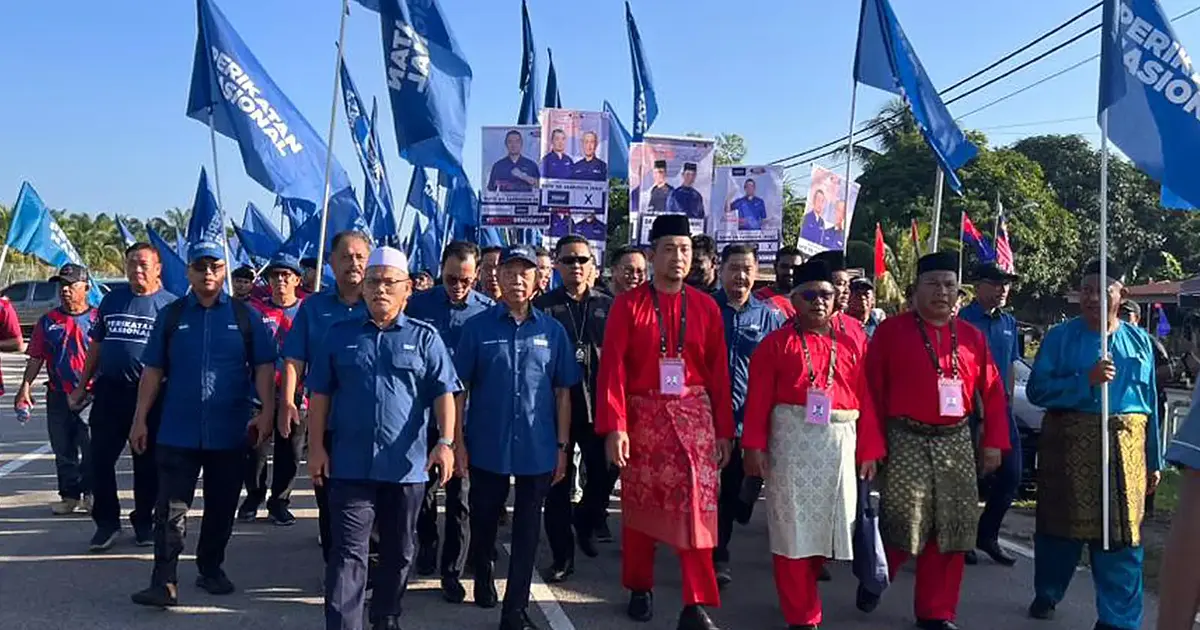
Former Prime Minister Muhyiddin Yassin joined hundreds of Perikatan Nasional supporters in a major mobilisation effort for the Bukit Kepong constituency, where two-term assemblyman Dr Sahruddin Jamal represents Bersatu's campaign push in what appears to be a strategically important battleground.
The gathering underscores Perikatan Nasional's determination to consolidate support in key constituencies as Malaysia's political landscape continues to shift following the 2022 general election. Bersatu, which forms the backbone of PN's legislative presence, has positioned Dr Sahruddin as its standard-bearer for the seat, signalling the coalition's confidence in the incumbent's track record and local standing.
Dr Sahruddin's two terms as assemblyman provide him with established grassroots networks and demonstrated electoral appeal within the constituency. His candidacy reflects a broader PN strategy of leveraging incumbency and institutional familiarity to retain support, particularly in areas where Bersatu has maintained a political foothold since the party's formation in 2016.
Muhyiddin's personal participation in the campaign event carries symbolic weight within Perikatan Nasional circles, as the former premier remains an influential figure within Bersatu despite stepping down from the party presidency. His presence signals institutional backing and attempts to energise the party faithful during what could be a contested electoral period.
The scale of the rally—drawing hundreds of supporters—suggests active grassroots mobilisation efforts and indicates that PN views this particular contest as consequential for the coalition's overall electoral fortunes. In Malaysia's fractured political environment, where state and federal-level dynamics frequently diverge, maintaining strength in traditional strongholds becomes strategically vital for opposition coalitions seeking to rebuild parliamentary influence.
Bersatu's positioning of Dr Sahruddin reflects the party's broader challenge of distinguishing itself within the crowded Malaysian political space while competing against both rival opposition blocs and the Barisan Nasional establishment. The two-term assemblyman's candidacy represents continuity, yet the need for public rallies suggests that party strategists recognise ongoing competitive pressures within the constituency.
The involvement of multiple PN supporters in a coordinated campaign event indicates organisational capacity and the coalition's continued ability to mobilise supporters for public demonstrations of backing. Such activities serve dual purposes: they energise core supporters and attempt to project momentum and viability to undecided voters who may assess candidate strength through visible evidence of organisational support.
For Malaysian observers tracking Perikatan Nasional's political trajectory, events like this Bukit Kepong gathering provide indicators of coalition cohesion and strategic priorities. The coalition's public investment in supporting Dr Sahruddin's campaign reveals where PN leadership judges its electoral prospects to be promising or vulnerable.
The broader context matters significantly here. Since PN's emergence as a meaningful parliamentary force following the February 2020 Sheraton Move, the coalition has struggled to establish itself as a credible national alternative to established power structures. Campaign mobilisations in specific constituencies demonstrate attempts to build back electoral credibility through local victories and demonstrated voter support.
Dr Sahruddin's position as a two-term assemblyman provides institutional legitimacy that newer candidates lack, making him a valuable asset for a coalition attempting to consolidate influence across state-level contests. His prior electoral success suggests familiarity with local issues and established connections within the Bukit Kepong community.
The campaign effort also reflects PN's recognition that maintaining opposition presence requires continuous public engagement and visible leadership involvement. By deploying senior figures like Muhyiddin to support local candidates, the coalition attempts to link grassroots contests to higher-level political narratives and demonstrate that local races carry significance within the broader political structure.
Moving forward, the success or failure of Dr Sahruddin's Bukit Kepong campaign will provide a data point for understanding PN's electoral viability and whether the coalition can effectively translate leadership backing and grassroots enthusiasm into actual electoral victories. Such contests become microcosms of larger coalition strengths and weaknesses in the contemporary Malaysian political environment.

