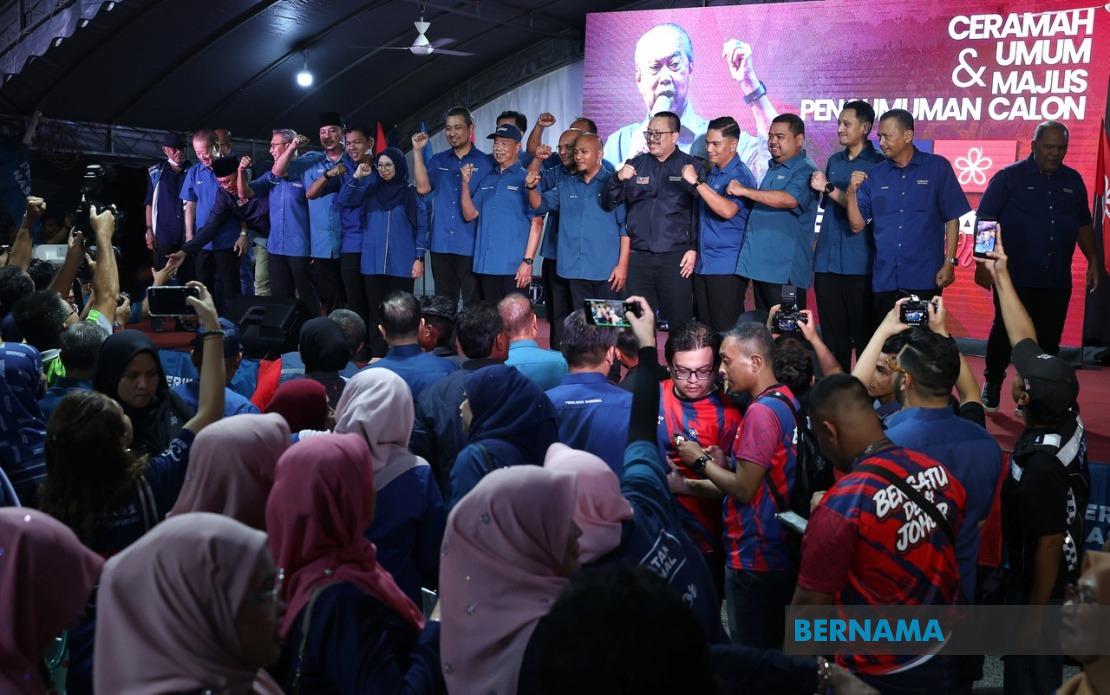
Tan Sri Muhyiddin Yassin, president of Parti Pribumi Bersatu Malaysia, has revealed the party's complete slate of 16 candidates who will contest in the 16th Johor State Election. The announcement, made at a candidate presentation and public forum held at the Pagoh Parliamentary Service Centre in Taman Pagoh Jaya, marks a significant milestone in Bersatu's preparations for the forthcoming state polls. The event drew party members and supporters keen to learn who would represent the party across Johor's state constituencies.
The timing of this announcement comes as the political landscape in Johor enters a critical phase. The Johor State Assembly was dissolved on June 1, formally triggering the electoral process and establishing a calendar for the election machinery. The Election Commission has designated June 27 as nomination day, when candidates and parties must officially register their entries with electoral authorities. This compressed timeline means that Bersatu, like other contesting parties, must move swiftly from candidate announcement to formal nomination within just two days of the public revelation.
Polling day is scheduled for July 11, providing voters and candidates with roughly a two-week campaign window. This relatively short campaign period places considerable pressure on parties to mobilize their machinery efficiently and communicate their messages to the electorate without delay. For Bersatu, which has been rebuilding its political presence following shifts in coalition dynamics at both federal and state levels, the tight schedule presents both challenges and opportunities to consolidate support among traditional supporters and persuade swing voters.
The choice to hold the candidate announcement event in Pagoh, a parliamentary constituency within Johor, reflects the significance Bersatu places on this region. Pagoh has historically been a stronghold where the party and its affiliated political movements have enjoyed substantial electoral support. By staging the public ceramah at this location, Bersatu sought to energize the grassroots base while demonstrating organizational readiness to the broader voting public. The event functioned both as an internal party rally and a public relations exercise aimed at establishing momentum heading into the official nomination period.
Among the candidates announced, Mohd Idzharruddin Mohd Nasirruddin has been fielded for the N8 Bukit Pasir state seat. This particular constituency, like others on Bersatu's candidate list, will be crucial to the party's overall performance in the election. Seat selection reflects careful strategic calculation by party leadership regarding which constituencies offer the strongest potential for victory based on demographic composition, historical voting patterns, and available party machinery. The distribution of these 16 candidates across Johor's state assembly constituencies signals where Bersatu believes it can mount competitive campaigns.
Bersatu's participation in the Johor State Election represents a critical test of the party's political viability in a state where it has experienced fluctuating fortunes. Following the collapse of the Pakatan Harapan government in 2020, Bersatu has navigated shifting political alignments and coalition partnerships. The party's performance in Johor will provide important indicators of its capacity to retain voter support and expand its footprint in one of Malaysia's most politically significant states. Johor's 56 state assembly seats represent substantial representation, and Bersatu's campaign here will influence perceptions of party strength nationally.
The broader Malaysian political context adds another layer of significance to these Johor elections. State polls occurring during the current federal administration provide opposition parties with opportunities to challenge incumbent coalitions and government-aligned parties in specific regions. For Bersatu, framing its campaign messaging and positioning candidates who can articulate party principles to Johor voters becomes essential. The quality and track record of candidates fielded frequently determines voter receptiveness, particularly in a state where local issues such as water security, economic development, and service delivery remain paramount voter concerns.
For Johor voters, this election represents a chance to provide direct feedback on state-level governance and policies. Bersatu's manifesto and candidate profiles will form the basis upon which party supporters and undecided voters will evaluate whether the party merits their support. The 16 candidates collectively bear responsibility for translating party ideology and electoral promises into resonant local campaign narratives that address constituency-specific concerns while maintaining consistency with broader party positioning.
The period between announcement and nomination day typically involves intensive verification processes by the Election Commission and parties themselves. Bersatu's administrative team will ensure all nominated candidates meet statutory requirements and that documentation is complete and accurate. Any procedural irregularities could jeopardize candidates' eligibility, making the transition period between public announcement and formal nomination crucial for technical compliance and logistical coordination.
Looking ahead, Bersatu's electoral fortunes in Johor will significantly influence its political standing going forward. A strong performance could validate the party's positioning within current coalition arrangements and strengthen Muhyiddin's leadership. Conversely, disappointing results might prompt reassessment of party strategy and coalition partnerships. The campaign period between June 27 and July 11 will be intense, with all contesting parties deploying resources and messaging strategies designed to maximize electoral advantage. For Malaysian political observers and analysts, the Johor State Election will provide valuable insights into voter sentiment, regional political dynamics, and the relative strength of competing political forces.

