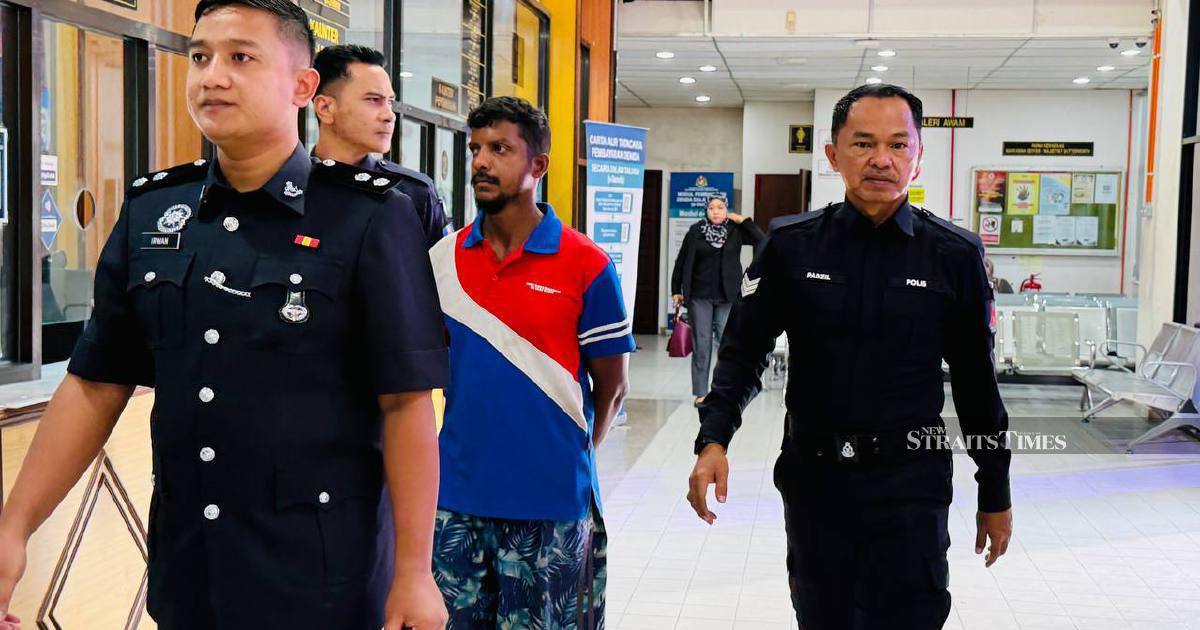
A Myanmar national faced charges at Butterworth Sessions Court yesterday in connection with a grievous hurt incident targeting a fellow countryman, with the accused remaining in police custody as investigators continue processing identity documentation. The alleged assault occurred within the past seven days, drawing law enforcement intervention in what appears to be an altercation within Myanmar's migrant community in Penang's industrial hub.
The defendant's appearance marked a procedural milestone in the case, formalising the allegations through the formal charging framework. However, the court's decision to withhold bail pending the receipt and verification of proper identification documents suggests ongoing uncertainty about the accused's background and eligibility for pretrial release, a standard precaution when dealing with foreign nationals operating without clear documentation.
Migrant workers from Myanmar represent a significant portion of Penang's labour force, particularly in manufacturing and construction sectors concentrated around Butterworth. This demographic reality has created parallel social ecosystems within the state, sometimes leading to internal disputes that escalate into violence. The incident reflects broader challenges authorities face in managing migrant communities—balancing enforcement of local law with the complexities of cross-border jurisdictional issues and language barriers.
The decision to withhold bail until identification papers are produced carries substantial implications for the accused's immediate circumstances. Extended remand periods pending documentation review can stretch into weeks, substantially delaying the trial process while investigators verify background details through foreign government channels. Myanmar's bureaucratic systems add further delays, as officials in Naypyidaw must process requests for certified identity records, creating administrative bottlenecks that extend custody periods.
From a Malaysian law enforcement perspective, the documentation requirement reflects standard protocol for managing cases involving foreign nationals. Courts typically prefer establishing verified identity before approving bail, partly because individuals without proper papers pose elevated flight risks and partly because background checks become essential for assessing criminal history and propensity for reoffending. The absence of verifiable identification essentially removes the usual anchors courts rely upon when evaluating flight risk.
The grievous hurt charge itself carries significant legal weight in Malaysia's criminal framework. Falling under Section 325 of the Penal Code, such charges indicate injuries exceeding simple hurt—typically involving fractures, loss of consciousness, or prolonged medical treatment. The categorisation suggests the alleged assault resulted in material bodily harm rather than minor contusions, elevating the severity beyond minor altercations that might result in simple hurt charges.
Migrant worker incidents in Penang have commanded increasing prosecutorial attention in recent years, particularly after high-profile cases involving violence within community groups. Authorities have strengthened enforcement mechanisms to deter violence and maintain public order, recognising that unresolved tensions can escalate into tit-for-tat reprisals affecting wider community stability. This case appears positioned within that enforcement framework.
The victim's status as a fellow Myanmar national adds cultural and diplomatic dimensions often absent in domestic assault cases. While Malaysia routinely prosecutes crimes involving foreign nationals against other foreign nationals, such cases sometimes involve consular notification requirements and coordination with Myanmar authorities. The Myanmar government's diplomatic presence in Malaysia, while limited, means cases involving serious injury occasionally attract attention from consular officials monitoring their nationals' treatment within Malaysian courts.
For the broader Southeast Asian context, this incident exemplifies recurring patterns in post-2021 Myanmar migration dynamics. Economic deterioration and political instability have intensified outbound migration flows, with Malaysia and Thailand remaining primary destinations for work-seeking Myanmar nationals. Larger migrant populations inevitably bring higher incidences of internal conflict, creating new law enforcement demands for host countries managing these populations.
The remand decision reflects judicial caution appropriate when handling such cases. Malaysian courts typically adopt conservative approaches toward bail involving undocumented or inadequately identified foreign nationals, particularly in cases involving violence. This protective stance acknowledges that establishing reliable contact information and fixed residential addresses becomes difficult without verified documentation, making bail conditions difficult to enforce if violations occur.
The timeline for document verification remains unclear, as the original report provided no specific deadlines for identity confirmation. In practice, such processes often consume several weeks as requests navigate embassy channels and government offices. The accused will likely remain in custody throughout this period, with court review dates scheduled periodically to reassess the documentation status.
This case will proceed through Malaysia's established criminal justice mechanisms once identity verification concludes and bail arrangements are finalised. The eventual trial will require translation services, witness coordination across international borders, and potentially victim participation from individuals willing to travel for court appearances. Such logistical complexity distinguishes migrant-involved cases from purely domestic prosecutions, requiring courts to coordinate across jurisdictional boundaries while maintaining legal integrity.

