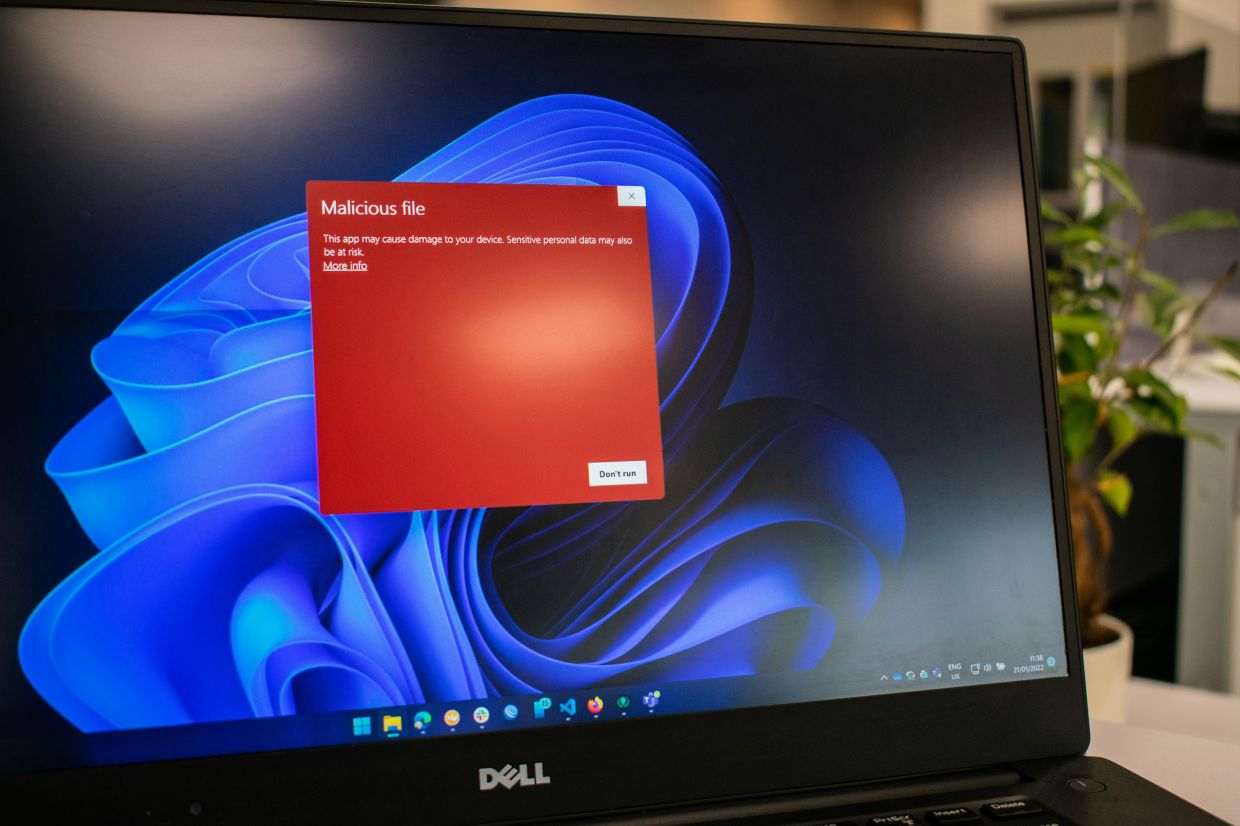
Malaysia's Computer Emergency Response Team (MyCert) has raised an alarm over an active malware distribution campaign leveraging WhatsApp Web and Desktop platforms to compromise Windows computers across the country. The attack employs deceptive social engineering methods, with threat actors masquerading as financial institutions or legal entities and sending victims files that appear to be legitimate documents but actually contain dangerous executable code.
The sophistication of this particular threat lies in its deceptive file naming convention. Attackers are distributing Visual Basic Script (.vbs) files with filenames that closely mimic common financial and legal documents, such as "Acknowledgment of Debt.vbs", "Sila semak bil anda.vbs" (which translates to "Please check your bill"), "December statement of account.vbs", and "Reconciliation.vbs". To the untrained eye, these appear to be PDF or document files, exploiting the natural assumption that financial statements and legal acknowledgments are routine correspondence that most internet users regularly receive.
The mechanism of infection is straightforward yet insidious. Once a user downloads and opens one of these files, the Visual Basic script executes automatically without requiring additional user interaction or consent. This execution triggers an immediate infection sequence, installing malicious components onto the compromised system. The attackers favour deploying a Remote Access Trojan, which effectively hands over control of the victim's computer to the threat actors, allowing them to operate the device remotely as if they were sitting at the keyboard themselves.
What makes this particular variant especially dangerous is its ability to disable security prompts and evade traditional detection mechanisms. After establishing remote access, the malware systematically disables Windows security features, enabling the attackers to operate undetected by antivirus software and without triggering alerts to the user. This stealth capability allows the compromised system to become a covert intelligence-gathering tool, with attackers silently monitoring everything displayed or typed on the screen.
The information harvesting capabilities are particularly concerning for Malaysian users who conduct financial transactions online. The malware can capture sensitive data as it is entered, including login credentials, banking passwords, personal identification numbers, and one-time passwords used for transaction authentication. For individuals engaged in business or financial services, this represents a direct pipeline to their most sensitive digital assets. The Malaysian financial sector's growing reliance on digital banking and the prevalence of online transactions make this threat particularly acute for the country's economic ecosystem.
MyCert's advisory emphasises that users should treat any unexpected file attachment received through WhatsApp with extreme caution. The authority specifically recommends against opening or executing suspicious files, and critically, against forwarding such files to others, as this would propagate the malware within one's social network. Responding to the sender is equally inadvisable, as it confirms to attackers that the phone number is active and monitored, potentially leading to escalated targeting or sale of the number to other criminal groups.
For users who have already inadvertently opened such files, the situation demands immediate and comprehensive action. MyCert advises treating the device as fully compromised and implementing emergency containment measures. The first step is to disconnect the affected computer from internet connectivity entirely, severing the attacker's remote access channel before they can exfiltrate sensitive data or install additional malicious components. For corporate users, notifying the organisation's IT security team is essential, as the compromise may extend beyond personal data to encompass business systems and information.
Password management becomes critical for victims of this attack. All credentials previously used on the compromised device should be considered exposed and must be changed immediately, though this change must be executed from a separate, clean device to avoid the new passwords being captured as they are typed. This includes not only email and banking passwords but also authentication credentials for corporate systems, cloud services, and any platform containing sensitive information. The scope of required changes underscores the severity of allowing such malware to establish persistence on a system.
MyCert's cautionary note about professional malware removal reflects a technical reality that often eludes casual computer users. Standard antivirus software, even when properly updated, frequently fails to detect or eliminate sophisticated remote access trojans that have had time to establish themselves deeply within a system. These trojans often employ rootkit-level techniques to hide from security scanning tools, making their removal require specialized forensic expertise. For individuals lacking technical capability, attempting amateur malware removal risks incomplete cleaning and persistent infections.
The distribution of this threat specifically through WhatsApp represents a strategic choice by attackers, as WhatsApp's end-to-end encryption and massive user base across Malaysia and Southeast Asia provide ideal conditions for campaign distribution. The platform's widespread legitimacy in business and personal communication means users are more likely to trust file attachments received through WhatsApp compared to other channels. This convergence of technical and psychological factors makes WhatsApp an increasingly attractive vector for cybercriminals targeting the region.
Malaysian users and organisations should report suspected infections to MyCert through the designated Cyber999 email channel ([email protected]), providing screenshots of the malicious message, timestamp information, and the sender's phone number. Reporting serves dual purposes: it enables MyCert to track the evolution of this campaign and issue targeted alerts, and it creates an official record that may assist law enforcement agencies in investigating the perpetrators. As these campaigns typically originate from coordinated criminal groups operating across multiple jurisdictions, comprehensive reporting from affected users strengthens the regional cybersecurity response.

