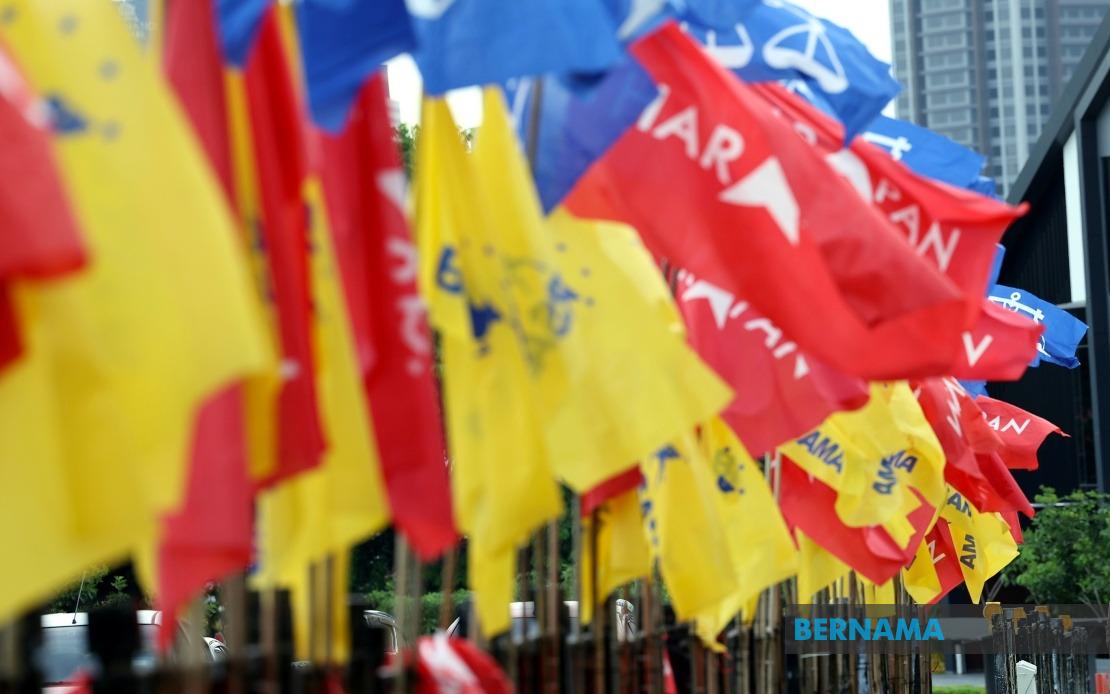
In a carefully worded statement released from Seremban on July 27, the Negeri Sembilan Palace has drawn a firm line against the politicisation of the monarchy, cautioning all contending parties in the upcoming state election to keep the royal household out of their campaign narratives and activities. The warning comes as political parties prepare for the August 1 polling day, with early voting scheduled for the following day, and reflects growing concern within the palace about potential misuse of royal symbolism during the electoral process.
Datuk Azizi Mohamad Ali, who serves as Comptroller of the Negeri Sembilan Royal Household, delivered the palace's position with unmistakable clarity. He emphasised that the monarchy maintains a position of strict neutrality and categorically does not align itself with any political faction or campaign initiative. This principle stands as a cornerstone of Malaysia's constitutional monarchy, where the institution's perceived impartiality is essential to its legitimacy and role as a unifying force across the nation's diverse political landscape.
The palace framed its concerns within a broader context of national values and institutional integrity. According to the comptroller's statement, the monarchy functions fundamentally as a symbol of unity that transcends partisan divides, and plays an indispensable role in preserving the state's harmony, stability, and collective well-being. This formulation reflects the palace's view that any attempt to drag the royal institution into electoral competition undermines not merely the monarchy itself, but the social fabric that depends on its neutrality.
The statement included an explicit denial of any association between the palace and any political party. Azizi made clear that any allegations, statements, images, videos, or materials that purport to link the Negeri Sembilan Palace, the Ruler, or members of the royal family to any political organisation are categorically false. This broad disclaimer suggests the palace may have encountered such misrepresentations already, or anticipates their emergence during the campaign period.
In setting boundaries for acceptable campaign conduct, the palace invoked the well-established principle of avoiding what is colloquially known as the 3R—religion, royalty, and race. Candidates were advised to steer clear of exploiting these sensitive domains and instead conduct their campaigns with prudence, ethical standards, and strict adherence to electoral law. This guidance reflects Malaysia's experience with elections where communal sensitivities have occasionally been inflamed through careless or deliberate invocation of identity-based issues.
The Negeri Sembilan Palace's statement also carried an implicit recognition of its own vulnerability to misrepresentation in the digital age. The comptroller urged members of the public not to accept or disseminate unverified information about the royal institution, and instead to rely exclusively on the palace's official communication channels for authentic statements. This advisory underscores how misinformation can spread rapidly through social media and private messaging platforms, potentially distorting the palace's actual positions or even fabricating statements entirely.
The timing of this intervention is significant given the institutional context. The Negeri Sembilan State Legislative Assembly was dissolved on June 5, clearing the path for the state election now underway. The palace's decision to issue this statement mere days before polling suggests either a proactive stance or a response to specific incidents or allegations that have already surfaced during the campaign period. Either way, the warning represents a formal assertion of institutional boundaries at a critical moment in the state's political cycle.
From a broader Malaysian perspective, the palace's intervention reflects established norms around the separation of the monarchy from electoral competition. Unlike many democracies where executive monarchs play active political roles, Malaysia's constitutional settlement places the king and state rulers in a carefully circumscribed position. This requires that all political actors, regardless of ambition or ideology, respect the monarchy's formal detachment from factional politics. Violations of this principle—whether through invoking royal patronage or attempting to align the institution with particular candidates—are viewed as breaches of constitutional convention and national custom.
The palace's appeal for cooperation from all parties and the public represents an attempt to establish a shared commitment to institutional norms. By framing its concerns in terms of harmony, stability, and the collective good, the palace positioned itself not as a participant in political disputes but as a custodian of values transcending immediate electoral contests. This rhetorical strategy aims to make violation of its boundaries appear not merely as affront to the monarchy, but as a threat to the broader social contract that underpins Malaysia's multiethnic, multireligious society.
For Malaysian voters and political observers, the palace's statement carries practical implications. It signals that concerns about electoral conduct extend beyond the state electoral commission to the highest institutional level in Negeri Sembilan. The warning may influence how parties calibrate their messaging, particularly in relation to royal symbolism and the Ruler's position. Simultaneously, it establishes a benchmark against which conduct during the campaign and afterward can be evaluated and assessed for conformity with constitutional principles.
The palace's emphasis on official communication channels is equally noteworthy in an era of proliferating digital platforms and unverified claims. By directing the public toward authoritative sources, the comptroller's statement implicitly acknowledged that false information attributing positions to the palace could circulate widely before being corrected. This reality reflects broader challenges facing not only the Malaysian monarchy but democratic institutions across Southeast Asia in maintaining information integrity during electoral periods.
As Negeri Sembilan heads toward its August 1 polling day, the palace's intervention sets a clear expectation that all participants in the democratic process will respect the institution's neutrality and constitutional role. Whether this warning succeeds in preventing the politicisation of royalty during the campaign will become apparent in the coming weeks, and may influence how other state palaces approach similar situations in future electoral cycles.

