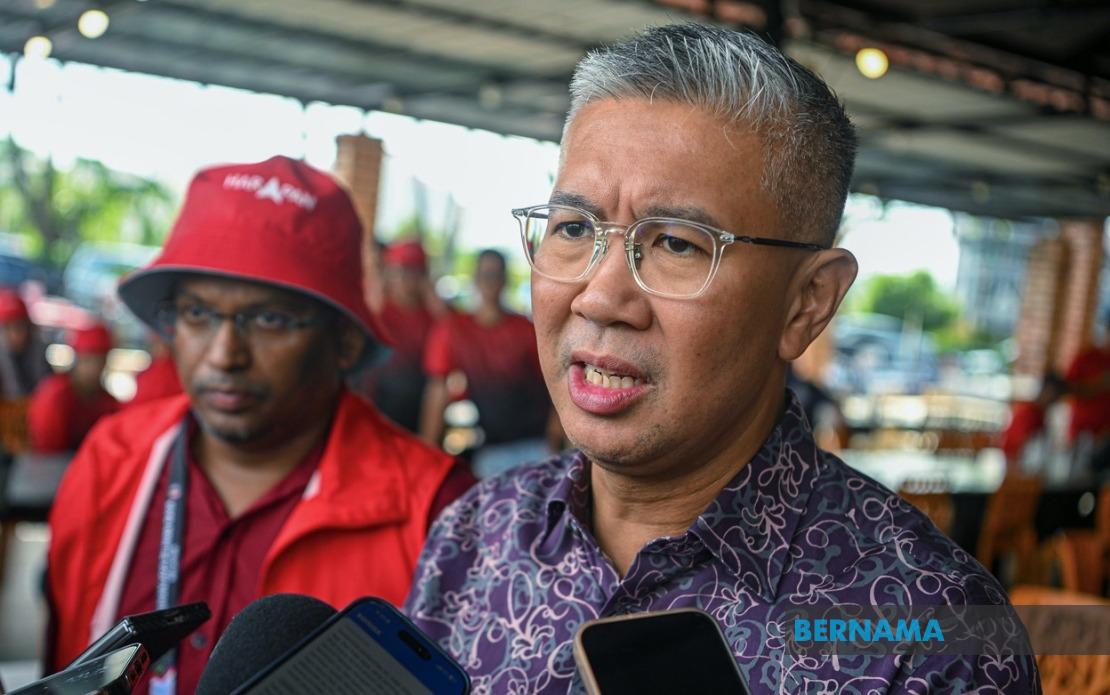
Voters in Negeri Sembilan should weigh the competing manifestos in the forthcoming state election not primarily on the grandeur of promises made during campaign rallies, but rather on each party's demonstrated capacity to turn pledges into tangible outcomes on the ground. This measured approach to electoral decision-making was the message delivered by Tengku Datuk Seri Zafrul Tengku Abdul Aziz, senior political advisor to the Prime Minister, during a campaign stop in Port Dickson on July 26 supporting Pakatan Harapan candidate Datuk Dr G. Rajasekaran in the Sri Tanjung constituency.
All three major coalitions contesting the 16th Negeri Sembilan State Election—Pakatan Harapan, Barisan Nasional, and Perikatan Nasional—have presented distinct manifestos outlining their policy priorities and developmental commitments to voters. While acknowledging that each political bloc possesses its own carefully crafted platform, Tengku Zafrul emphasised that the critical measure of electoral choice should be institutional and political capacity. The fundamental question voters must ask themselves, he suggested, is whether a particular party or coalition possesses the organisational machinery, financial resources, administrative experience, and political will to actually realise the commitments they have enshrined in their manifestos once they receive a popular mandate.
Drawing on the Pakatan Harapan government's performance record in Negeri Sembilan over the preceding two years and eight months, Tengku Zafrul pointed to concrete evidence of manifesto implementation as a persuasive argument for voter consideration. The administration, he noted, had already translated many of the commitments outlined in its initial platform into implemented policies and programmes affecting daily life across the state. This emphasis on demonstrated delivery represents a deliberate strategic pivot away from the rhetoric-heavy terrain of campaign season competition, instead anchoring the electoral choice in verifiable administrative outcomes and institutional track records that voters can directly observe and assess.
For Malaysian and regional observers, this framing reflects a broader maturation in electoral discourse within Southeast Asia. Rather than allowing campaigns to devolve into a contest of increasingly extravagant promises with minimal connection to fiscal reality or administrative capacity, Tengku Zafrul's intervention seeks to ground voter decision-making in tangible evidence of governance competence. This approach carries particular salience in Negeri Sembilan and other Malaysian states where competing coalitions often articulate similar-sounding objectives but possess vastly different track records of implementation once in office. The distinction between campaigning capacity and governing capacity remains one of the most consequential but underexamined dimensions of electoral politics across the region.
The Sri Tanjung constituency itself presents a compelling microcosm of the broader political competition across Negeri Sembilan. The seat is slated to witness a five-way contest that extends well beyond the traditional two-coalition framework dominating Malaysian politics. Datuk Dr G. Rajasekaran represents Pakatan Harapan's position, facing challenges from A. Achuthan representing Barisan Nasional, M. Leevineshwaraan contesting under the banner of Parti Pribumi Bersatu Malaysia, and two independent candidates—Datuk A. Saravanan and Islah Wahyudi. This fragmented electoral landscape reflects the broader decomposition of monolithic political blocs that has characterised Malaysian electoral dynamics in recent election cycles, particularly following the 2018 general election and its tumultuous aftermath.
Rajasekaran himself expressed considerable confidence regarding his prospects for retaining the seat, attributing his optimism to the overwhelmingly positive response he has encountered from constituents during the preceding week's intensive campaign activities. The warmth and receptiveness he characterised from voters across Sri Tanjung, he suggested, provided him with tangible evidence of sustained support and electoral viability. Such claims require careful interpretation, of course, as campaign trail enthusiasm does not invariably translate into ballot box outcomes, yet the apparent momentum he described reflects the competitive intensity of this particular contest within the broader state election framework.
Tengku Zafrul's comments also carried implicit dismissal of claims regarding internal fragmentation within Negeri Sembilan's Pakatan Harapan structure, particularly allegations that PKR party machinery had engaged in sabotage attempts targeting certain candidates in the state election. Based on his direct observations while engaging with party leadership and ground-level organisation across several constituencies, he rejected the notion that such serious internal dysfunction existed within the coalition. This statement carries significance for broader electoral dynamics, as intra-coalition tensions and candidate selection disputes have historically undermined Pakatan Harapan's electoral performance in several Malaysian states. Clear affirmation that such problems do not plague Negeri Sembilan's campaign effort provides reassurance to both party machinery and supportive voters concerned about organisational coherence.
The election timeline further structures the political urgency confronting Negeri Sembilan voters. Early voting was scheduled for Tuesday, July 28, with the principal polling day set for August 1, providing voters with only a narrow window to evaluate competing manifestos and make their electoral decisions. This compressed timeframe reflects the reality that campaigns in Malaysian state elections often operate under intense temporal constraints that can disadvantage less well-resourced political actors and advantage established coalitions with deeper organisational reach and media access. The early voting mechanism, meanwhile, accommodates those whose circumstances on polling day would otherwise prevent participation—a procedural innovation increasingly normalised across Malaysian electoral administration.
For voters across Negeri Sembilan seeking to navigate the manifesto terrain Tengku Zafrul urged them to examine, several substantive considerations warrant attention. Beyond the rhetorical flourishes and campaign-season enthusiasm, careful inspection of which coalition has demonstrated the administrative capacity, technical expertise, and financial resources to actually implement specific manifesto commitments offers a more reliable guide to actual governance outcomes. The distinction between aspirational campaign messaging and realistic policy delivery has assumed heightened importance as Malaysian voters have grown increasingly sophisticated in distinguishing between electoral theatre and substantive governance performance. This evolution reflects not merely growing political maturity among the electorate, but also the accumulated experience of multiple election cycles in which campaign promises have failed to materialise once governing responsibility transferred to particular coalitions or parties.
The Negeri Sembilan state election thus acquires significance extending well beyond its immediate state-level implications. As a competitive electoral arena where multiple political forces contend without any single coalition commanding overwhelming dominance, the state election provides valuable data concerning broader trajectories within Malaysian electoral politics. The choices voters make regarding which coalition merits their confidence—choices ideally grounded in assessments of delivery capacity rather than campaign rhetoric alone—will inform understanding of how Malaysian electoral dynamics continue to evolve in the post-2018 era. Whether voters indeed prioritise demonstrated governance competence over campaign promises remains an open question that the August 1 results will help illuminate.

