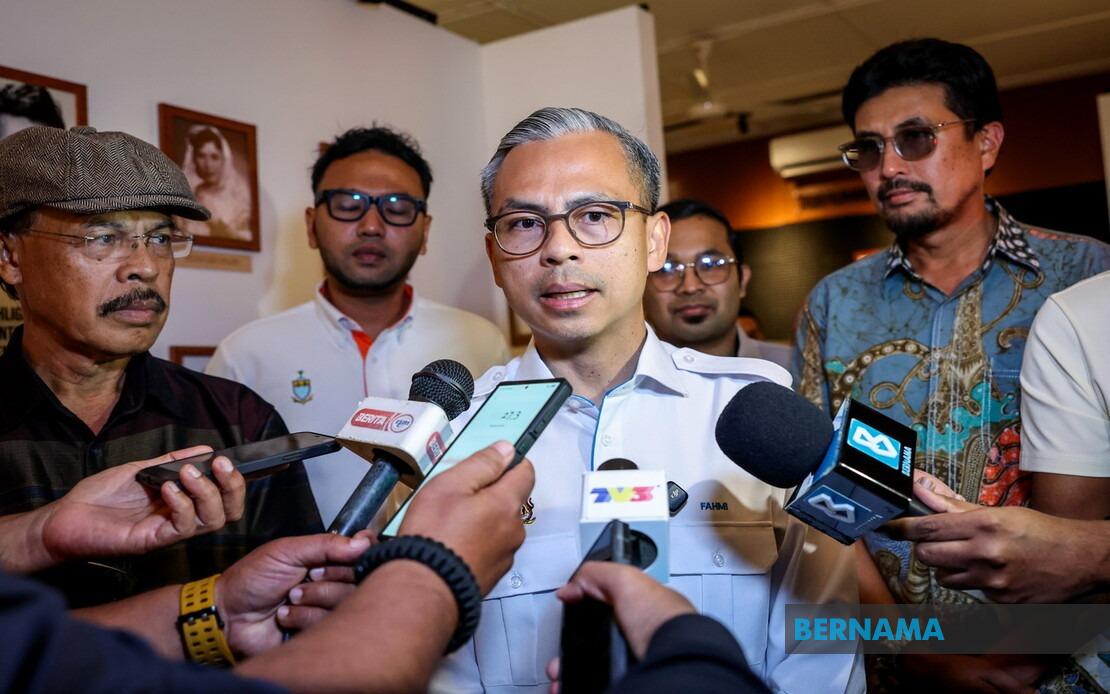
As campaigning intensifies for the Negeri Sembilan state election, authorities are sounding fresh alarms about the weaponisation of social media to deceive voters through fabricated narratives and recycled content masquerading as breaking news. Communications Minister Datuk Seri Fahmi Fadzil has issued a pointed call for greater digital literacy among Malaysians, urging them to treat online claims with scepticism and cross-reference information against established news outlets before accepting or amplifying content within their networks.
The warning reflects a deepening concern about how unverified material travels through messaging applications and social platforms during electoral periods, when public sentiment directly shapes political outcomes. Fahmi emphasised that voters and social media users should adopt a default posture of caution, recognising that the absence of mainstream media coverage often signals that a claim or incident may be fabricated, chronologically misleading, or deliberately taken out of context to distort public understanding.
One of the most insidious patterns the minister highlighted is the recycling of old content repackaged as contemporary news. This technique exploits the rapid consumption habits of social media users, many of whom share material without verifying its currency or authenticity. By the time fact-checkers debunk such posts, they have often spread to thousands of inboxes and chat groups, anchoring false impressions in the public mind that persist long after correction.
The Malaysian Communications and Multimedia Commission (MCMC) has already fielded 16 reports concerning false election-related information and internet connectivity complaints since the Negeri Sembilan campaign commenced. While this figure may seem modest, it represents only cases that prompted formal complaints; the actual volume of misinformation circulating remains substantially higher. The relatively low reporting rate suggests that many Malaysians either lack awareness of complaint mechanisms or have normalised encountering unreliable content online.
WhatsApp and similar messaging platforms have emerged as particularly effective conduits for false narratives. Unlike public social media feeds, which benefit from greater scrutiny and community fact-checking, private group conversations lack transparency and accountability. Messages forwarded through these channels acquire an appearance of insider knowledge or personal endorsement, lending them credibility that bare claims posted publicly would not enjoy. This structural vulnerability makes messaging apps a favoured vector for those seeking to influence electoral behaviour through deception.
Fahmi's appeal for media organisations to assume a more active verification role represents an acknowledgment that audiences alone cannot shoulder the burden of truth-seeking in an environment saturated with competing claims. Mainstream newsrooms possess resources for investigation, editorial standards, and professional accountability that individual users cannot replicate. By elevating the profile of verified sources and creating accessible, rapid responses to viral falsehoods, the media can help establish clearer hierarchies of credibility in the public mind.
The challenge facing Malaysian democracy extends beyond Negeri Sembilan. As regional elections multiply and national political contests loom, the infrastructure enabling deception continues to evolve. Bad-faith actors have grown sophisticated at deploying fake news—creating accounts mimicking legitimate institutions, commissioning deepfake videos, and orchestrating coordinated campaigns across multiple platforms to create an illusion of spontaneous popular sentiment. The Negeri Sembilan situation offers a case study relevant to how Southeast Asian democracies must collectively address digital manipulation.
From a Malaysian perspective, this moment underscores the urgency of embedding media literacy into educational curricula and public messaging. Citizens equipped to distinguish between credible sources and fabrication techniques represent the most resilient defence against electoral misinformation. This requires moving beyond exhortations to "check facts" and instead teaching people the evaluative frameworks used by journalists—how to assess source reliability, recognise logical fallacies, and understand the economics driving viral content.
The minister's comments also implicitly criticise the business models of social platforms, which algorithmically amplify emotionally charged content regardless of veracity. Posts that provoke anger or fear generate engagement metrics that translate to advertising revenue, creating perverse incentives for sensationalism and deception. Until platforms meaningfully alter their recommendation systems or face regulatory consequences for enabling misinformation, warnings to individual users represent only partial solutions.
For Negeri Sembilan specifically, the timing of these warnings carries particular significance. State elections determine which coalition holds legislative power, directly affecting policy on local development, education, and governance. Voters whose perceptions are shaped by false information effectively cede agency to those manufacturing deception. The principle Fahmi articulated—that absence from mainstream coverage should trigger suspicion rather than faith—offers a practical heuristic for ordinary Malaysians navigating an increasingly opaque information landscape.
Looking forward, the Malaysian government's approach to combating election-related misinformation will likely influence how other Southeast Asian democracies respond to similar challenges. Whether authorities can meaningfully improve information quality without resorting to censorship remains an open question. Fahmi's emphasis on directing voters toward mainstream sources suggests confidence in traditional media's ability to serve as a counterweight to viral falsehoods, though that confidence depends on news organisations themselves maintaining rigorous standards and public trust.

