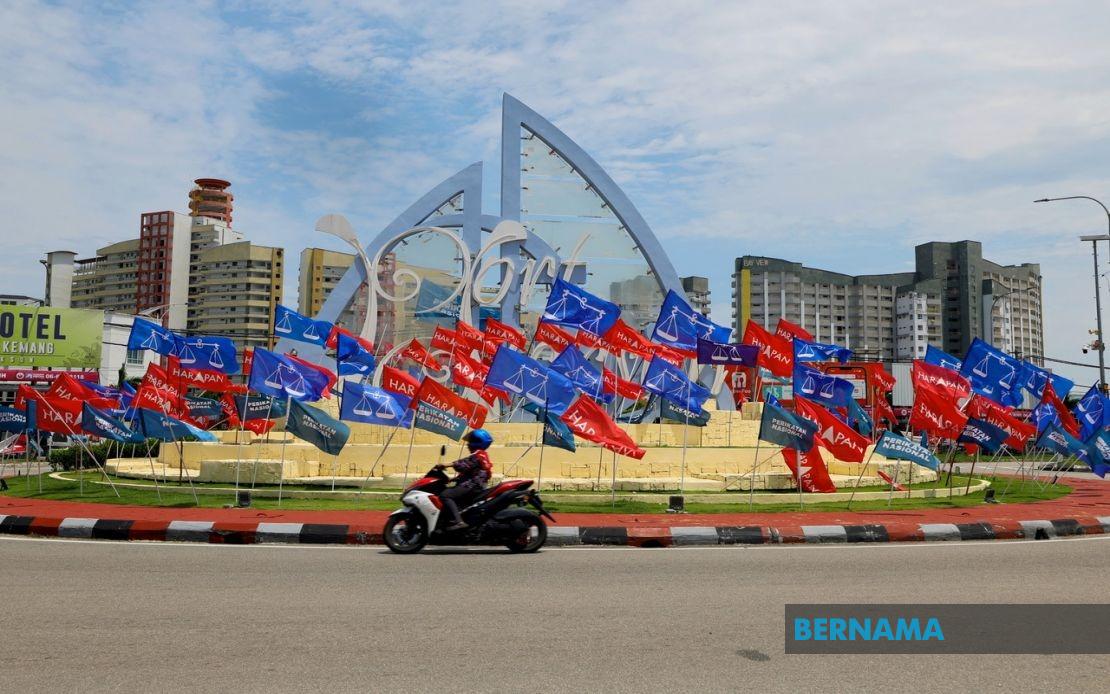
Voters heading to polling stations across Negeri Sembilan tomorrow should prepare for a day of contrasting weather conditions, according to forecasts released by the Malaysian Meteorological Department. The morning hours—which will encompass most of the state's voting period—are expected to remain fair and sunny, providing voters with comfortable conditions to cast their ballots. However, meteorologists have warned of a sharp deterioration later in the afternoon, with widespread heavy rain and thunderstorms anticipated across the state by evening, potentially affecting those voting during the latter hours of the election day.
The 16th Negeri Sembilan state election will see 401 polling stations opened simultaneously across all seven districts in the state, ranging from Seremban and Port Dickson to more rural areas like Jelebu and Rembau. These voting centres, established in schools, community halls, and educational institutions, will operate continuously for ten hours, beginning at 8 am and closing at 6 pm. This extended timeframe reflects the logistical challenges of conducting state-wide elections across geographically dispersed constituencies, though the forecast rain may complicate access to some polling locations, particularly in lower-lying or flood-prone areas.
The election represents a significant moment for Malaysia's central state, with nearly 867,151 ordinary voters eligible to participate in the selection process. This substantial electorate will determine the composition of the state assembly for the coming term, with the outcome potentially influencing the broader political dynamics within Malaysia's federal structure. For voters in more remote districts, the combination of polling day activities and deteriorating weather conditions could present practical obstacles, particularly for elderly voters or those without reliable transportation.
A field of 103 candidates has registered to contest the 36 available state seats, offering voters a relatively broad spectrum of political options. Pakatan Harapan fields candidates in all 36 seats, positioning itself as the most comprehensive participant in the contest. Barisan Nasional, the traditional governing coalition, contests 25 seats, while Parti Pribumi Bersatu Malaysia—which carries particular significance given its historical role in Malaysian politics—contests 24 seats. Perikatan Nasional, a more recent political alignment in Malaysian politics, contests 11 seats, and four independent candidates are also in the running. Smaller parties including Barisan Jemaah Islamiah Semalaysia, Parti Orang Asli Malaysia, and Parti Sosialis Malaysia each field single candidates, reflecting their more niche positioning within the political landscape.
The distribution of candidate participation reveals important patterns about political competition in Negeri Sembilan. Pakatan Harapan's decision to contest all seats suggests confidence and resource allocation across the entire state, while the varying levels of participation from other coalitions and parties indicate different strategic assessments about their electoral prospects. The presence of independent candidates, though limited in number, underscores the diversity of political expression at the state level, even as mainstream coalitions dominate the contest.
For Malaysian observers watching state-level electoral dynamics, the Negeri Sembilan election offers insights into how different coalitions are performing in a state with significant urban and semi-rural components. The state's centrality within Malaysia's geography and its historical political importance make its electoral outcome noteworthy beyond its immediate constituency. Political analysts will be particularly attentive to how voters in different districts respond to the platforms and personalities offered by the competing coalitions, as patterns established here often influence broader national political trends.
The weather forecast introduces an unpredictable element into the electoral process. Morning sunshine may encourage higher turnout during the earlier hours, as voters benefit from clear skies and comfortable conditions. Conversely, the predicted afternoon thunderstorms could suppress late-day voting, potentially skewing the demographic composition of the actual voting population. Younger, more mobile voters might brave deteriorating conditions, while elderly voters may face genuine difficulty navigating to polling stations as rain intensifies. This differential impact on voter accessibility, though difficult to quantify, represents a genuine factor in state elections that often receives insufficient attention in political commentary.
Election officials have prepared contingency arrangements for the predicted weather, though the extended nature of afternoon thunderstorms suggests that some voters may encounter genuinely challenging conditions. The decision to maintain polling hours from 8 am to 6 pm regardless of weather reflects Malaysia's commitment to maintaining democratic processes under standard conditions, though extreme weather events could theoretically prompt last-minute adjustments. Voters in vulnerable areas should familiarize themselves with their designated polling stations and plan their voting schedules accordingly, potentially visiting during morning hours when conditions are most favourable.
The election itself represents an important juncture for Negeri Sembilan's governance and political direction. With representation split across multiple coalitions and parties, the eventual composition of the state assembly will determine not only who holds executive positions at the state level but also the nature of political dynamics within the state legislature. Coalition-building arrangements, either before or after the election, could substantially influence which group ultimately governs the state, making the election outcome consequential for months and years of state administration and policy implementation.
Voters across the state should remain informed about their specific polling locations, expected to be notified through official channels and published electoral rolls. For those planning to vote during afternoon hours, the weather forecast should inform practical decisions about transportation and travel timing. The combination of significant electoral stakes and atmospheric uncertainty makes tomorrow's election day in Negeri Sembilan particularly noteworthy as both a moment of democratic participation and a test of citizens' commitment to engaging in the electoral process regardless of weather-related challenges.

