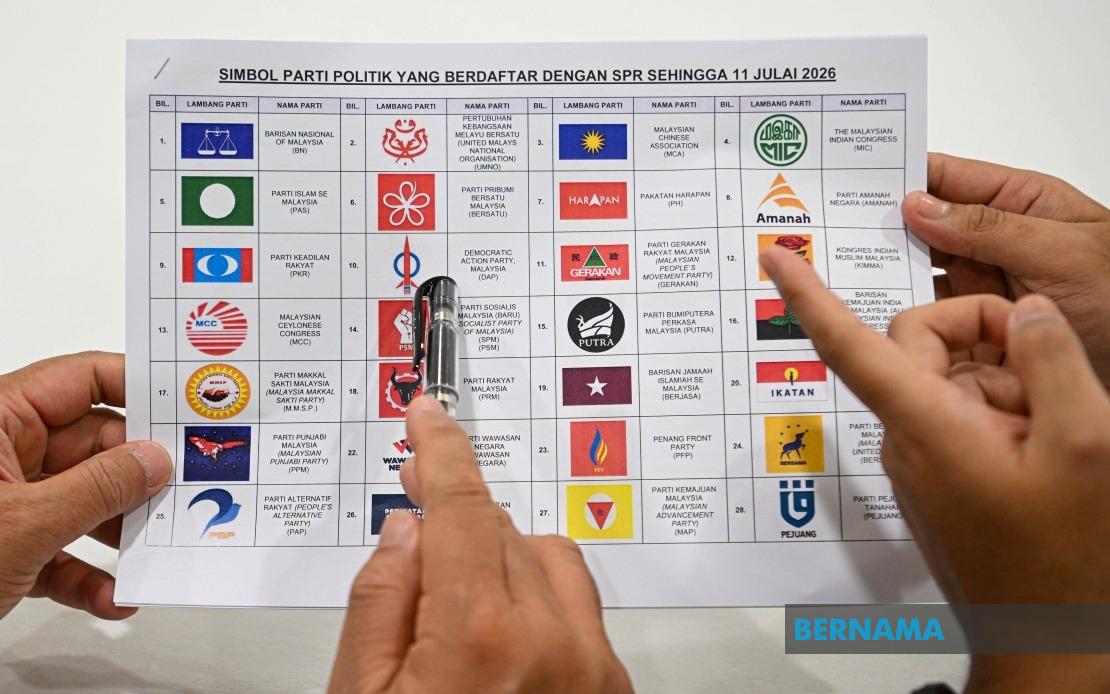
The contest for control of Negeri Sembilan has formally begun, with nomination papers being submitted across eight centres throughout the state from early this morning. The Election Commission opened its doors at 9 am in Seremban and other locations, with prospective candidates given until 10 am to lodge their documentation with the Returning Officer. This marks the official start of what promises to be a significant electoral battle in the state, following the dissolution of the Negeri Sembilan State Legislative Assembly on June 5 with the approval of Tuanku Muhriz Tuanku Munawir, the Yang Dipertuan Besar of Negeri Sembilan.
The numbers suggest a competitive race ahead. The Election Commission reported that 464 nomination forms had been distributed to interested parties, while 70 prospective candidates had already paid their election deposits, signalling their firm intention to contest. Once the Returning Officer validates all submissions and publishes the official list of eligible candidates, the campaign period will commence immediately. Political parties will then have precisely 14 days to convince voters, with the deadline for campaign activities ending at 11.59 pm on July 31.
The three major political coalitions have staked out their territorial claims across the state's 36 seats with markedly different strategies. Pakatan Harapan has taken the aggressive approach, contesting all available seats and positioning itself as a force seeking to expand its influence beyond the 17 seats it secured in the previous 2023 election. Barisan Nasional, which held 14 seats in the last assembly, has adopted a more selective approach by fielding candidates in 25 seats, suggesting a strategic decision to concentrate resources where it believes the party has stronger prospects. Perikatan Nasional, which won five seats previously, will contest 11 seats this time, indicating an expansion of its ambitions in the state.
Beyond the major coalitions, several smaller parties have filed their banners in the race. Bersatu, competing within the Perikatan Nasional framework, will field 24 candidates, including two representatives from Urimai running under the Bersatu logo. Three other parties—the Socialist Party of Malaysia, the Parti Orang Asli Malaysia, and Berjasa—will each put forward a single candidate. This fragmented opposition landscape underscores how Malaysian electoral politics has evolved into a multi-polar competition where regional and ideological variations create complex dynamics in individual states.
The eligible electorate reflects Negeri Sembilan's diverse demographics and institutional structure. Approximately 889,490 voters are registered to participate, comprising 867,151 ordinary civilians, alongside 16,884 military personnel and their spouses, and 5,455 police officers and their families. This composition is notable because it means security sector participation represents a meaningful minority within the overall voting population, potentially influencing outcomes in constituencies where such voters concentrate.
The election calendar itself has been carefully structured by the Election Commission to manage logistics and security. Early voting has been scheduled for July 28, giving those unable to vote on the main day an opportunity to participate beforehand. The actual polling day is set for August 1, providing a week between the close of campaigning and voting to allow tensions to subside and administrative preparations to be finalised. This sequencing is deliberately designed to maintain electoral integrity and public order.
Security preparations underscore the significance of this election for Malaysia's federal authorities. The Negeri Sembilan police have mobilised 4,800 of their own personnel, supplemented by an additional 1,373 officers and personnel seconded from the national headquarters at Bukit Aman. This substantial deployment suggests concerns about maintaining order during nomination day, when large crowds of party supporters are expected to accompany candidates to the eight nomination centres. The presence of competing political machines, each eager to demonstrate grassroots enthusiasm, typically generates heightened tensions during such events.
The Election Commission has issued explicit reminders that all parties must observe established regulations and refrain from any conduct that could provoke disruptions. These warnings reflect lessons learned from previous elections and the commitment to ensure that Malaysia's democratic processes remain orderly and credible. The emphasis on avoiding provocations serves a broader purpose—maintaining public confidence in the integrity of the electoral system itself, which is essential for democratic legitimacy regardless of which party ultimately wins.
Weather conditions could influence voter turnout patterns, though meteorological forecasts suggest manageable conditions overall. The Malaysian Meteorological Department has predicted generally fair weather across most areas during the morning hours, with the exception of Port Dickson and Seremban where rain is anticipated. Afternoon thunderstorms are expected statewide, which could temporarily suppress voting activity during peak afternoon hours on polling day, potentially affecting turnout demographics.
The 2023 result provides important context for understanding the current contest. Pakatan Harapan's 17-seat majority gives it incumbency and the ability to claim credit for state administration over the past year, yet a majority of just one seat represents a precarious mandate. Barisan Nasional's 14 seats position it as the second force, while Perikatan Nasional's five seats remain marginal. These numbers suggest that if any party can consolidate support effectively during this campaign period, the outcome could differ significantly from the previous election. Voters' assessments of state governance performance, federal political developments, and local issues will all factor into decisions that could reshape Negeri Sembilan's political representation.
For Malaysian observers and regional watchers, this election carries significance beyond state boundaries. State elections serve as important indicators of broader political sentiment between federal elections, offering insights into whether ruling coalitions are gaining or losing ground with voters. The campaign period ahead will reveal whether Pakatan Harapan can defend its position, whether Barisan Nasional can make inroads, and whether Perikatan Nasional can expand its footprint in this central Malaysian state.

