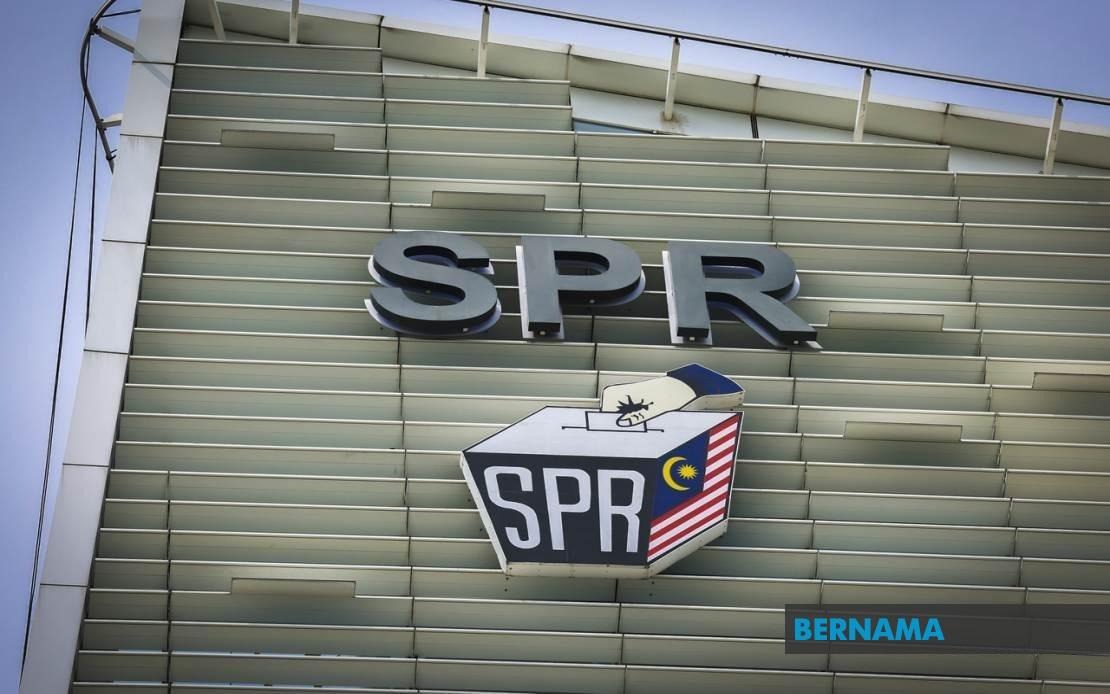
The political battle for Negeri Sembilan enters its critical opening phase tomorrow when the state's electoral commission officially receives nomination papers from prospective candidates seeking to represent the 36 legislative constituencies. This formal ceremony marks the commencement of a fortnight-long campaign that will culminate in polling day on August 1, with early voting opportunities available a few days prior. The nomination centres scattered across the state will operate a narrow window between 9 am and 10 am, during which candidates must submit their documentation to returning officers, who will subsequently announce the final roster of competitors eligible to contest.
Approximately 889,490 registered voters across Negeri Sembilan hold the power to reshape the state's political complexion in this election. This electorate comprises 867,151 ordinary citizens eligible to cast ballots, alongside 16,884 military personnel and their spouses, and 5,455 police personnel and their spouses. The inclusive franchise represents a significant proportion of the state's population and underscores the democratic participation mechanisms embedded within Malaysia's electoral system. For Malaysian observers, the Negeri Sembilan contest serves as a bellwether for broader national political trends, particularly regarding voter sentiment towards the governing coalitions and opposition alternatives.
Pakatan Harapan has committed to fielding candidates across every single constituency, signalling confidence in its electoral prospects and organisational capacity. The coalition's distribution reflects its internal power dynamics: PKR contributes 16 nominees, while the Democratic Action Party provides 11, and the National Trust Party adds nine candidates. This composition demonstrates the coalition's attempt to balance representation among its constituent parties while maintaining electoral competitiveness. Barisan Nasional, the traditional heavyweight of Malaysian politics, has opted for a more selective approach, contesting only 25 of the 36 seats. The coalition's candidate allocation reveals UMNO's dominance with 16 candidates, supplemented by seven from the Malaysian Chinese Association and two from the Malaysian Indian Congress, reflecting the demographic composition of constituencies deemed winnable.
Perikatan Nasional's participation presents a fractured picture of Malaysia's Islamist and non-aligned political forces. The coalition officially contests 11 seats through its component parties, with the Pan-Malaysian Islamic Party fielding five candidates alongside single representatives from Gerakan and the Malaysian Indian People's Party. Notably, Parti Wawasan Negara, a recently incorporated PN member, is making its electoral debut in Negeri Sembilan with four candidates, marking an expansion of PN's political footprint. However, Parti Bersatu's decision to contest independently using its own symbol rather than the PN logo complicates the coalition's unity narrative and signals potential internal tensions that could influence voter perception of Perikatan's coherence.
Several smaller political entities are also participating, seeking to carve out representation or establish themselves as viable political alternatives. Parti Orang Asli Malaysia and Parti Sosialis Malaysia each field single candidates, while Parti Barisan Jemaah Islamiah Se-Malaysia is expected to present seven nominees. Conversely, the Malaysian United Democratic Alliance, Parti Pejuang Tanah Air, and Parti Bersama Malaysia have opted not to contest the election, reflecting either limited organisational capacity or strategic calculations regarding resource allocation. This tapestry of competing parties demonstrates the increasingly fragmented nature of Malaysian electoral politics, where multi-cornered contests have become the norm rather than exception.
The electoral commission has issued procedural guidance emphasising advance verification of nomination documents to streamline the submission process and minimise administrative delays. Candidates are encouraged to coordinate with returning officers at their respective offices or the State Election Office to ensure their paperwork meets all requirements before the critical nomination window opens. Additionally, the commission recommends that candidates settle their election deposits in advance and retain payment receipts as proof of completion, reducing congestion during the hectic morning of nominations. These administrative preparations, while seemingly routine, carry significant consequences for smaller parties with limited bureaucratic resources.
Weather considerations may subtly influence turnout patterns, particularly given Malaysia's tropical climate. The Malaysian Meteorological Department forecasts generally clement conditions across most of Negeri Sembilan on Saturday morning, though Port Dickson and Seremban are expected to experience rainfall. Afternoon thunderstorms are anticipated statewide, a common occurrence during this monsoon season. While weather rarely determines electoral outcomes, heavy precipitation can suppress voter participation among marginal demographics and may provide tactical advantages to campaigns with superior ground mobilisation infrastructure. The timing of afternoon storms assumes particular relevance for early voting operations scheduled for July 28.
The electoral landscape has crystallised markedly in the fortnight preceding nomination day, with major coalitions finalising their strategic candidate placements. The previous 2023 Negeri Sembilan state election saw Pakatan Harapan secure 17 seats, establishing itself as the plurality force in the state legislature, while Barisan Nasional retained 14 seats and Perikatan Nasional captured five. The intervening year has witnessed considerable political manoeuvring, defections, and coalition realignments that may substantially alter these baseline expectations. For Malaysian analysts, the current contest represents an opportunity to assess whether PH's 2023 gains have solidified into durable political support or whether voter preferences have shifted amid debates over governance performance and economic management.
The dissolution of the Negeri Sembilan State Legislative Assembly on June 5 by the Yang Dipertuan Besar Tuanku Muhriz Tuanku Munawir provided the formal legal basis for this election, following constitutional protocols governing state-level elections in Malaysia. The timing and manner of dissolution carry political significance, as they may reflect assessments by incumbent administrations regarding electoral viability. The subsequent 14-day campaign period represents a compressed timeframe for candidates and parties to articulate their platforms, mobilise supporters, and counter opposition messaging. Digital media, grassroots organising, and traditional campaign methods will compete for voter attention during this fortnight.
For Malaysian and Southeast Asian observers, the Negeri Sembilan election carries broader ramifications beyond state boundaries. As Malaysia navigates post-pandemic economic recovery, regional geopolitical tensions, and domestic political consolidation, state-level elections provide crucial data points regarding voter preferences, coalition durability, and emerging political alignments. The performance of Perikatan Nasional in particular merits close attention, given its role as an alternative to long-established governance coalitions and its appeal to specific demographic constituencies. Simultaneously, Pakatan Harapan's ability to maintain and expand its 2023 state-level gains will influence calculations regarding its prospects in future federal elections and its capacity to govern effectively at subnational levels.

