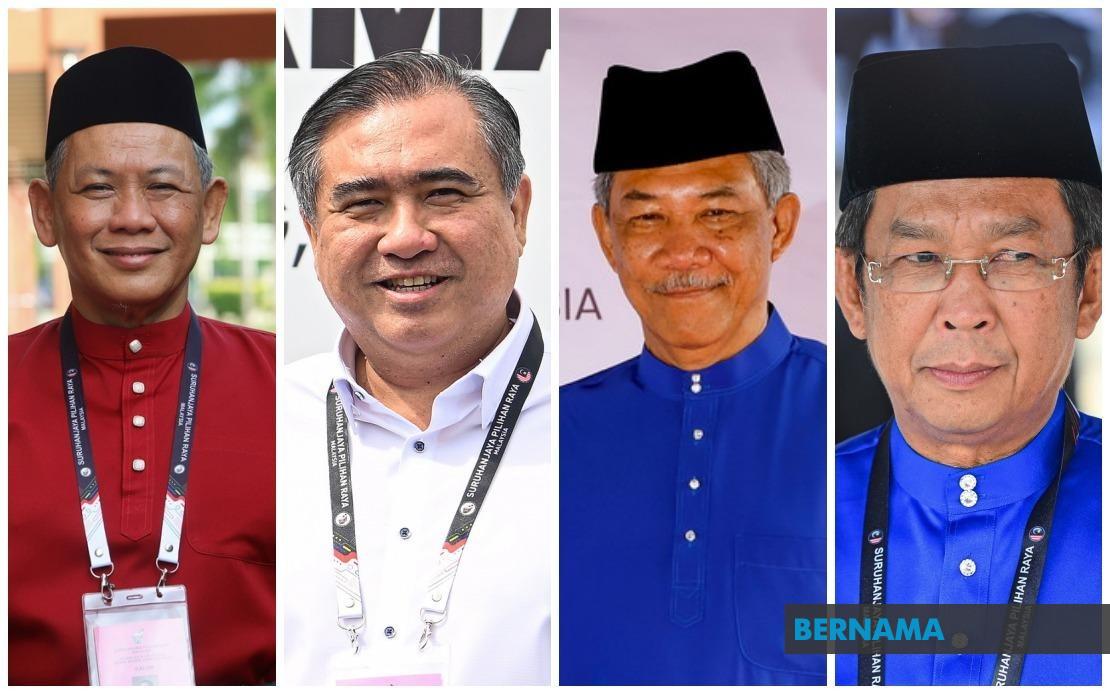
The 16th Negeri Sembilan state election has emerged as a fiercely competitive contest, with established political leaders across all major coalitions facing genuine threats to their parliamentary dominance. The campaign cycle, which officially commenced on July 18 following the close of nomination proceedings, has thrown into sharp relief the vulnerability of even the most entrenched incumbents as voters prepare to cast ballots on August 1.
Among the most closely scrutinised races is the three-way competition for the Linggi seat, where caretaker Menteri Besar Datuk Seri Aminuddin Harun, who doubles as Negeri Sembilan Pakatan Harapan chairman and PKR vice-president, must defend against both incumbent Datuk Mohd Faizal Ramli representing Barisan Nasional and Bersatu's Datuk Zamri Md Said. This contest exemplifies the fractured political environment that has emerged following the dissolution of the previous governing coalition, forcing Aminuddin to navigate a triangular fight that could prove unpredictable for any incumbent lacking overwhelming local support.
The Transport Minister and DAP secretary-general Anthony Loke confronts an equally challenging scenario in the Chennah constituency. Though the seat has remained a DAP fortress since 2013, Loke's candidacy has attracted the attention of Negeri Sembilan MCA Youth chief Siow Kong Choon, fielded by Barisan Nasional. The contest carries symbolic importance given Loke's prominence within the DAP hierarchy and signals that no regional party bastion remains insulated from electoral pressure in the contemporary political climate.
Perhaps the most intriguing matchup involves the Rantau seat, where Datuk Seri Mohamad Hasan, the Foreign Minister, UMNO deputy president, and Barisan Nasional deputy chairman, faces a generational challenge from Pakatan Harapan's Dr Azizul Hakim Mahdi. At seventy years old, Mohamad has represented the constituency continuously since 2004 and remains synonymous with the seat amongst local populations. The emergence of a significantly younger challenger, however, may reshape voter calculus as generational preferences play an increasingly decisive role in Malaysian electoral contests. Mohamad's national profile and ministerial position provide substantial advantages, yet incumbent status offers diminishing protection when facing organised opposition campaigns.
In Pertang, another significant three-cornered contest has attracted widespread attention. Incumbent Datuk Seri Jalaluddin Alias, who has held the Barisan Nasional seat since 2013, faces competition from both Pakatan Harapan's Mohd Umry Abdul Khois and Bersatu's Mohd Faizal Fadli Mohd Idrus. The participation of three distinct political organisations in a single constituency underscores the fragmented electoral landscape that now characterises Negeri Sembilan politics, making seat retention considerably more challenging for incumbents regardless of their political affiliation.
The Nilai constituency presents an even more complex electoral scenario, featuring a five-cornered contest involving J. Arul Kumar, the DAP national deputy chairman and incumbent Pakatan Harapan representative, alongside Datuk Lai Chien Kong from Barisan Nasional, Datuk V. Saravana Kumar representing Bersatu, Berjasa candidate Zamani Ibrahim, and independent contender Omar Mohd Isa. When voter preferences fragment across five distinct options, predictability diminishes substantially, potentially allowing minor candidates or independent operators to become kingmakers through strategic vote distribution.
Another five-cornered battle in Sri Tanjung pits Pakatan Harapan incumbent Dr G. Rajassekaran against Barisan Nasional's A. Achutan, Bersatu newcomer Leevineshwaraan Murugan—at twenty-three years old the youngest candidate in the entire state election—independent candidates Saravanan Arumugam and Islah Wahyudi Zainudin. The emergence of a candidate barely past early adulthood reflects broader demographic shifts and potentially signals growing frustration with established political structures among younger voter cohorts.
The overall electoral configuration for the 16th Negeri Sembilan state election encompasses 103 candidates competing for 36 assembly seats across a remarkably diverse political spectrum. Pakatan Harapan has fielded the maximum permitted slate of thirty-six candidates, while Barisan Nasional has submitted twenty-five nominations, Bersatu twenty-four, and Perikatan Nasional eleven. Additionally, three smaller parties—Barisan Jemaah Islamiah Se-Malaysia, Parti Orang Asli Malaysia, and Parti Sosialis Malaysia—each contest a single seat, while four independent candidates complete the candidate roster. This considerable fragmentation represents a substantial departure from historical patterns when two or three dominant coalitions monopolised electoral competition.
The fourteen-day campaign period, commencing from July 18 and concluding at 11:59 PM on July 31, provides candidates and political organisations limited time to mobilise support and communicate their respective platforms to voters. Early voting opportunities on July 28 precede the general polling day on August 1, enabling voters who anticipate unavailability on the primary election date to participate in the democratic process. The compressed campaign schedule intensifies competitive pressures and rewards campaigns capable of rapid, efficient communication.
For Malaysian political observers, the Negeri Sembilan contest carries implications extending beyond state-level governance. The state's electoral outcomes may signal broader patterns regarding voter receptiveness to incumbent coalitions, the electoral viability of Bersatu as a political force, and the continued competitiveness of Barisan Nasional following substantial losses in previous national elections. The prevalence of multi-cornered contests and the emergence of Bersatu as a substantial political player across numerous constituencies suggest that Malaysian electoral politics has fundamentally transformed from the previously dominant two-coalition paradigm. These developments will almost certainly influence strategic calculations for subsequent national elections and regional contests across Southeast Asia's largest democracy.

