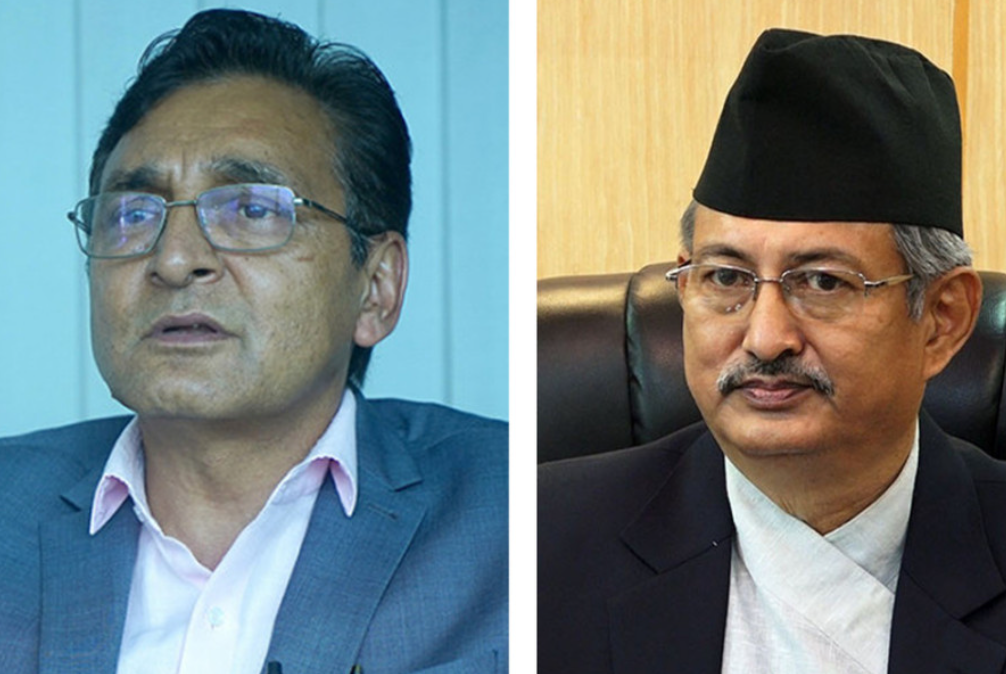
A Kathmandu district court has sentenced two former Nepali government ministers to prison for their roles in a sophisticated refugee fraud scheme, signalling renewed judicial resolve against high-level corruption under the country's fledgling new administration. The convictions underscore growing accountability in a nation where graft allegations have long plagued public institutions, and represent a watershed moment in Nepal's tumultuous political transition. Former Deputy Prime Minister and Energy Minister Top Bahadur Rayamajhi received a four-year sentence on charges of offences against the state, fraud, and involvement in organised crime, while ex-Home Minister Bal Krishna Khand was handed two years imprisonment as an accomplice to the scheme. Both men have historically denied the accusations, and their legal representatives indicated immediate plans to file appeals challenging the verdicts handed down late Tuesday.
The criminal enterprise involved the deliberate falsification of documents to enable Nepali citizens to present themselves as Bhutanese refugees eligible for third-country resettlement, primarily targeting the United States as a destination. The judicial findings represent rare accountability for political figures of ministerial rank in Nepal, where previous administrations frequently escaped meaningful consequences for alleged misconduct. Rayamajhi currently remains in custody following the conviction, whereas Khand was previously granted bail pending trial proceedings. Defence counsel for both men have signalled their intention to challenge the court's findings through the appellate process, with Rayamajhi's lawyer Dharma Raj Regmi asserting that his client held no policy-making authority over refugee affairs and therefore could not have orchestrated such a scheme.
Beyond the two ministers, the court also convicted fourteen additional individuals implicated in the fraud operation, including a high-ranking former home ministry bureaucrat and a prominent figure who previously led Bhutanese refugee community organisations in Nepal. These secondary defendants received sentences stretching up to four years, reflecting the conspiracy's considerable scope and the involvement of individuals across government, civil service, and refugee advocacy sectors. The breadth of convictions demonstrates that the scheme extended well beyond ministerial involvement, drawing in administrators, camp officials, and community leaders who presumably facilitated the document forgery and application processes necessary to deceive American immigration authorities.
The scam remained undetected for years before its exposure in 2023, long after both senior ministers had departed their positions in government. This temporal gap raises questions about institutional capacity for detecting financial crimes and documentary fraud within Nepal's bureaucracy, and highlights the vulnerability of resettlement programmes to manipulation by well-positioned insiders. Authorities have not yet determined whether any Nepali nationals actually succeeded in reaching the United States under false Bhutanese refugee status, leaving ambiguity about the scheme's practical success rate versus the number of attempted fraudulent applications.
The refugee context underlying this crime reflects decades of regional instability and humanitarian displacement. Since the early 1990s, approximately 120,000 Bhutanese nationals of Nepali ethnic origin have fled Bhutan seeking refuge in Nepal, driven by political restrictions and discrimination within their Buddhist-majority homeland of fewer than 800,000 people. The exodus represents one of Asia's longest-running displacement crises, with displaced communities languishing in camps across eastern Nepal for generations. Despite repeated diplomatic efforts, Bhutan and Nepal have never reached agreement on repatriation terms, effectively cementing the refugees' exile status.
To manage this impasse, the international community established a third-country resettlement programme offering permanent relocation to Western nations willing to accept Bhutanese refugees. The United States has absorbed approximately 100,000 Nepali-origin Bhutanese refugees since the programme's inception, making it by far the largest recipient country. Canada and Australia have also accepted substantial numbers, while nearly 113,000 people in total have been successfully resettled globally. Yet several thousand refugees persist in Nepali camps, refusing resettlement offers and maintaining stated intentions to eventually return to Bhutan, effectively freezing their status in limbo indefinitely.
The refugee fraud scheme exploited the legitimacy and scale of this established resettlement machinery, suggesting how even international humanitarian operations can become targets for corruption and document manipulation. By positioning Nepali nationals as Bhutanese refugees entitled to resettlement assistance, conspirators bypassed standard immigration screening procedures that would have disqualified fraudulent applicants. The discovery of this breach prompted soul-searching within resettlement programme administrators regarding document verification protocols and the susceptibility of paper-based or inadequately digitised refugee identification systems to forgery.
Nepals broader political context frames these convictions within a dramatic generational shift toward anti-corruption governance. Youth-led anti-corruption protests in September 2023 culminated in 76 deaths, forcing the collapse of the previous government and catalysing the electoral ascendancy of a new administration fronted by 36-year-old Balendra Shah, a former rapper-turned-politician representing Gen Z aspirations for institutional reform. Shah's government explicitly campaigned on pledges to prosecute corruption within former administrations and rebuild public faith in state institutions decimated by decades of graft and cronyism. The minister convictions validate this mandate for accountability, though opponents note that selective prosecution of only certain previous administrations raises questions about equitable application of anti-corruption measures.
These judicial actions carry particular resonance across South Asia, where refugee and resettlement fraud schemes have repeatedly emerged as vehicles for elite corruption. The Nepali case demonstrates how politically connected individuals can weaponise humanitarian systems designed to protect vulnerable populations, and underscores the need for robust international coordination on refugee documentation standards. For Malaysia, which hosts significant refugee populations and participates in regional resettlement discussions, the Nepali precedent offers cautionary lessons regarding the institutional vulnerabilities that characterise developing-world refugee management systems and the importance of comprehensive document authentication in protecting programme integrity.

