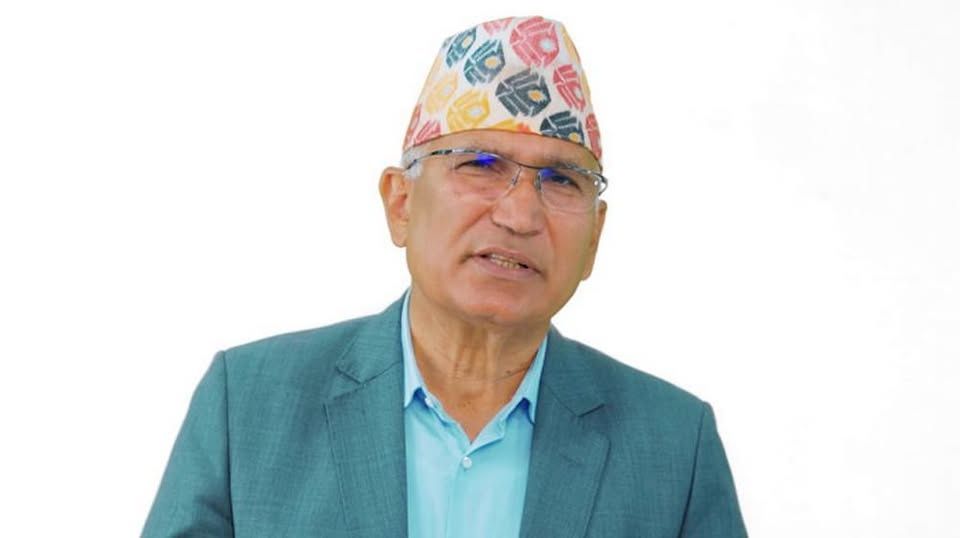
Nepal's police have arrested Bishnu Paudel, the country's former finance minister and vice-chair of the Communist CPN-UML party, on suspicion of involvement in money laundering, authorities confirmed on Tuesday. The arrest on Monday represents the latest in a series of prosecutions targeting senior officials from the previous government, which was ousted following widespread anti-corruption demonstrations that swept through the nation in 2025. Nepal Police spokesman Abhi Narayan Kafle stated that the department would conduct a full investigation into Paudel's alleged financial crimes.
Paudel held significant positions under former Prime Minister KP Sharma Oli, whose administration fell from power during the tumultuous September uprising. The ousted leader and his allies have since faced considerable legal pressure from the new government led by Balendra Shah, a musician-turned-politician who secured election in March with a mandate to tackle endemic corruption. The pattern of arrests has sparked fierce debate within Nepal's political establishment about the motivations and fairness of the ongoing prosecutions, with opposition figures questioning whether legitimate anti-graft efforts are being weaponized for political advantage.
The CPN-UML party has characterised the arrest as a calculated political manoeuvre. Oli himself, who lost his parliamentary seat to Shah, condemned the detention as a "political stunt" and levelled accusations of authoritarian governance against the current administration. Party publicity chief Niraj Acharya struck a more measured tone while remaining critical, pledging that the CPN-UML would respect legal proceedings even as he highlighted what the party views as discriminatory treatment by Shah's government. These statements reflect the deep partisan divisions that continue to define Nepali politics following the tumultuous transition of power.
The broader context for Paudel's arrest extends back to the violent crackdowns that accompanied the 2025 protests. Oli and his former interior minister Ramesh Lekhak were themselves taken into custody in March, merely one day after Shah assumed office, facing questioning regarding their alleged responsibility for the fatal suppression of demonstrations. That operation resulted in at least 76 deaths and more than 2,500 injuries across two days of violence. Although the two former officials were released after approximately two weeks in detention, neither was formally charged, and both have consistently denied involvement in ordering or condoning the violent response to protesters.
The original disturbances that triggered this chain of events began relatively modestly as demonstrations against a temporary ban on social media platforms. However, public grievances rapidly expanded beyond this single issue to encompass widespread frustration with systemic corruption and economic stagnation. The protests became a flashpoint for accumulated resentment against Nepal's political establishment, ultimately forcing the collapse of Oli's government and creating space for the electoral triumph of Shah's reformist platform.
For Malaysian and broader Southeast Asian observers, Nepal's experience underscores the perennial tension between accountability and political vindictiveness that characterises post-conflict transitions throughout the region. The question of whether prosecutions represent genuine anti-corruption efforts or weaponised legal mechanisms remains contested and difficult to resolve objectively. This ambiguity resonates across South and Southeast Asia, where multiple countries have grappled with similar dilemmas when managing the aftermath of political upheaval and demands for justice.
Beyond the high-profile arrest of Paudel, Nepal's anti-corruption apparatus has expanded its reach to encompass additional cases involving lower-ranking officials. The Commission for Investigation of Abuse of Authority has initiated proceedings against sixteen individuals, including the chief of the passport department, in connection with an alleged embezzlement scheme valued at approximately $66 million. This case specifically concerns fraudulent procurement practices related to electronic passport systems, according to commission spokesman Suresh Neupane. The scope of these investigations suggests that Shah's government is pursuing a comprehensive cleansing of corrupt elements across multiple bureaucratic levels and agencies.
The scale and intensity of anti-corruption activity under Shah's administration contrasts sharply with the inaction that characterised previous governments. Critics argue that this contrast partly reflects genuine reform sentiment but also potentially reflects the new administration's eagerness to consolidate political dominance by removing potential rivals and critics from positions of influence. The challenge facing Nepal's institutions lies in maintaining public confidence in the legitimacy of these prosecutions while avoiding the appearance of selective enforcement that benefits the ruling coalition at the expense of genuine accountability.
For Nepal's economy and international standing, the corruption prosecutions carry significant implications. Foreign investors and development partners have consistently identified graft and weak governance as major obstacles to sustainable growth. A credible anti-corruption drive could theoretically improve investor confidence and facilitate better access to development financing. However, if prosecutions are perceived as politically motivated, the opposite effect may occur, with international observers becoming reluctant to provide support to a government viewed as instrumentalising the justice system for factional advantage.
The coming months will prove crucial in determining whether Nepal's anti-corruption campaign achieves genuine institutional reform or devolves into a cycle of recrimination and revenge politics. The test will lie in whether officials from Shah's own coalition face similar scrutiny when evidence of wrongdoing emerges, or whether protection from prosecution becomes an implicit privilege of government membership. This standard will substantially influence both Nepal's democratic trajectory and the confidence of neighbouring states in Kathmandu's commitment to genuine institutional transformation.

