Bishnu Prasad Paudel, who previously held the position of finance minister in Nepal, was taken into custody late Monday evening following accusations of money laundering, according to statements from Nepal's police force. The arrest represents a significant development in what appears to be an expanding investigation into financial irregularities allegedly committed under earlier governments.
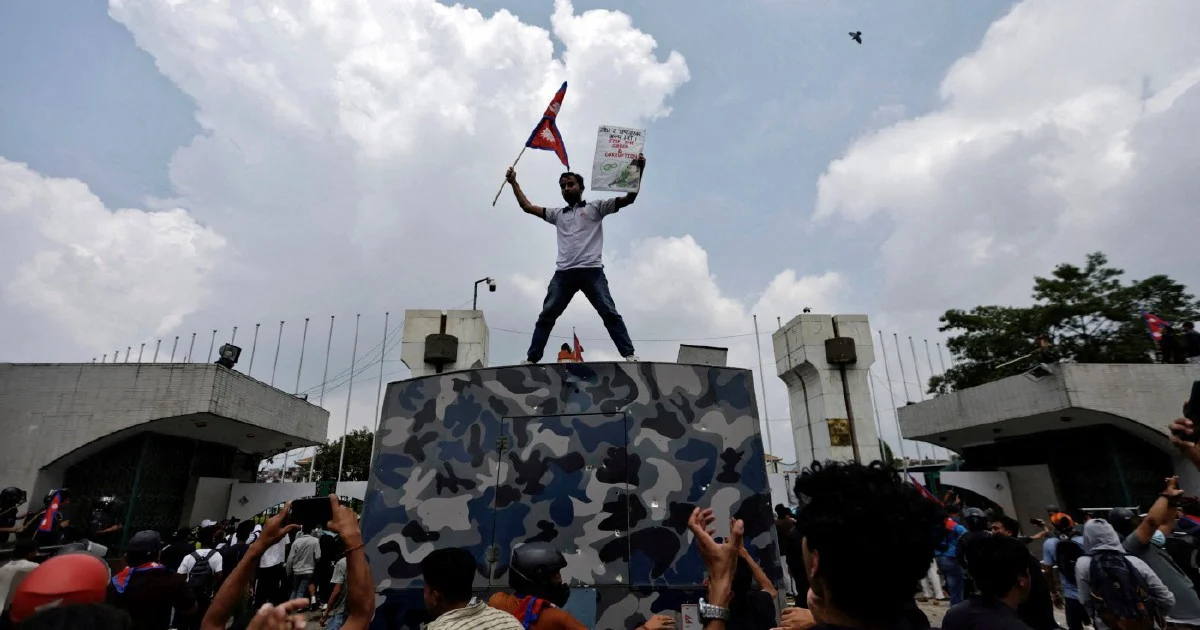
The detention of Paudel comes as Nepal's administration, notably backed by a generation of younger politicians, has demonstrated a stronger commitment to pursuing high-profile corruption cases. This shift in approach marks a departure from previous patterns where such investigations often stalled or were shelved, suggesting that anti-corruption efforts may now carry genuine political will at the highest levels of government.
Money laundering cases involving former government officials are particularly sensitive in Nepal's political landscape, where such allegations frequently intersect with broader questions about the legitimacy of wealth accumulated during periods of state office. The investigation into Paudel will likely draw significant public attention given his previously prominent role in managing the nation's fiscal affairs.
For Malaysia and other Southeast Asian nations, Nepal's willingness to pursue sitting officials—or those recently in power—offers an instructive comparison. Many observers in the region have noted that anti-corruption campaigns sometimes lack follow-through when they involve politically connected individuals. Nepal's actions suggest that generational shifts in political leadership can occasionally translate into more rigorous enforcement.
The timing of such arrests often carries political significance in South Asian democracies. By focusing prosecutorial resources on predecessors' alleged misdeeds, new administrations can simultaneously address public demands for accountability while potentially consolidating power. The effectiveness of these campaigns, however, depends heavily on whether investigations proceed independently or become instruments of political vendetta.
Bishnu Prasad Paudel's previous tenure as finance minister placed him at the centre of government financial management and procurement decisions. If substantiated, money laundering charges would suggest the systematic movement of potentially illegally obtained funds through financial channels—a practice that typically requires sophistication and knowledge of banking systems that someone in his position might possess.
Nepal's investigative capacity for such complex financial crimes has historically been uneven. Money laundering cases require sustained technical expertise, international cooperation, and resistance to political pressure. The success of investigations into figures of Paudel's stature will therefore serve as an important gauge of whether institutional safeguards have genuinely strengthened under the new administration.
The broader anti-corruption campaign targeting previous governments reflects public frustration with pervasive allegations that officials enriched themselves improperly during periods of state service. Such sentiments exist across South and Southeast Asia, where voters frequently cite corruption as a leading concern. In Nepal's case, the willingness of Gen Z-influenced leadership to act on these grievances may have partly contributed to their electoral success.
International observers and development agencies have often pressed Nepal to strengthen its institutional mechanisms for combating financial crime. Money laundering investigations that are properly conducted and result in convictions could enhance the country's standing with international anti-corruption bodies and potentially improve its overall governance ratings, though perceptions of selective prosecution would damage such efforts.
The arrest also raises questions about asset recovery. If Paudel is convicted of laundering ill-gotten gains, Nepali authorities would have grounds to seek restitution or seizure of property and wealth derived from such activities. This possibility carries significant implications for victims of any schemes that may have been funded with laundered money.
Regional security analysts note that money laundering cases in South Asia sometimes reveal connections to transnational criminal networks or funding flows. Information uncovered during investigations into Paudel's financial activities could potentially illuminate broader illicit networks operating across Nepal, India, and beyond, making such cases valuable beyond the immediate prosecution of the accused individual.
The political dimensions of this arrest cannot be entirely separated from its legal aspects. Opposition parties may challenge whether investigations are genuinely impartial or represent selective targeting of their members while ignoring alleged violations by current officeholders. The independence with which courts handle such cases will ultimately determine whether the anti-corruption campaign achieves genuine legitimacy or is perceived as a tool for eliminating political opposition.

