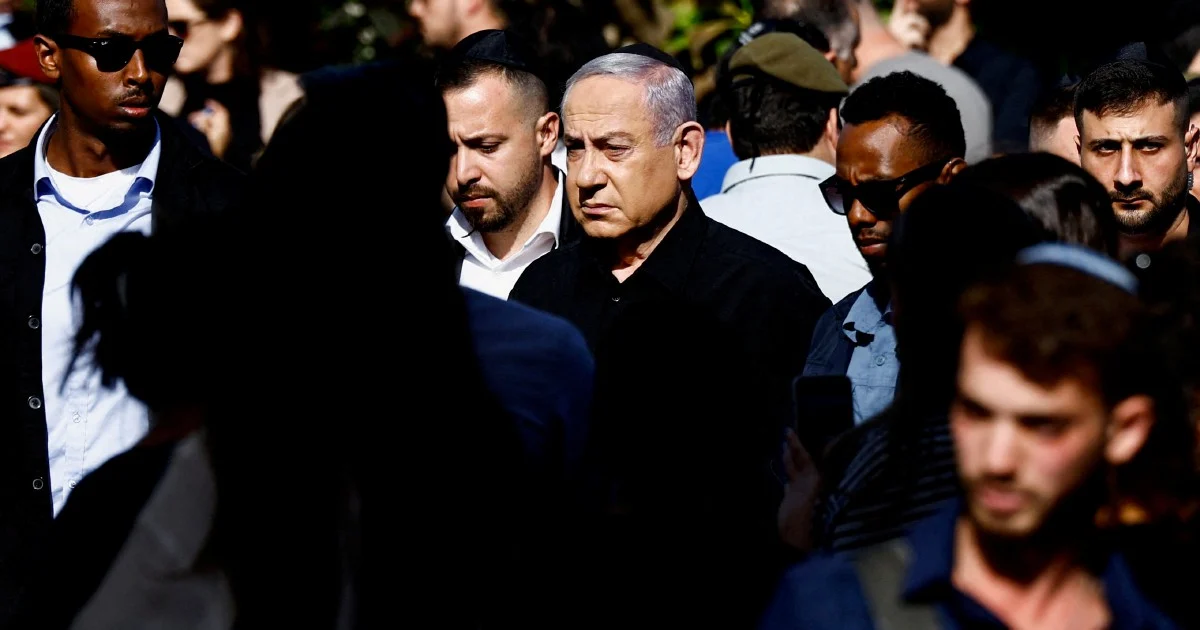
Israeli Prime Minister Benjamin Netanyahu has wrapped up his court testimony in multiple corruption cases, according to a justice ministry official who confirmed the development to AFP on Wednesday. The conclusion of Netanyahu's testimony marks a significant procedural milestone in the long-running legal proceedings that have shadowed his tenure as the country's longest-serving leader. This testimony phase closes a chapter in trials that have dominated Israeli legal and political discourse for several years, though the judicial process itself will continue with verdicts and further proceedings still pending.
The timing of Netanyahu's testimony completion arrives amid heightened regional tensions surrounding a nuclear agreement between the United States and Iran, a pact that has generated considerable apprehension in Israel about its strategic implications. Israeli officials and security analysts have largely characterized the agreement as problematic for the country's security positioning, particularly given Iran's historical regional activities and Israel's longstanding concerns about nuclear proliferation in the Middle East. The convergence of domestic legal challenges and foreign policy crises underscores the multifaceted pressures facing Netanyahu's administration during this particularly complex period.
Netanyahu faces charges spanning financial misconduct, bribery, and fraud across three separate indictments. The most serious allegations centre on his conduct in dealings with various business figures and media proprietors, with prosecutors alleging that Netanyahu received improper gifts and luxuries in exchange for political favours. These cases represent an unprecedented legal juncture in Israeli history, as no previous sitting prime minister has stood trial on such charges while remaining in office. The protracted nature of these proceedings has raised significant questions about governance, institutional independence, and the balance between executive authority and judicial oversight.
The conclusion of Netanyahu's direct testimony suggests the trial is advancing toward more substantive phases where the court will weigh the evidence presented and the credibility of various witness accounts. The justice system's handling of these cases has broader implications for Israeli democracy and the rule of law, establishing precedents for how the country's institutions respond when senior officials face serious criminal allegations. International observers have monitored these proceedings closely, viewing them as a test of institutional resilience in a mature democracy.
For Malaysian readers and the Southeast Asian region more broadly, Netanyahu's legal troubles carry indirect significance. The internal preoccupation with corruption proceedings may influence Israel's foreign policy focus and diplomatic bandwidth during a period when Middle Eastern tensions already run high. Israel's responses to regional security challenges, including those affecting maritime trade routes and energy security in the Indian Ocean and beyond, could be shaped by leadership distraction or political instability at home. Understanding these dynamics helps contextualise broader geopolitical developments affecting Asia-Pacific interests.
The US-Iran agreement that Netanyahu's government views with considerable alarm represents a fundamental divergence between Israeli and American strategic assessment at this moment. Israel has consistently argued that the agreement inadequately constrains Iranian nuclear ambitions and overlooks troubling Iranian conduct in regional proxy activities. This disagreement reflects deeper tensions within the Western alliance structure that have ramifications far beyond the immediate Middle Eastern context, potentially affecting international law, nonproliferation frameworks, and diplomatic credibility that extend to Asia.
Netanyahu's position as a consistently hawkish voice on Iranian matters has shaped Israeli security doctrine for decades. His willingness to publicly challenge American diplomatic initiatives, even from fellow ally nations, demonstrates the strength of his conviction regarding Iranian threats but also highlights domestic political calculations in Israeli society where security concerns command particular salience. The combination of his corruption trials and his foreign policy challenges creates a complex political environment where Netanyahu must simultaneously defend his legal position and articulate a coherent security strategy.
The corruption trials themselves, regardless of their eventual outcomes, have already exerted substantial influence on Israeli politics and governance. The extended court proceedings have consumed significant political capital, media attention, and public discourse, potentially diminishing governmental effectiveness on other policy priorities. The trials have also shaped coalition dynamics within the Israeli parliament, as various political actors calibrate their relationships based on perceptions of Netanyahu's legal jeopardy and political durability.
As the testimony phase concludes, the trials enter a period where judges will deliberate on the evidence presented. The verdicts, whenever they arrive, will carry profound implications not merely for Netanyahu personally but for Israeli society's assessment of its political leadership, institutional integrity, and democratic processes. The international dimension of these proceedings underscores how domestic legal developments in significant regional powers carry implications extending well beyond national borders, affecting strategic calculations and policy frameworks throughout Asia-Pacific contexts where security and stability remain paramount concerns.

