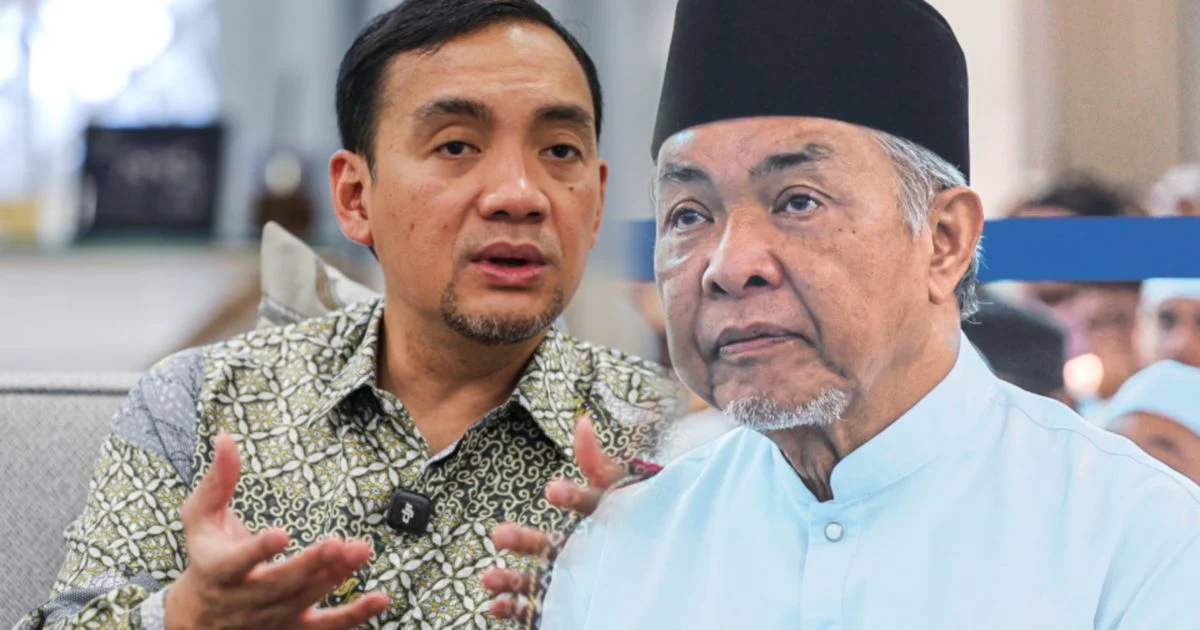
Deputy Prime Minister Datuk Seri Zahid Hamidi has clarified that caretaker Johor Menteri Besar Datuk Onn Hafiz Ghazi faces no official restrictions preventing him from accessing Federal Land Development Authority (Felda) settlements, seeking to dispel recent rumours that had circulated within political circles in Kuala Lumpur.
The statement represents an effort to manage perceptions around the relationship between the federal government machinery and the Johor state administration during a period of heightened political transition. Felda settlements, which scatter across peninsular Malaysia and house nearly 1 million residents, form a strategically significant electoral constituency and a traditionally important support base for the Barisan Nasional coalition that has governed most of these agricultural communities for decades.
Zahid's clarification arrives amid broader questions about governance during the caretaker administration period, when conventions typically dictate that ministers and chief ministers operate within carefully defined boundaries. The caretaker arrangement, which precedes formal elections, exists to prevent administrative overreach whilst preventing the sitting government from deploying state apparatus for electoral advantage. These constraints have periodically generated tensions between federal authorities and state-level caretaker administrations.
Felda's particular importance to Malaysia's political landscape stems from both its historical significance and contemporary demographic weight. The settlements represent one of the country's most substantial land-settlement initiatives, transforming rural economies across multiple states over half a century. Within these communities, patterns of political allegiance have traditionally favoured the ruling coalition, though recent electoral cycles have demonstrated increasing volatility as younger generations exhibit more independent voting behaviours.
The timing of Zahid's statement suggests officials were responding to concerns that Onn Hafiz's status as caretaker might be exploited to justify limiting his grassroots engagement during the interregnum period. Such restrictions would theoretically prevent the sitting state leadership from mobilising administrative advantages in preparation for the forthcoming electoral contest. By explicitly rejecting the existence of any such directive, Zahid has effectively granted institutional legitimacy to Onn Hafiz's continued political activities within these communities.
Onn Hafiz's position as caretaker Menteri Besar carries particular significance given Johor's size and economic importance within Malaysia's federal framework. The state consistently contributes substantially to national gross domestic product and commands considerable electoral mathematics within any coalition-building exercise following general elections. Ensuring that state-level leadership maintains functional access to constituent communities during the caretaker period therefore carries implications extending beyond Johor's borders.
Felda communities themselves maintain distinctive political characteristics that differ markedly from urban or non-settled rural constituencies. Residents typically demonstrate strong interest in development outcomes tied to commodity pricing, particularly palm oil market fluctuations, and agricultural extension services. These concrete economic concerns often override broader partisan messaging, making direct engagement with state leadership particularly consequential during election cycles.
The clarification may also reflect recognition that restricting Onn Hafiz's Felda access would have generated significant political complications for the federal coalition. Any perception that Putrajaya was constraining the Johor administration's normal functions could alienate settled communities and create damaging narratives about federal overreach during politically sensitive periods. Such perceptions prove particularly hazardous when Johor remains demographically significant and historically central to Barisan Nasional's electoral calculations.
For Malaysian political observers, Zahid's statement underscores the intricate choreography required to manage caretaker arrangements within a federal system where state-level and national-level political cycles do not necessarily align. The federal government must simultaneously uphold constitutional conventions limiting caretaker powers whilst avoiding actions that appear to weaponise those restrictions against sitting administrations from its own coalition. This balance becomes especially delicate when major economic constituencies and voting blocs concentrate within particular states.
The development also highlights ongoing questions about coordination between federal and state structures within the ruling coalition. While Johor remains under Barisan Nasional control, friction between different layers of government occasionally surfaces, particularly during periods of institutional uncertainty such as caretaker periods. Explicit clarifications addressing hypothetical restrictions therefore serve practical purpose in maintaining functional relationships and preventing misunderstandings that could fragment coalition unity.
Moving forward, Onn Hafiz's unimpeded access to Felda areas positions the Johor administration to maintain constituent engagement during the critical period preceding elections. This access carries ramifications for how development projects, agricultural policy concerns, and economic grievances receive state-level attention within these communities. The clarity provided by Zahid's statement essentially preserves the status quo of normal administrative functioning, allowing settled communities to continue receiving direct engagement from their elected state leadership.
Regional implications extend beyond Johor, as Malaysia's broader commitment to maintaining federal-state coordination during caretaker periods demonstrates institutional resilience. Other states facing interim administrations in coming electoral cycles may look to this precedent when navigating similar questions about appropriate scope of caretaker activities. The principle that functional access to constituent communities represents normal administrative operation, rather than an exploitable loophole, establishes expectations for managing comparable situations.

