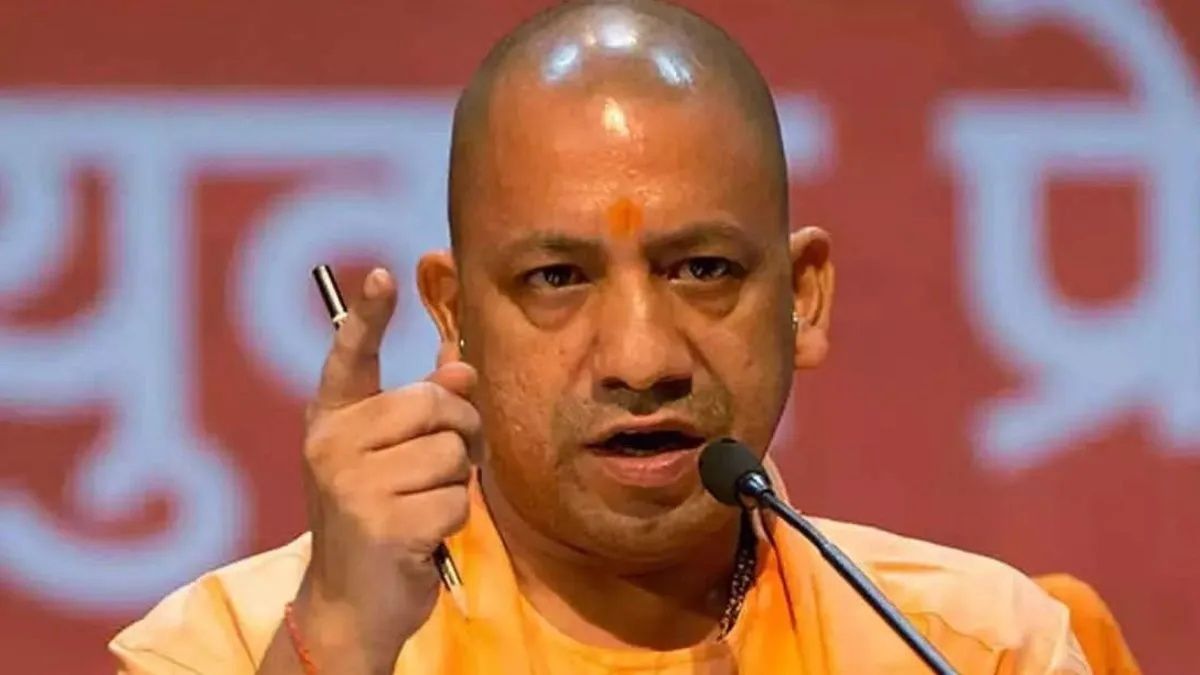
A theft involving donations at the Ram Janmabhoomi temple in Ayodhya has triggered a forceful response from Uttar Pradesh Chief Minister Yogi Adityanath, who has vowed that any attempts to undermine public faith in the sacred institution will face serious legal consequences. Speaking at a public event in Deoria on Friday while inaugurating development projects, the Chief Minister addressed the controversy head-on following the filing of the first formal complaint and the receipt of a special investigation team's report into the matter.
Yogi's remarks centred on the principle that religious sentiments deserve protection from exploitation and misuse. He explained that once the SIT investigation report was received, the government immediately began enforcement action based on its findings. The Chief Minister stated his commitment to separating factual information from deliberate falsehoods, emphasising that individuals found responsible for compromising people's spiritual trust would face appropriate consequences and would not receive preferential treatment.
The Chief Minister framed the incident within broader historical and political contexts. He recalled his recent visit to Ayodhya on June 19, during which he underscored the temple's symbolic importance as a representation of faith for all Indians and as a manifestation of Sanatan Dharma, India's ancient religious and philosophical traditions. He cautioned against making unfounded accusations against Ayodhya and urged people to maintain respect for Lord Ram and the temple's sanctity. His warnings specifically targeted what he characterised as elements with questionable motivations seeking to create doubts about the temple and its management.
In a pointed political critique, Yogi directed accusations at the Indian National Congress and the Samajwadi Party, suggesting that both organisations have historically opposed Hindu religious interests and the Ram Janmabhoomi movement. He alleged that Congress had previously denied the historical existence of Lord Ram and questioned the legitimacy of constructing a temple at the Ayodhya site. The Chief Minister claimed these parties deployed extensive legal opposition to the temple construction, mobilising numerous lawyers to contest the matter through Indian courts for years.
Yogi's rhetoric extended to allegations of communal violence during previous administrations in Uttar Pradesh. He accused the opposition parties of ordering the use of force against citizens participating in religious chanting, of restricting celebrations of Krishna Janmashtami, and of preventing the Kanwar Yatra pilgrimage. He referenced communal incidents during Ram Navami and Durga Puja festivities, and specifically mentioned the Lar riot as historical evidence of what he characterised as deliberate instigation of religious conflict. These references aimed to establish that the current government's focus on faith protection represented a sharp departure from previous governance approaches.
The Chief Minister's accusations also extended to broader governance matters. He contended that Congress had engaged in extensive looting of national resources and set records for dishonesty and financial corruption. Yogi argued that the current double-engine government, referring to the state and central administrations under his and Prime Minister Narendra Modi's respective leadership, has successfully halted the systematic plunder that characterised Samajwadi Party rule in Uttar Pradesh. According to his interpretation, the opposition's current attacks on the government's handling of the temple donation case represent frustration stemming from lost access to power and resources.
Yogi appealed directly to Ram devotees and the general population to exercise restraint and cease making allegations without solid evidence. He stressed that the government's investigative intentions have remained transparent and consistent since the controversy first emerged. The Chief Minister urged citizens not to test the patience of Ram followers and called for an end to what he described as attempts to compromise their spiritual beliefs. His appeal to the opposition framed cooperation with the SIT as the appropriate course of action, requesting that those with concrete evidence present it to investigators rather than engaging in public recrimination.
The Chief Minister's statement established a clear distinction between legitimate investigation and what he viewed as political point-scoring. He argued that when senior government officers are conducting a thorough and independent inquiry, political commentary should pause to allow the investigative process to proceed without external influence or distraction. This positioning attempted to reframe the opposition's critical statements as obstructive rather than as valid scrutiny of government accountability. By granting the investigation institutional independence, Yogi sought to insulate the government from charges of covering up wrongdoing while simultaneously delegitimising external criticism.
For Malaysian and Southeast Asian observers, this incident illuminates how religious institutions in South Asia intersect with politics, governance, and the deployment of faith-based nationalism. The Ram Janmabhoomi temple holds profound symbolic significance within Indian Hindu nationalism, and its institutional management has become intertwined with political legitimacy and state authority. The donation theft case, while potentially a straightforward financial crime, has become a vehicle for broader political contestation about which groups are qualified to protect religious interests and who represents authentic spiritual commitment.
The regional dimension deserves attention as well. Uttar Pradesh's governance approaches under Yogi Adityanath have attracted scrutiny from international observers and neighbouring countries regarding communal harmony and minority protection. While the Chief Minister frames his administration as a protector of faith, critics have raised concerns about the implementation of policies affecting religious minorities. The temple donation controversy thus occurs within a contested governance landscape where different stakeholders assess the government's commitment to religious freedom and institutional integrity differently.
Yogi's appeal to the SIT investigation also reflects institutional realities in Indian governance where special investigation teams typically operate with both genuine investigative authority and potential vulnerability to political influence. The framing of investigation findings as conclusive and as requiring cooperation rather than scrutiny suggests confidence in the process's impartiality, though broader Indian democratic discourse frequently debates the extent to which such bodies maintain independence from government direction.
The Chief Minister's dismissal of opposition parties as opponents of Hindu interests rather than as legitimate political competitors represents a rhetorical strategy that consolidates Hindu-nationalist political identity while simultaneously portraying criticism as inherently anti-religious rather than potentially pro-accountability. This framing has become characteristic of contemporary Indian politics and shapes how such controversies are understood within India and internationally. For the broader region, the Ram Temple donation case demonstrates how religious institutions' management has become inseparable from political legitimacy and state identity in India.

