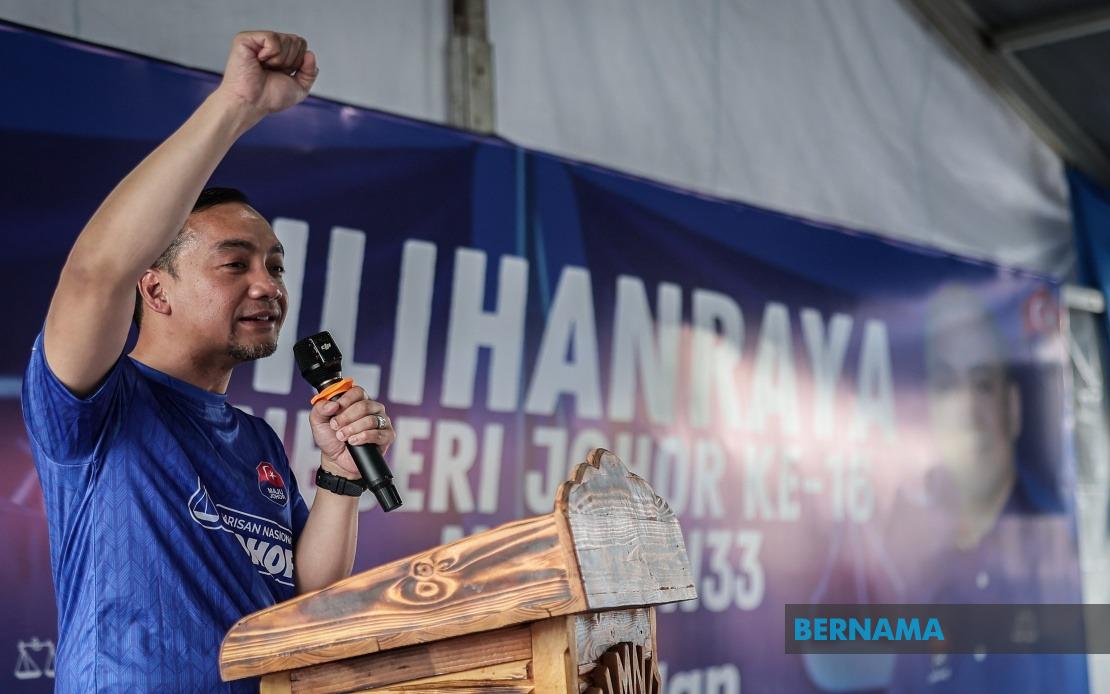
The Barisan Nasional coalition in Johor is banking on strong grassroots support for its Endau candidate Alwiyah Talib to propel its campaign into the final stretch before voters go to the polls on July 11. Johor Menteri Besar Datuk Onn Hafiz Ghazi, speaking at a campaign event in Mersing on June 29, characterised the community response to Talib as "highly encouraging" throughout the campaign period, signalling optimism that the positive reception will translate into electoral gains for the coalition in the constituency.
Alwiyah Talib, known affectionately within her constituency as "Kak Awi", represents a significant political manoeuvre for BN. She previously contested the Endau seat in 2022 as a Perikatan Nasional candidate, when she secured a majority of 3,041 votes in a five-cornered fight. Before that, she held the seat under the BN banner during the 14th General Election before transitioning to Bersatu. Her return to the coalition fold after breaking ranks underscores the fluid nature of Malaysian state-level politics, where electoral calculations and political realignment frequently reshape candidate selection strategies.
Onn Hafiz framed Talib's comeback to BN within the broader narrative of "Rumah Bangsa" — a unity concept championed by UMNO president Datuk Seri Dr Ahmad Zahid Hamidi that emphasises coalition cohesion and inclusive membership. The Menteri Besar's public embrace of a candidate who had previously campaigned for an opposition coalition signals BN's pragmatic approach to consolidating support in marginal constituencies. By highlighting Talib's track record of serving the community regardless of her party affiliation, BN aims to neutralise potential criticism about her party-hopping while emphasising her constituency work.
The timing of this confidence-building messaging carries particular weight in Johor, where state elections traditionally reflect broader national political currents. The 2022 election saw BN substantially recover from its 2018 nadir, and the party is evidently working to maintain that momentum in the 2024 state poll. The positive voter response that Onn Hafiz describes suggests BN's ground game in Endau is functioning effectively, a crucial indicator in Malaysian elections where local-level organising remains decisive.
Beyond Endau, the Menteri Besar also mentioned Tenggaroh, where BN candidate Mohd Youzaimi Yusof is competing. The presence of both candidates at the "Santai ONN X ONN Bersama Menteri Besar Johor" event in Endau demonstrates BN's attempt to coordinate momentum across multiple constituencies, leveraging Onn Hafiz's popularity as a state leader to energise supporters in different areas. This grassroots engagement strategy reflects recognition that state elections in Malaysia are often decided at the community level, where personal connections and local service delivery records matter significantly.
Onn Hafiz's assertion that the party machinery in both constituencies is "fully prepared and committed" points to BN's confidence in its organisational capabilities heading into the election. The coalition's ability to mobilise volunteers, coordinate messaging, and manage logistics becomes increasingly important in the final weeks before polling day. His observation that the campaign has proceeded "smoothly without any untoward incidents" also suggests a stable operational environment, contrasting with some other electoral contests that have been disrupted by disputes or logistical complications.
For the broader Malaysian political landscape, Alwiyah's candidacy in Endau carries implications beyond that single constituency. Her trajectory — from BN to Bersatu and back to BN — reflects the complex dynamics of coalition politics in Malaysia's federal system, where state-level alignments do not always mirror national ones. The decision to field her as a BN candidate signals the coalition's confidence that voters in Endau will prioritise local representation and service delivery over concerns about political consistency, a calculation that previous BN victories suggest is often correct in Malaysian electoral contests.
The Johor state election on July 11 occurs within a context of broader political consolidation. Since BN's recovery in 2022, the coalition has been attempting to reinforce its dominance in traditional strongholds like Johor while competitive seats require focused resource deployment. Endau falls into the latter category, making Talib's demonstrated grassroots support valuable not merely for that one seat but as a bellwether of BN's competitive capacity in marginal constituencies. The voter enthusiasm that Onn Hafiz reports suggests that BN's strategy of fielding proven local representatives, regardless of recent party history, may be yielding dividends.
Technical details of the election process are now locked in place. Early voting is scheduled for July 7, with the main polling day following on July 11. This compressed timeframe means that campaign momentum in the final week becomes crucial — voters' final impressions and the perceived energy levels of competing campaigns can influence turnout and vote choice, particularly among swing voters who remain undecided until the final days. BN's emphasis on positive reception and strong party readiness is designed to create an impression of inevitability and organisational competence.
The Menteri Besar's statement that "Insya-Allah, we pray that this momentum continues right up to polling day" reveals awareness that electoral outcomes, despite apparent advantages, remain contingent on factors beyond immediate campaign control. While BN's leadership exudes confidence in Endau and Tenggaroh, the party understands that complacency has historically cost coalitions and parties dearly in Malaysian elections. The invocation of divine blessing alongside organisational effort reflects the complex interplay of calculation and uncertainty that characterises Malaysian electoral politics.

