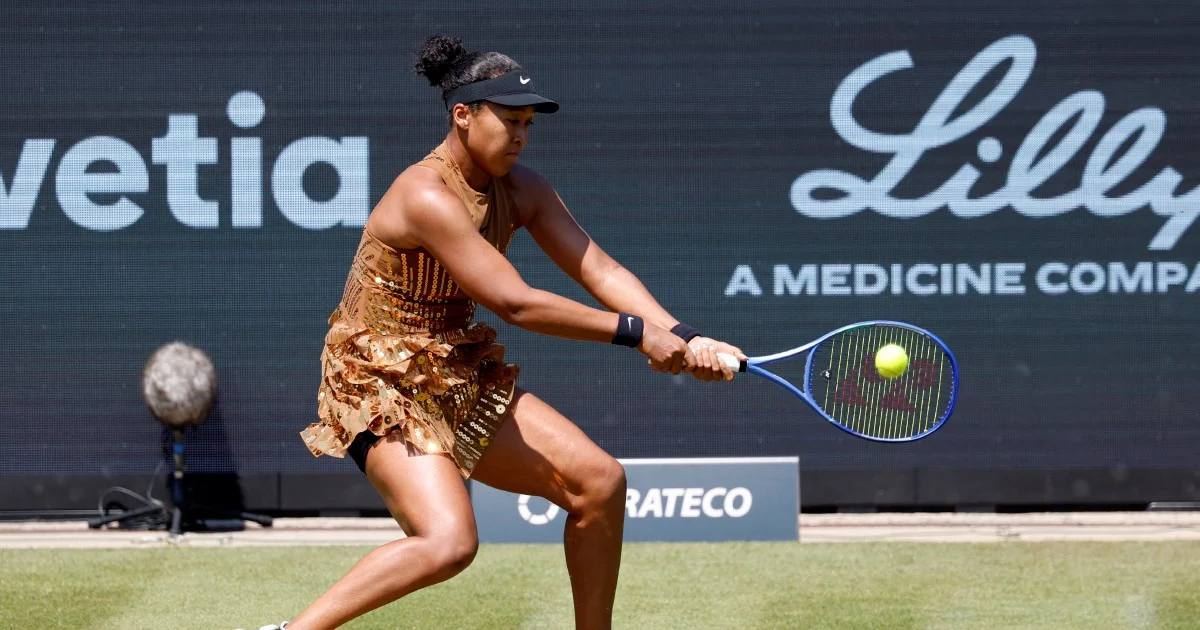
Naomi Osaka has achieved a significant career milestone by reaching her first grass court final, powered through a dominant performance against China's Wang Xinyu at Bad Homburg in Germany. The four-time Grand Slam champion's breakthrough on the grass surface comes as she continues her resurgence on the professional circuit, demonstrating the kind of commanding tennis that has defined her career at major tournaments.
Osaka's victory over Wang marked a convincing display on one of tennis's most demanding surfaces. The Japanese star's power game, typically devastating on hard courts, translated effectively to the grass, where her aggressive approach allowed her to control rallies and dictate play. This breakthrough holds particular significance for Osaka, whose Grand Slam titles have all come on hard courts at the Australian Open and US Open, leaving a notable gap in her major championship resume.
The Bad Homburg tournament, officially known as the Zalando Womens Open and held annually in Germany, serves as important preparation for players heading into Wimbledon. The event has traditionally attracted top-ranked competitors seeking to fine-tune their games on grass before tennis's most prestigious grass court championship. For Osaka, this venue proved the perfect setting to develop her grass court credentials and gain confidence ahead of potential future Wimbledon campaigns.
Wang Xinyu's defeat marked a disappointing exit for the Chinese player, who had been competing well throughout the tournament. Wang has been working to establish herself as a significant force in women's tennis and was aiming for her first WTA final appearance. The loss underscores the vast gulf in experience between a multiple Grand Slam champion and rising players still seeking to break through at the highest levels of professional tennis.
Osaka's grass court progress represents more than just a single tournament achievement. It suggests the former world number one is successfully adapting her game to different surfaces, an essential component of becoming a truly complete player. While her hard court dominance is well-established, winning on grass has historically eluded her, making this final appearance particularly meaningful for her career development and confidence across all surfaces.
The tournament in Bad Homburg has historically served as a launching pad for players preparing for Wimbledon, and Osaka's emergence as a grass court finalist validates her commitment to broadening her game. The grass surface requires different timing, footwork, and tactical approaches compared to the hard courts where Osaka has built her reputation. Her success here demonstrates either natural adaptation or deliberate preparation—likely both—that suggests she could become a serious Wimbledon contender in the coming years.
For Malaysian and Southeast Asian tennis fans, Osaka's achievement is significant as it showcases the evolution of a player who burst onto the scene with remarkable Grand Slam victories before taking time away from the sport for mental health reasons. Her return to top-level competition and this grass court breakthrough represent a comeback narrative that transcends sports, offering broader lessons about resilience and rediscovering form after setbacks.
The implications for women's tennis are notable as well. Osaka's dominance on different surfaces, if sustained, positions her as a threat across the entire professional calendar. Coaches and opponents will need to adjust their approaches to a player who is no longer exclusively dangerous on hard courts. This versatility could extend her competitive window and increase her chances of accumulating additional major championships across various surfaces.
Osaka's path to the final also illustrates the depth of her shot-making and mental fortitude. Reaching finals requires not just winning one match but prevailing through multiple rounds against increasingly strong opposition. Wang represented a serious challenge, yet Osaka's experience and superior ranking allowed her to suppress the threat and advance with authority.
Looking ahead, Osaka now faces a final opponent at Bad Homburg, offering another opportunity to capture a grass court title before the season's major grass court championship. This final will serve as crucial preparation and could significantly boost her confidence heading into summer tournaments. Success at Bad Homburg would mark a statement victory for a player working to restore the championship pedigree that defined her earlier career.
The significance of this milestone cannot be overstated for Osaka personally. Grand Slam champions are ultimately judged by their ability to win across all surfaces and tournament stages. By reaching her first grass court final, Osaka is addressing one of the few remaining gaps in her resume and proving that her reign at the top of women's tennis remains viable despite the challenges she has faced off the court.

