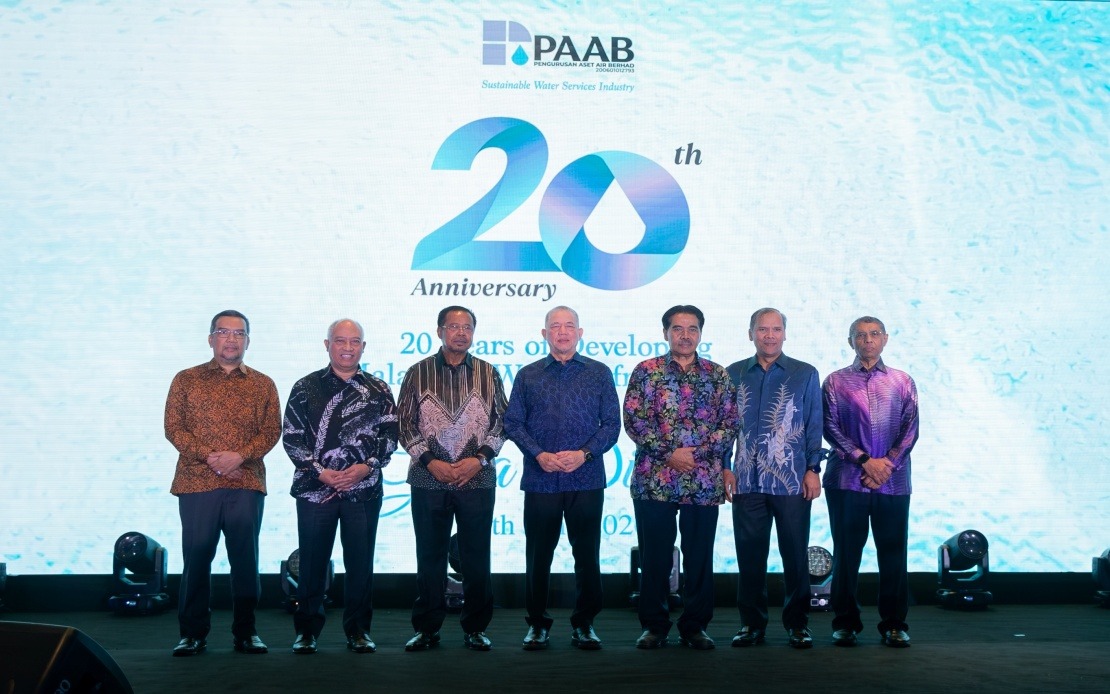
Pengurusan Aset Air Berhad (PAAB), the government-owned water asset management company, has reached a significant milestone with its 20th anniversary, underscoring two decades of strategic work to reshape Malaysia's water services landscape and fortify the nation's water supply infrastructure. Since its establishment on May 5, 2006, the organisation has become instrumental in financing the restructuring of the country's water sector, channelling substantial resources into modernising treatment facilities, storage infrastructure, and distribution networks across the country.
The scale of PAAB's financial commitment reveals the magnitude of transformation underway. The company has financed the assumption of water industry debts totalling RM23.04 billion while simultaneously investing RM23.84 billion in capital expenditure for infrastructure projects. This combined figure of RM46.88 billion positions PAAB as a central pillar of Malaysia's public infrastructure development strategy, demonstrating the government's commitment to addressing long-standing challenges within the water utility sector. The investments span the full spectrum of water services infrastructure, from treatment and storage through to distribution networks serving millions of Malaysians.
Progress on the National Water Services Industry Restructuring Plan has accelerated, with ten states now having formally endorsed the transformation roadmap as of December 2025. This widespread adoption reflects growing recognition among state governments of the necessity for coordinated, systematic reform. The tangible outcomes of this restructuring are becoming visible across the nation: 21 newly established or upgraded water treatment plants now collectively process 2,085 million litres daily, while 42 storage facilities provide buffer capacity of 783 million litres. These investments have been complemented by extensive network modernisation, with 3,263 kilometres of pipeline infrastructure either upgraded or newly installed to reduce leakage and improve supply reliability nationwide.
Deputy Prime Minister Datuk Seri Fadillah Yusof, addressing attendees at PAAB's anniversary celebration, highlighted a persistent challenge that threatens to undermine these substantial infrastructure gains. Non-revenue water, representing water lost through leakage and system inefficiencies before reaching consumers, remains at approximately 40 per cent across Malaysia. This rate indicates that two out of every five litres processed by treatment plants never reaches paying customers or serves intended purposes. Fadillah's emphasis on this problem reflects growing urgency within government circles regarding the need for faster, more aggressive remedial action rather than reliance on long-term strategies extending to 2050.
The urgency surrounding water supply efficiency has acquired new dimensions as Malaysia pursues economic diversification and foreign investment in technology-intensive sectors. Data centres, semiconductor manufacturing facilities, and other high-value industries demand reliable, uninterrupted water supplies alongside stable power. The attraction and retention of such investments increasingly depends on demonstrating infrastructure resilience. Water supply disruptions, whether from leakage-related capacity constraints or seasonal shortages, could jeopardise Malaysia's competitive positioning in regional competition for high-growth industrial sectors. This economic dimension adds weight to calls for accelerating non-revenue water reduction rather than adhering to leisurely timelines.
PAAB chairman Datuk Seri Jaseni Maidinsa outlined the organisation's structured approach to water sector transformation, organised around a four-phase roadmap extending to 2050. The Migration phase (2008–2020) focused on establishing new governance frameworks and transitioning responsibilities. The current Stabilisation phase (2021–2030) concentrates on consolidating gains and improving system performance. Subsequent Consolidation (2031–2040) and Full Cost Recovery (2041–2050) phases envision progressive improvement in financial sustainability and operational efficiency. This structured timeline provides clarity regarding the scale and duration of transformation required, though Fadillah's remarks suggest the actual pace of change must accelerate beyond what current frameworks contemplate.
The distribution of PAAB's RM23.84 billion capital expenditure portfolio reveals the ongoing nature of infrastructure modernisation. Projects already handed over to water operators account for RM8.33 billion of completed work. An additional RM1.84 billion remains under active construction, while RM13.67 billion remains in design and planning phases. This composition indicates that substantial work lies ahead, with nearly 60 per cent of committed capital still in pre-operational stages. The pipeline of projects underscores the multi-year commitment required to modernise infrastructure systems that have accumulated decades of deferred maintenance.
For Malaysian consumers and businesses, the implications of PAAB's two decades of work remain mixed. While infrastructure capacity has expanded significantly and water quality has improved in many areas, the persistence of non-revenue water at 40 per cent suggests that distribution system vulnerabilities continue limiting benefits. In periods of peak demand or during drought conditions, inadequate distribution efficiency can translate into rationing and supply interruptions. This vulnerability particularly affects industrial consumers operating on tight water budgets and residential areas reliant on piped supplies during dry seasons. The government's acknowledgment of the urgency surrounding non-revenue water reduction suggests recognition that current rates are unsustainable.
The restructuring roadmap reflects a commitment to transitioning water services toward full cost recovery, whereby tariffs eventually cover all operational, maintenance, and capital costs. This approach contrasts with historical models where government subsidies masked true infrastructure costs. Achieving full cost recovery by 2050 requires balancing affordability concerns with financial sustainability. Tariff increases will likely accelerate in coming years as water operators move toward cost-reflective pricing. Consumers and industries should anticipate rising water bills even as consumption patterns and efficiency become increasingly important for managing household and business expenditures.
Regional dynamics further underscore PAAB's significance within Southeast Asia's broader water security challenge. Transboundary water resources connect Malaysia with neighbouring countries, making cooperation essential for long-term security. As climate variability intensifies, intra-regional competition for water resources may sharpen. Malaysia's efforts to strengthen domestic water infrastructure and reduce system losses enhance national security while demonstrating commitment to responsible stewardship of shared resources. PAAB's investments therefore contribute not only to domestic well-being but also to regional stability and cooperation.
The momentum established through PAAB's two decades must now accelerate to address non-revenue water and achieve supply resilience meeting 21st-century economic demands. While RM46.88 billion in financing and investment represents substantial progress, the true measure of success lies in reliable, clean water reaching consumers consistently and affordably. Government officials, water utilities, and PAAB leadership recognise that achieving this outcome requires sustained commitment beyond current timelines, with aggressive targets for reducing leakage and modernising ageing infrastructure systems nationwide.

