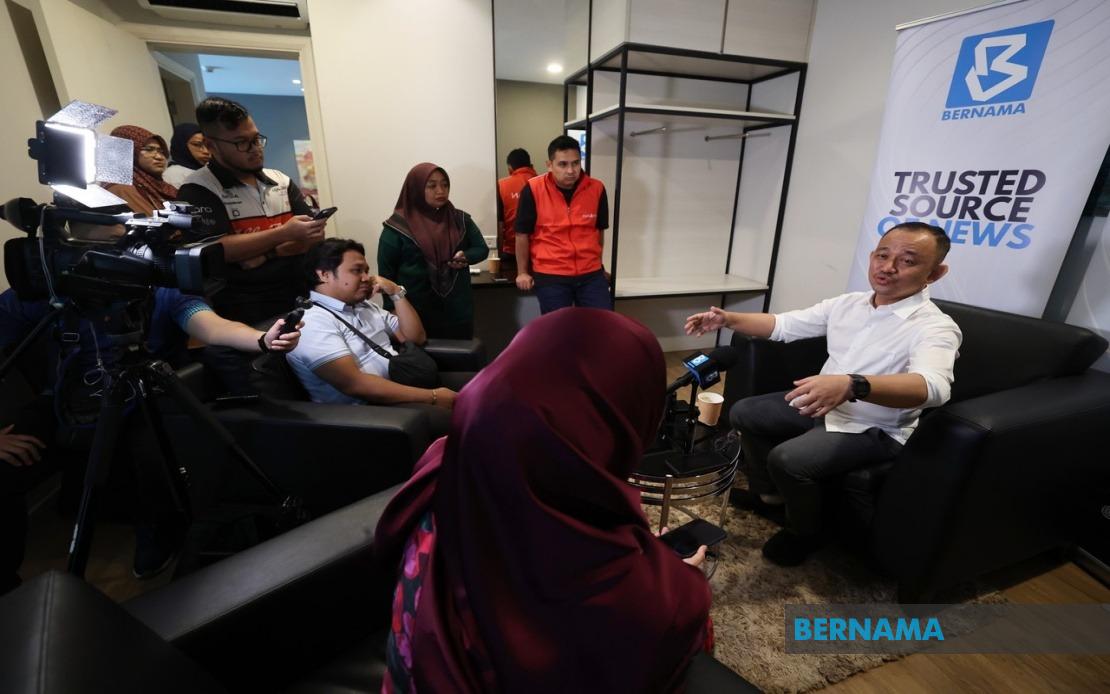
Pakatan Harapan has formally acknowledged the Sultan of Johor's constitutional authority over the appointment of the state's next Menteri Besar, signalling the coalition's willingness to defer the significant political decision to the Palace should it win control of the state government in the upcoming election. Dr Maszlee Malik, the coalition's candidate for the Puteri Wangsa state seat, made this position clear during an exclusive interview conducted in Johor Bahru on June 29, emphasizing that internal party deliberations have not touched on the matter at all.
The clarification comes as social media speculation has swirled around several potential candidates who might lead a PH-controlled administration following the 16th Johor state polls. Despite mounting chatter linking him to the Menteri Besar role, Maszlee deflected attention from individual personalities, insisting that the coalition's focus remains squarely on presenting a unified front to voters rather than jockeying for top positions. This rhetorical pivot reflects broader sensitivities within Malaysian politics regarding the relationship between elected representatives and the traditional monarchy, a balance that has become increasingly delicate in recent years.
Under the State Constitution of Johor, the Sultan retains the formal prerogative to select and appoint the Menteri Besar following an election, though constitutional convention has typically guided this choice towards the leader commanding the largest legislative majority. Maszlee's careful reiteration of this principle underscores PH's desire to avoid friction with the Johor Palace, a consideration that carries weight beyond mere protocol. The state has witnessed significant political turbulence in recent years, and demonstrating respect for institutional boundaries may help rebuild public confidence in democratic processes.
The coalition's deliberate pivot towards emphasizing collective competence rather than individual stars represents a strategic repositioning after years of leadership questions that dogged both federal and state-level PH administrations. By framing the election contest as one where all 56 candidates function as a cohesive team rather than stepping stones to personal advancement, PH aims to project stability and purpose-driven governance. Maszlee's reference to the candidates as "Avengers" underscores a populist appeal designed to resonate with voters concerned less about personalities than about effective service delivery.
Johor's political landscape has shifted considerably since the previous state election, with realignments and defections reshaping traditional voting patterns. The coalition's current posture of transparency regarding the Palace's authority may also serve to neutralize potential ammunition from opposition parties, which might otherwise accuse PH of orchestrating backroom deals or circumventing constitutional norms. By proactively ceding the appointment decision to the Sultan, PH removes a line of attack while simultaneously demonstrating institutional deference.
For Malaysian observers, particularly those from states with similarly vested monarchical authority, Maszlee's statements carry broader implications for how federal coalitions interact with state-level institutions. The federation comprises thirteen state governments, many of which retain significant constitutional powers over matters ranging from land to local governance. How a national coalition manages these federalized relationships will likely influence its credibility and electoral performance across diverse regional contexts. Johor's significance as one of Malaysia's largest and most economically important states makes this election a bellwether for coalition cohesion.
The election is scheduled for July 11, with early voting set for July 7, giving voters roughly two weeks to evaluate the competing visions presented by different political blocs. Both the timing and the campaign dynamics will test whether PH's emphasis on team-based governance resonates with an electorate that has grown increasingly skeptical of political messaging following decades of incumbent rule and more recent experiences with coalition government at the federal level. The party's willingness to surrender control over a critical hiring decision to the monarchy may strike some as pragmatic and others as evasive, depending on individual perspectives regarding power and accountability.
Johor's economic clout and strategic location along the Straits of Malacca give its governance implications that extend beyond state borders. Major infrastructure projects, port operations, and cross-border trade relationships depend significantly on administrative continuity and effective policymaking. Investors and neighbouring Singapore have vested interests in stable, competent administration, making the election outcome relevant to broader regional economic considerations. Maszlee's framing of PH as a team committed to service quality rather than individual aggrandizement may resonate with constituencies concerned about governance standards.
The coalition's careful navigation of the Menteri Besar question also reflects lessons learned from federal-level experiences where leadership transitions and power struggles within PH have sometimes overshadowed policy achievements and legislative work. By establishing clear parameters around decision-making authority and emphasizing collective responsibility, the party signals an intention to operate differently at the state level. Whether this strategic messaging translates into actual operational discipline and unified governance will become apparent in the months following polling day.
Maszlee's insistence that PH has not deliberated the Menteri Besar position internally deserves scrutiny, as most major political coalitions typically prepare contingency plans regarding key ministerial appointments. However, his public statement acknowledges constitutional reality while leaving space for palace discretion, a position that satisfies both constitutional purists and practical political actors. This careful ambiguity may itself represent sophisticated political communication designed to appeal across ideological lines.
The period between now and July 11 will test whether voters prioritize the coalition's pledged governance approach or remain fixated on individual leadership personalities and perceived power dynamics. Historical voting patterns in Johor suggest a complex electorate influenced by local issues, communal considerations, and regional economic conditions alongside national political tides. Maszlee and his PH colleagues will need to convert their talk of teamwork into tangible policy platforms that address these ground-level concerns while maintaining the institutional respect they have publicly promised.

