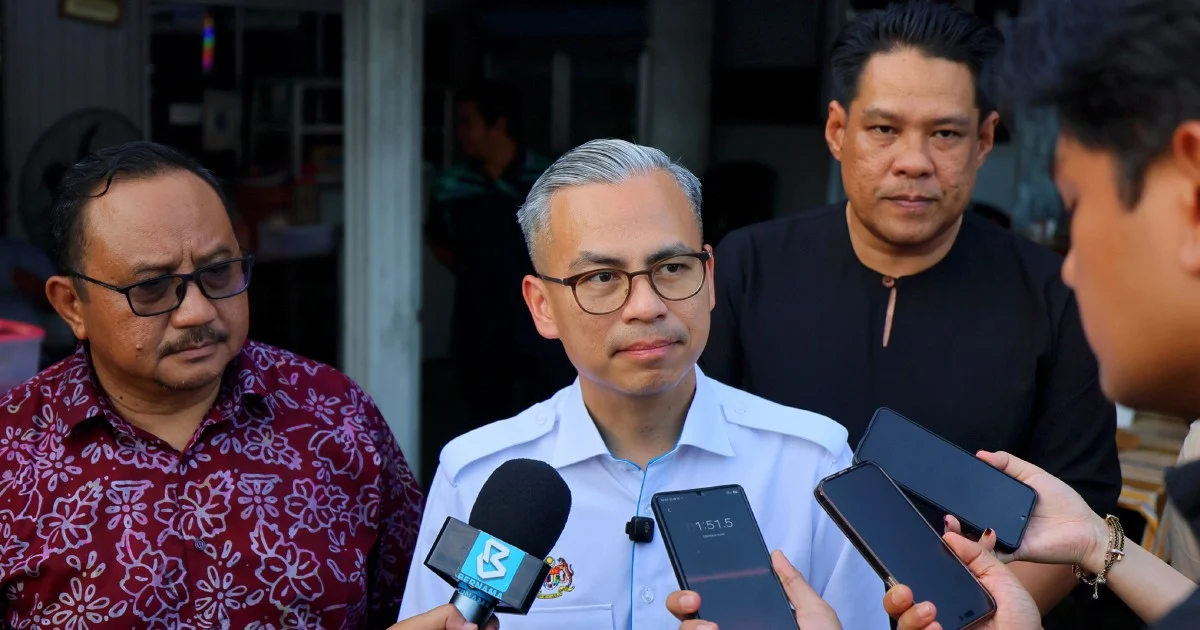
Pakatan Harapan is preparing to contest the forthcoming Johor state election through a carefully integrated approach that leverages both digital platforms and traditional on-the-ground mobilisation, according to a statement made in Batu Pahat. This dual-pronged strategy reflects the coalition's recognition that effective political communication in contemporary Malaysia requires simultaneous presence in online and physical spaces, particularly as voter behaviour increasingly spans both domains.
The strategic pivot toward hybrid campaigning acknowledges several evolving realities in Malaysian electoral politics. Younger voters, particularly in urban centres, consume political messaging primarily through social media platforms, while older populations and rural communities remain more responsive to direct engagement and door-to-door contact. By refusing to favour one approach exclusively, Pakatan Harapan seeks to avoid the fragmentation that has plagued political movements that concentrate resources in a single channel.
Digital-first campaigning offers Pakatan Harapan substantial advantages in Johor, a state with diverse demographics spread across the peninsula's southern region. Online platforms enable rapid dissemination of party policy positions, targeted messaging to specific voter segments, and real-time response to opposition narratives. Social media campaigns can be deployed flexibly and at relatively low cost compared to traditional advertising, freeing resources for deployment elsewhere in the campaign infrastructure.
However, the coalition's parallel commitment to ground operations signals recognition of digital media's limitations in converting passive online engagement into actual electoral support. Physical campaigning—including town halls, meet-and-greet sessions with candidates, and precinct-level voter mobilisation—builds the personal connections that remain decisive in many constituencies. In Johor's smaller towns and rural districts, where community networks exercise powerful influence, tangible party presence matters considerably.
The timing of this announcement reflects the intensifying pace of pre-election activity in Johor. State elections typically generate extended campaigning periods allowing parties to test messages, refine positioning, and build organisational momentum. Pakatan Harapan's early disclosure of campaign methodology signals confidence in the strategy's effectiveness and demonstrates organisational readiness to commence substantial political activity.
This integrated approach carries particular significance for Johor, which remains strategically vital to Malaysian opposition politics. The state's voting patterns have shifted unpredictably in recent years, making it a genuine contested space rather than a coalition stronghold. Pakatan Harapan's performance in Johor influences national political calculations given the state's parliamentary seat count and symbolic weight as home to substantial urban populations alongside traditionally rural constituencies.
The hybrid strategy also reflects pragmatic lessons from recent electoral cycles elsewhere in Malaysia. Campaign experiences from federal elections and other state contests have demonstrated that single-track approaches frequently underperform. Candidates who excel at digital communication sometimes falter in direct voter interaction, while those skilled in ground mobilisation may struggle to navigate social media environments effectively. Integrating both approaches allows Pakatan Harapan to leverage diverse skill sets within its membership and campaign apparatus.
Resource allocation will prove crucial to executing this dual strategy successfully. Campaigning requires finite budgets of both money and volunteer energy. Balancing investment between digital marketing professionals, social media content creation, and traditional ground organising demands careful planning. Miscalibration—overinvesting in either domain—could squander resources without proportional electoral returns.
From a regional perspective, Pakatan Harapan's approach offers insights into Southeast Asian opposition politics more broadly. As digital connectivity expands across the region, political movements everywhere face analogous questions about integrating old and new campaign methodologies. Malaysia's relatively mature digital ecosystem and competitive political environment make developments here noteworthy for opposition movements in neighbouring democracies wrestling with similar strategic choices.
The coalition's willingness to maintain robust ground operations despite substantial digital capabilities also carries implicit messaging about party character. By rejecting a tech-centric posture, Pakatan Harapan presents itself as accessible and rooted in communities, rather than distant or reliant on sophisticated but impersonal automated systems. This positioning resonates with Malaysian voters who frequently express concerns about politicians' disconnection from grassroots constituencies.
Success will ultimately depend on execution quality and message consistency across platforms. Digital campaigns and ground operations must reinforce rather than contradict one another. Voters encountering Pakatan Harapan through social media should encounter the same policy priorities, candidate quality, and organisational professionalism when encountering the party through direct contact. This alignment challenge often proves more demanding than adopting the strategy conceptually.
Looking ahead, Pakatan Harapan's dual-track approach in Johor will likely influence campaign methodologies throughout Malaysian politics. If the coalition achieves strong electoral results in the state, competing parties will naturally adopt similar strategies. The coming months will reveal whether this integration of digital and traditional campaigning represents the future of competitive Malaysian electoral politics.

