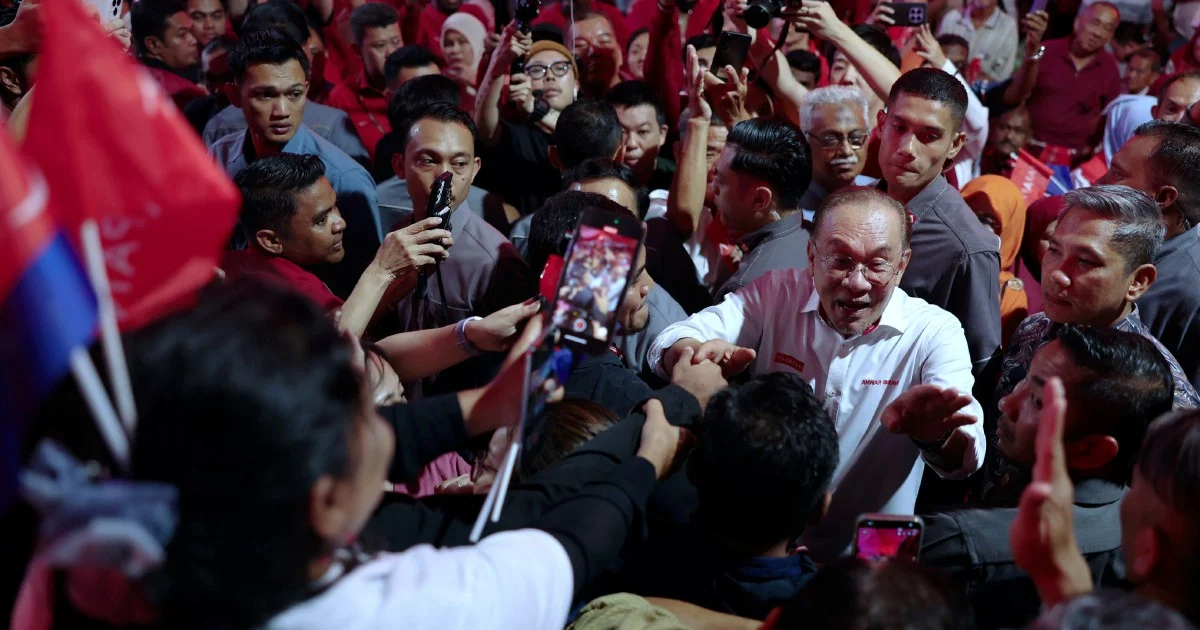
Pakatan Harapan has officially rolled out its complete roster of 56 candidates competing for state assembly seats in the Johor election scheduled for July 11, marking a critical juncture in the coalition's efforts to consolidate power in one of Malaysia's most strategically important states. The announcement, made by coalition chairman Datuk Seri Anwar Ibrahim in Tangkak, signals PH's readiness to contest across all available constituencies as it seeks to expand its electoral footprint beyond the federal level.
Johor represents one of the few remaining peninsular strongholds where opposition coalitions have historically struggled against entrenched ruling parties, making this election a significant test of PH's ground machinery and grassroots support. The state has long been a traditional powerhouse for Barisan Nasional, and any gains by PH would reshape the political landscape of the southern region. The July 11 polling date follows months of political repositioning and coalition-building negotiations that have refined candidate selections across party lines.
The presentation of the full slate demonstrates PH's commitment to fielding competitive candidates in all contested seats rather than ceding ground to rivals. The process of finalizing these 56 names involved extensive vetting and negotiations among the coalition's component parties—primarily PKR, DAP, Amanah, and their allied partners—each seeking representation proportional to their organisational strength and electoral viability in different districts. This balancing act underscores the internal dynamics and power-sharing arrangements that define opposition politics in Malaysia.
Candidate selection in Malaysian elections carries implications that extend beyond individual contests. Each nominee embodies their party's strategic vision for specific constituencies, whether prioritizing incumbent performance, youth renewal, demographic shifts, or local grievance management. Johor's diverse electorate, spanning urban centres like Johor Bahru and Iskandar Puteri alongside rural and semi-urban constituencies, requires PH to deploy candidates with varied backgrounds and expertise to resonate with different voter segments.
The timing of this announcement allows candidates roughly two months to campaign and build direct engagement with voters before polling day. This window is critical for less-known candidates to establish name recognition and for the coalition to construct a coherent campaign narrative across all 56 contests. Television, social media, and grassroots canvassing must work in concert to translate candidate enthusiasm into actual electoral support, a challenge that has proven variable for PH across different state elections since 2018.
Johor's political trajectory has particular significance for Southeast Asian observers monitoring Malaysia's democratic evolution. The state accounts for a substantial portion of Malaysia's population and economic output, and state government decisions directly affect regional commerce, infrastructure, and social policy. PH's performance here will send signals about the coalition's durability, its appeal across different demographic and geographic zones, and whether 2022's federal gains have translated into sustainable electoral momentum at the state level.
The 56-candidate announcement also reflects internal consolidation within PH itself following the party switching and realignments that characterized Malaysian politics over the past three years. The coalition faced criticisms of internal discord and competing agendas in some prior contests, making a unified, comprehensive candidate slate a necessary demonstration of cohesion. The fact that candidates were formally unveiled with coalition leadership present underscores the importance attached to presenting a unified front during the campaign period.
For Malaysian voters in Johor, the depth and quality of PH's candidate roster will likely become a focal point of electoral discourse. Voters assess not only individual candidates' merits but also what their selection reveals about each party's priorities, inclusive governance principles, and substantive policy differences from incumbents. The presence or absence of women, younger candidates, minority community representatives, and professionals from different sectors shapes voter perceptions of whether PH represents genuine renewal or recycled political elites.
The Johor election also serves as a bellwether for federal politics, offering indicators of voter sentiment at a time when Malaysia's political trajectory remains contested. State-level contests often generate lower turnout than federal elections, meaning PH's mobilization capability and its opponents' organization become more pronounced. The campaign period from the candidate announcement through July 11 will test whether either the ruling coalition or PH opposition has managed more effective ground-level preparation.
From a regional perspective, Malaysia's opposition coalition faces intensifying pressure to demonstrate electoral viability and governance competence. Neighbouring Thailand's democracy struggles and Singapore's carefully managed political order highlight how Malaysian voters' choices carry broader implications for Southeast Asian pluralism. PH's performance in Johor contributes to regional narratives about whether competitive elections can produce substantive government change in Southeast Asian democracies.
The 56 candidates now carry forward PH's vision for Johor governance, whether emphasizing economic development, healthcare and education improvements, or accountability and transparency reforms. Their individual campaigns and collective narrative during the campaign period will determine whether PH successfully converts this comprehensive candidate slate into seats won and, ultimately, into influence over state policy direction beyond July 11.

