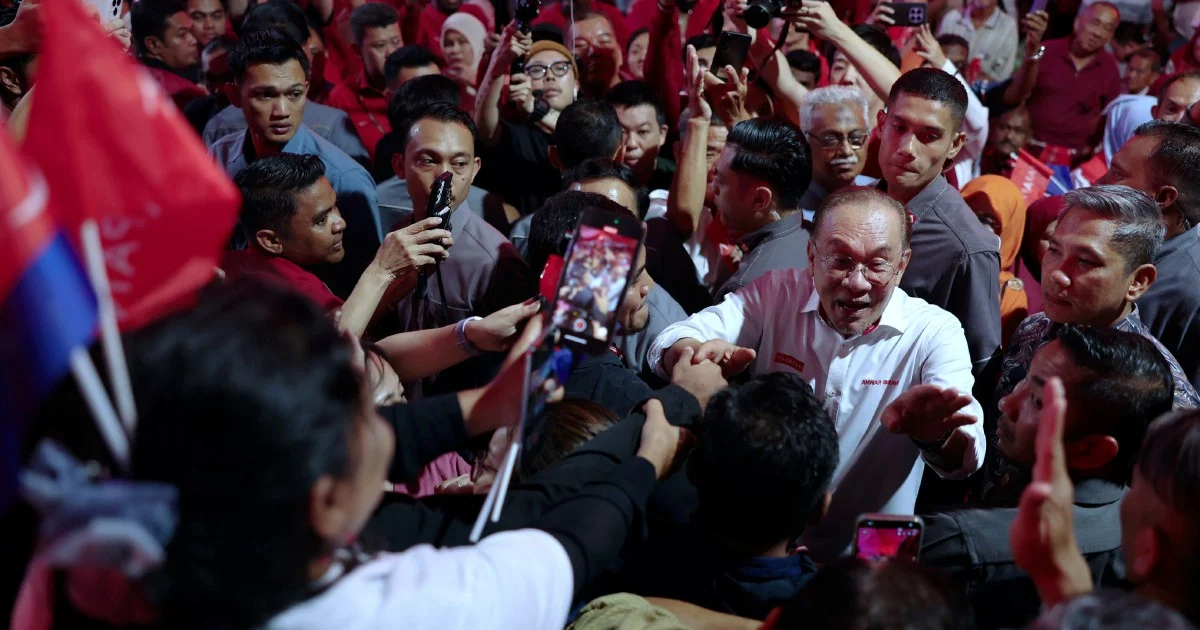
Pakatan Harapan's announcement of its complete candidate lineup for the upcoming Johor state election represents a critical moment in the opposition coalition's strategy to recapture one of Malaysia's most economically significant states. At an event in Tangkak on Tuesday, coalition chairman Datuk Seri Anwar Ibrahim formally presented the 56 nominees who will contest the July 11 polls, a move that signals PH's confidence in mounting a serious challenge to the ruling Barisan Nasional administration that has governed Johor for decades.
The timing of this declaration underscores the importance both major political blocs are placing on Johor, a state that generates substantial revenue and maintains considerable influence over national politics. PH's decision to field a full slate across all available seats demonstrates organizational readiness and reflects the coalition's assessment that conditions are favourable for a breakthrough in a state that has been traditionally aligned with Umno and Barisan Nasional. The move also signals internal cohesion among PH's constituent parties, a factor that often determines electoral success in Malaysia's fragmented political landscape.
Johor's political significance extends beyond its local governance. The state accounts for a meaningful portion of Malaysia's gross domestic product and serves as a crucial economic hub linking Malaysia to Singapore through the Causeway and Second Link. Control of Johor's state government directly impacts infrastructure development, investment attraction, and economic policies affecting millions of residents and businesses across the southern region. For PH, capturing the state would represent a substantial symbolic victory and provide access to state resources for party machinery and policy implementation.
The unveiling of candidates also reflects broader calculations within Malaysia's political system. State elections in Malaysia often serve as barometers of national political sentiment, and Johor's result will likely influence perceptions of momentum heading into any potential federal elections. PH's performance in Johor will be scrutinized by both supporters and critics as an indicator of whether the coalition can translate its previous federal election victories into sustained state-level control.
Anwar Ibrahim's personal involvement in the candidate announcement emphasizes the coalition's determination to project unity and leadership. His presence at the Tangkak event sends a clear message that PH treats the Johor contest as a priority matter rather than routine electoral procedure. The coalition chairman's role in presenter this strategic moment highlights the stakes involved and the party's commitment to mobilizing grassroots support across the state's diverse electoral geography.
For voters in Johor, the stakes involve questions of local governance, economic development priorities, and representation in state assembly. Residents will evaluate candidates based on their track records, policy proposals, and ability to address long-standing concerns about infrastructure, education, healthcare, and job creation. The candidate selection process therefore carries implications for which individuals and political philosophies will shape Johor's development trajectory over the next five years.
The full candidate slate also indicates PH's assessment of competitive dynamics in each constituency. By fielding nominees in all 56 state assembly seats, the coalition effectively contests every battleground rather than conceding any seat to opposition candidates. This maximalist approach differs from strategic withdrawal in some districts and reflects PH's belief that electoral momentum and voter sentiment have shifted sufficiently to make comprehensive contestation viable.
Barisan Nasional's response to PH's challenge will likely shape the tone and intensity of the campaign period. The ruling coalition has maintained its grip on Johor through long-established organizational networks, patronage systems, and advantages of incumbency. However, changing demographics, economic pressures on working families, and evolving political preferences among younger voters represent genuine challenges to any incumbent seeking to maintain power during electoral cycles.
Regional implications of a Johor state election outcome deserve consideration. Singapore, which has substantial economic ties to Johor and depends on the state for water supply agreements and border cooperation, will monitor the election outcome as an indicator of political stability in a key neighbouring jurisdiction. The election result could also influence cross-border investment decisions and bilateral relations during any transition of state power.
PH's coalition structure—comprising Anwar's Keadilan, the Democratic Action Party, Amanah, and allied parties—means the campaign will test whether these diverse partners can maintain unity while competing for seats and voter preference. Internal management of candidate allocation, campaign resources, and post-election seat distribution becomes critical in ensuring coalition cohesion doesn't fracture during the high-pressure electoral period.
The campaign period leading to July 11 will demonstrate whether PH's candidate selection strategy produces competitive nominees capable of engaging effectively with local issues while articulating broader coalition policy positions. Voter engagement in Johor over coming weeks will reveal whether dissatisfaction with incumbent governance translates into actual electoral support for opposition alternatives.
Johor's election ultimately represents a test of political change in Malaysia. The state has historically anchored Barisan Nasional's grip on federal power, and any shift in Johor's political complexion would signal realignment in Malaysian politics. PH's comprehensive candidate slate represents the coalition's commitment to contest that realignment seriously rather than accept the state's traditional political trajectory.

