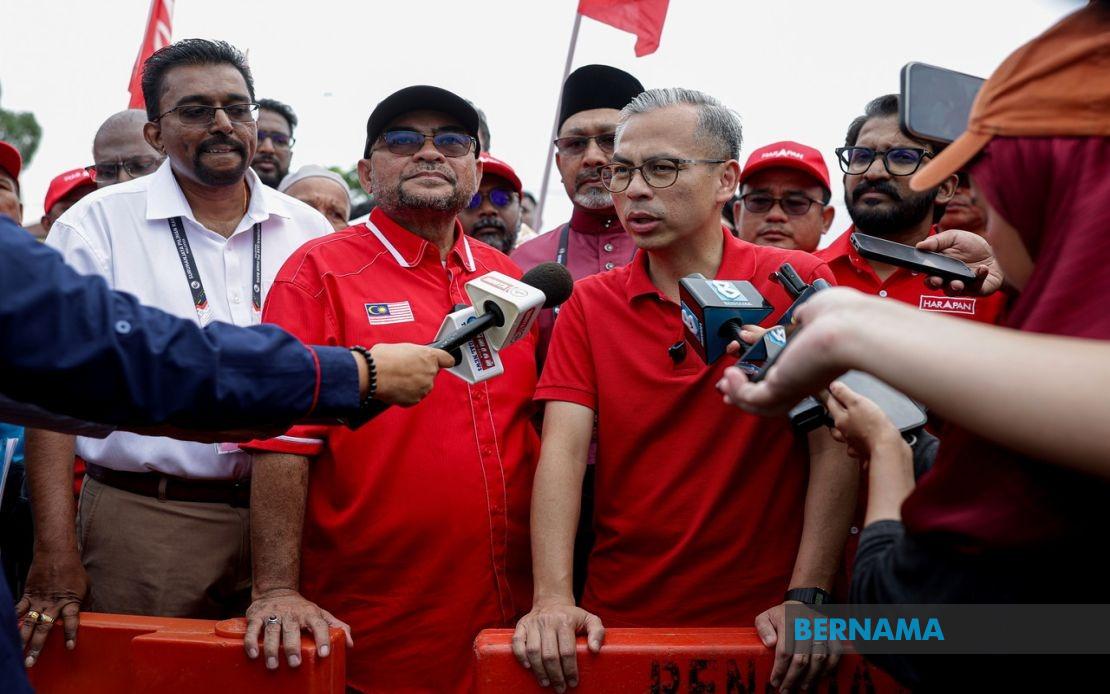
Pakatan Harapan will anchor its campaign strategy for the upcoming Negeri Sembilan state election on the economic and administrative achievements compiled by Menteri Besar Datuk Seri Aminuddin Harun during his tenure since 2018, according to Communications director and federal Communications Minister Datuk Seri Fahmi Fadzil. Speaking after candidate nominations closed for four state seats within the Jempol parliamentary constituency on July 18, Fahmi outlined a campaign narrative centred on continuity and demonstrated governance capability, framing the election as a referendum on ongoing economic stability rather than a broader ideological contest.
The coalition's messaging strategy emphasises tangible outcomes under the current administration, with particular emphasis on rising zakat collections, strengthened state revenue generation, and sustained foreign direct investment inflows. Aminuddin's leadership has also facilitated major infrastructure projects, most notably the development of a new port facility that underscores the state's commitment to regional economic integration. For Malaysian voters, especially those in economically developing states, this emphasis on proven delivery resonates with broader concerns about governance effectiveness and material improvement in living standards. The approach reflects a shift away from purely political arguments towards performance-based legitimacy, a trend increasingly important in Malaysian electoral dynamics.
The four-cornered contest for Jeram Padang state seat provides a microcosm of the broader campaign thrust. Pakatan Harapan has fielded G. Manivannan, a lawyer serving as political secretary to Prime Minister Datuk Seri Anwar Ibrahim, to contest against Barisan Nasional incumbent Datuk Mohd Zaidy Abdul Kadir, Perikatan Nasional's R. Sri Sanjeevan, and Dayana Dal representing Asli, the sole Orang Asli candidate in the contest. Fahmi indicated that the PH campaign in this constituency will specifically target employment concerns among younger voters, positioning the state's economic development agenda as a pathway to creating sustainable job opportunities. This granular approach to constituency-specific messaging demonstrates how the coalition intends to translate state-level achievements into direct benefits narratives for local communities.
Negeri Sembilan's economic trajectory under Aminuddin's stewardship offers substantive material for this campaign positioning. The state has successfully attracted multinational manufacturing investments and expanded its port infrastructure, initiatives that carry strategic significance for Malaysia's broader regional competitiveness. These developments represent more than routine administrative accomplishments; they signal progress on national economic diversification objectives. For Southeast Asian observers, Negeri Sembilan's trajectory illustrates how state-level governance quality directly influences investment flows and regional economic performance, with implications extending beyond state borders.
The nomination process across the four Jempol-based constituencies proceeded smoothly, with three contests featuring three-way contests and one straight fight. In Serting, PH's Yaacob Mahmood will face Perikatan Nasional incumbent Mohd Fairuz Mohd Isa and Bersatu's Muhammad Noraffendy Mohd Salleh. The Palong seat will see BN incumbent Datuk Mustapha Nagoor challenged by PH's Muhammad Zahin Zinal Abidin and Bersatu's Rebin Birham. In Bahau, PH's incumbent Teo Kok Seong of DAP faces a straight contest against MCA's Chong Fui Ming. This distribution of contests reflects the evolving competitive landscape in Malaysian state politics, where three-way and multi-cornered fights increasingly characterise electoral contests.
Fahmi stressed the importance of maintaining campaign conduct standards throughout the two-week campaigning period, particularly emphasizing avoidance of sensitive topics involving the three Rs—Religion, Race and Rulers—and the prevention of false information dissemination. As Communications Minister, his explicit warning carries both symbolic and practical weight, signalling the federal government's commitment to electoral integrity and social harmony. The emphasis on responsible media engagement reflects growing concerns across Malaysia about the intersection of digital communication, electoral politics, and social cohesion. For regional observers, this concern underscores how developing democracies increasingly grapple with information management challenges during electoral cycles.
The Negeri Sembilan election timeline involves early voting on July 28 with polling day scheduled for August 1, providing a compressed two-week campaign window. This condensed timeframe intensifies the strategic importance of Fahmi's coordinated messaging approach, as limited time necessitates focused, resonant communication rather than diffuse campaign efforts. The tight schedule also places particular pressure on ground organisations and candidate visibility, making the effectiveness of local machinery decisions potentially outcome-determinative.
Manivannan's candidacy in Jeram Padang carries symbolic weight beyond the individual contest. As a lawyer and prime ministerial political secretary, his nomination signals Anwar Ibrahim's administration's commitment to Negeri Sembilan's development pathway and underscores the centrality of federal-state administrative alignment to the coalition's governance model. This visible federal engagement in state contests reinforces the message that economic development continuity depends on political continuity between state and national leadership. For Malaysian voters assessing electoral choices, such signals about institutional coordination provide insights into broader governing arrangements beyond the immediate state contest.
The diversity of competing parties and candidates in Jeram Padang—spanning Pakatan Harapan, Barisan Nasional, Perikatan Nasional, and Asli—reflects Malaysia's fragmented electoral landscape. The presence of Dayana Dal as the sole Orang Asli candidate raises representation questions, particularly regarding indigenous community engagement in state politics. While Fahmi's campaign message emphasises economic opportunity, the broader electoral configuration suggests that voter choice increasingly involves weighing multiple competing governance visions and representation claims.
Packatan Harapan's strategy implicitly acknowledges that maintaining control of Negeri Sembilan requires translating administrative accomplishments into voter support during an election period when political messaging intensifies. The coalition's decision to foreground Aminuddin's record suggests confidence in the Menteri Besar's personal standing and the administration's achievements, a calculated gamble that performance legitimacy outweighs other electoral dynamics. This approach carries implications for how governing coalitions nationwide approach state elections, potentially establishing a template for emphasising administrative continuity over other campaign themes.
For Malaysia's broader political trajectory, the Negeri Sembilan election provides a testing ground for the sustainability of Pakatan Harapan's governance model and the electoral viability of performance-based campaign messaging. As the coalition faces electoral contests across multiple states, how effectively this Negeri Sembilan campaign translates administrative achievements into voter support will offer insights into whether Malaysian electorates prioritise proven governance delivery or other political considerations. The outcome will also illuminate the extent to which federal-state coordination under the current administration influences electoral results, with potential significance for assessing the stability of Malaysia's political arrangements.

