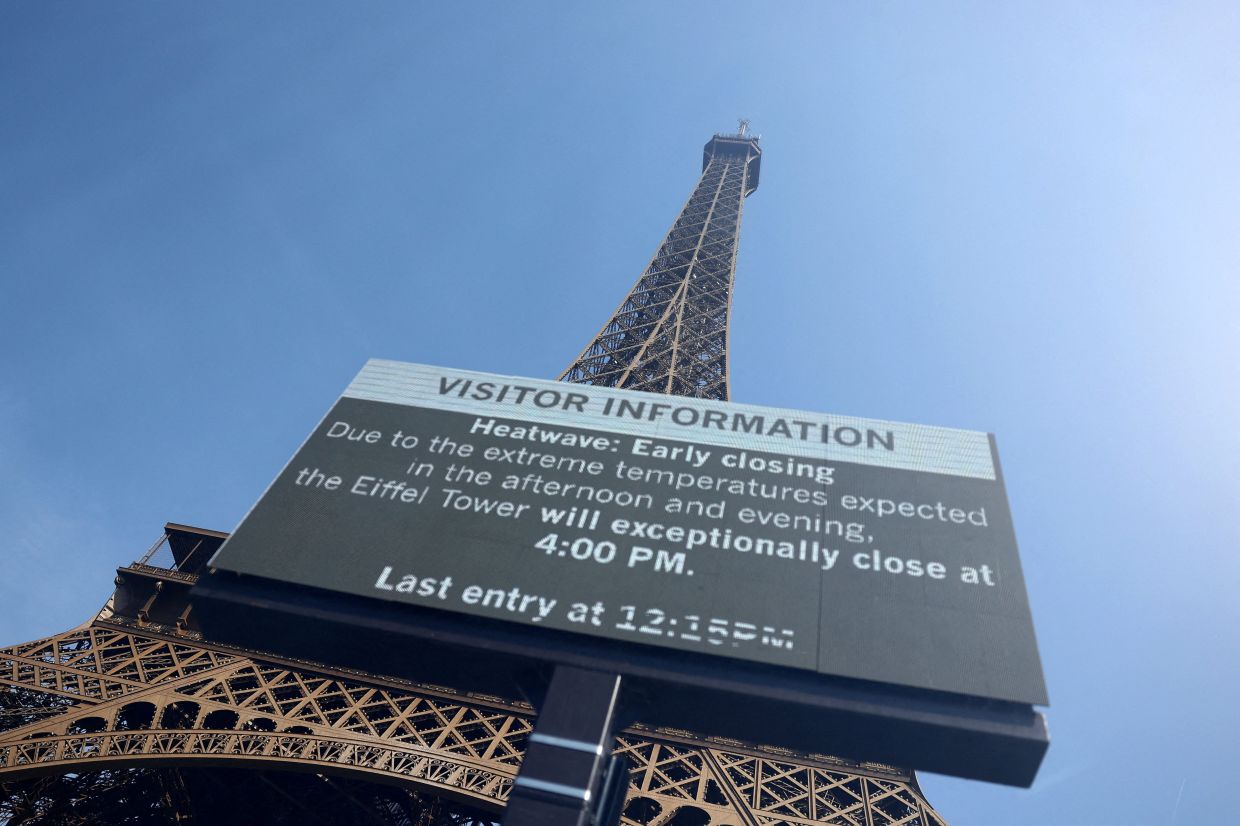
A record-breaking heatwave gripping France this week has triggered unprecedented disruptions to the capital's tourism sector, with major landmarks shuttering early and thousands of visitors forced to abandon carefully planned itineraries. The crisis came to a head on June 23, when France recorded its hottest day since temperature measurements began in 1947, creating conditions so extreme that even world-renowned attractions could no longer safely accommodate tourists.
The Eiffel Tower, Paris's most iconic structure and a destination for approximately seven million visitors annually, took the extraordinary step of closing early at 4pm on June 23. Operators of the 324-metre iron lattice monument indicated that shortened operating hours would likely continue beyond the initial crisis day, fundamentally altering the visitor experience for thousands. Under normal circumstances, the tower remains open well past midnight during the busy summer season, but the intense heat made extended operations untenable.
Spanish nurse Maite Blazques from Madrid had spent months carefully saving to bring her six-year-old son to Paris for what she had imagined would be an unforgettable family holiday. The extreme temperatures forced her to completely restructure their entire trip, eliminating multiple highlights that families typically prioritise. Instead of exploring the historic Marais district on foot with a professional guide, taking a leisurely river boat cruise along the Seine, or ascending the iconic tower to view the city from its upper levels, she and her son were left navigating the sweltering streets with drastically reduced options.
American tourist Tamara Dancer experienced similar disappointment when her scheduled guided tour was abruptly cancelled on Tuesday afternoon, leaving her group stranded without a backup plan. For many international visitors who book months in advance and budget carefully for specific experiences, such cancellations represent not merely inconvenience but a significant financial and emotional loss. The cascading cancellations across the city created a domino effect that rippled through the tourism industry.
The Louvre Museum, Earth's most visited museum with approximately nine million annual visitors, also struggled under the extreme conditions. Management acknowledged that the vast palace, constructed incrementally by successive French monarchs and presidents across centuries, remained fundamentally unprepared for climate-related stress. The institution has already contended with multiple difficulties over the preceding year, including a brazen US$100 million jewellery heist, significant water damage, and various structural maintenance crises. The additional burden of extreme heat exacerbated an already precarious situation.
Tourists throughout Paris attempted improvised coping strategies, carrying umbrellas, wide-brimmed hats, and portable fans as they navigated pavement surfaces literally radiating intense heat into the surrounding air. John Beeler, a 45-year-old American engineer accompanying his wife, found the experience utterly unpleasant, describing their attempts to navigate both street-level routes and the city's underground subway system as suffocating. Even their rented accommodation failed to provide refuge until they relocated to a hotel offering climate-controlled environments.
Drake Winners, a 66-year-old retiree from London, articulated a fundamental frustration about visiting Paris under such conditions: the city's essential character depends on pedestrian exploration and street-level discovery. The oppressive heat rendered this approach essentially impossible, forcing him and countless others to seek refuge in air-conditioned indoor spaces. He pivoted toward museum visits and churches, locations that historically provided cooler sanctuaries but offered a drastically diminished experience of authentic Parisian culture.
The crisis extended far beyond the capital. More than half of mainland France remained classified under the national weather service's most severe alert category, triggering warnings and closures at attractions throughout the country. Mont Saint-Michel, the spectacular tidal island fortress in Normandy and France's most visited tourist destination outside the Paris region, issued explicit advisories urging visitors to postpone their trips entirely until conditions improved. Such recommendations reflect the genuine danger posed by the extreme conditions and suggest the scale of disruption affecting France's entire tourism ecosystem.
The situation carries significant implications for Southeast Asian travellers and tourism stakeholders across the region. As climate patterns grow increasingly unpredictable worldwide, tourist destinations face mounting pressure to adapt infrastructure and operating procedures to accommodate extreme weather events. For Malaysian and regional visitors who typically save substantial resources for European holidays, the risk of disrupted itineraries and closed attractions raises important questions about travel planning, travel insurance adequacy, and destination resilience. The Paris heatwave demonstrates that even the world's most developed tourist infrastructure may prove inadequate when facing unprecedented climatic stress, a cautionary tale as climate change accelerates globally.

