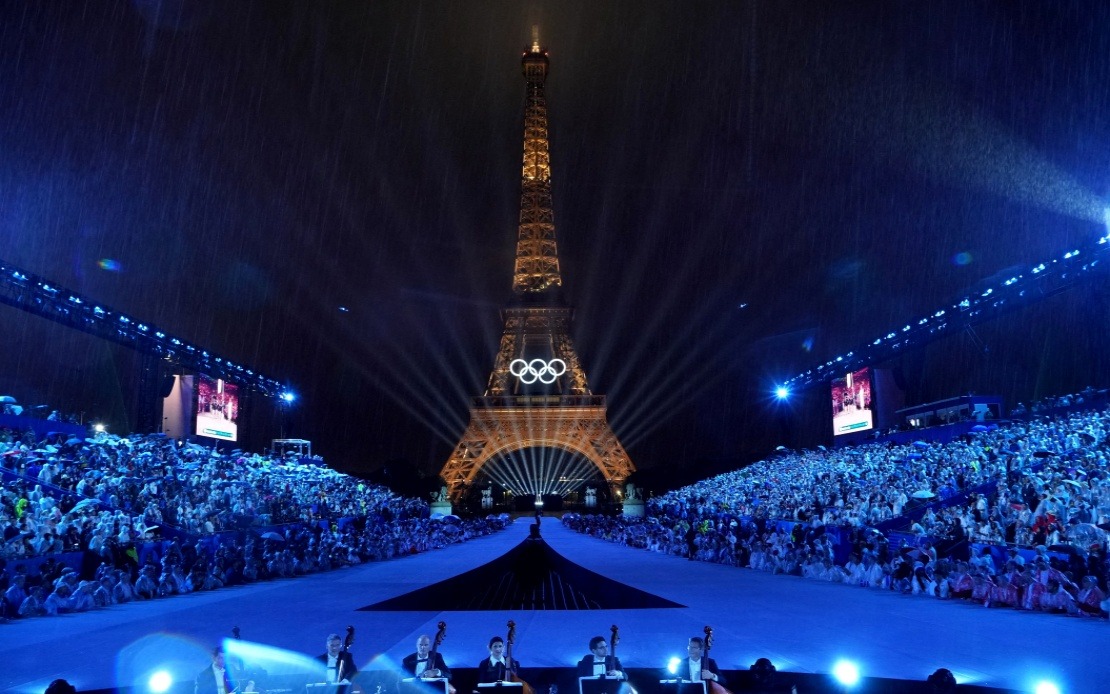
Paris has taken the extraordinary step of shutting down two of its most iconic attractions ahead of schedule as France contends with a severe heatwave gripping the country. The Eiffel Tower, one of the world's most visited monuments, ceased operations at 4 pm local time on Tuesday rather than its normal closing hour, with the last admissions halted at 12:15 pm. The decision reflects the intensifying crisis as temperatures soar across the nation, forcing authorities to prioritise the wellbeing of both workers and guests over revenue concerns.
Operators of the famous iron lattice structure, the company Sete (Societe d'Exploitation de la tour Eiffel), acknowledged the unprecedented nature of the closure in a statement, emphasising that adaptation to extreme conditions had become necessary. The management explicitly cited safety as the paramount concern, recognising that continued operations during such dangerous heat could expose staff members to potentially life-threatening conditions and compromise visitor health. This marks a rare instance where one of Europe's premier tourist destinations has voluntarily restricted access due to weather conditions.
Visitors affected by the early closure will not face financial loss, as the Eiffel Tower's management has arranged automatic refunds for all tickets issued for time slots beginning from 11:30 am for stair access and 12:00 pm for lift access. This provision aims to mitigate frustration among tourists who may have made travel arrangements specifically to visit the monument, though the refund mechanism also reflects the operational complexities of managing one of the world's most-visited paid monuments during crisis conditions.
The Louvre Museum, France's most-visited art gallery, has similarly adjusted its operations in response to the dangerous temperatures. The institution announced that from June 24 through June 27, it would close at 4 pm instead of its customary 6 pm closing time. While the Louvre's reduction represents a more modest adjustment compared to the Eiffel Tower's full early closure, it nonetheless signals the seriousness with which major cultural institutions are taking the health risks posed by the prevailing conditions.
Meteo-France, the country's official meteorological authority, has warned that the exceptional heat is expected to persist through at least Thursday, with no immediate relief anticipated. On Tuesday itself, thermometers in Paris reached 36 degrees Celsius at 4 pm, already surpassing typical summer temperatures. More alarmingly, forecasters predict Wednesday could see highs climb to 38 degrees Celsius, pushing conditions into genuinely dangerous territory where heat-related illness becomes a significant public health threat.
The geographic scope of the crisis is staggering. As of Tuesday, Meteo-France had placed 54 departments across mainland France under red alert, the highest level in the national warning system. Additionally, 35 departments were designated under orange alert, indicating that over two-thirds of French territory faced either extreme or serious heat warnings. This distribution underscores that the heatwave is not a localised phenomenon affecting only the capital region but rather a nationwide emergency with implications for public services, infrastructure, and populations across the entire country.
For Southeast Asian readers, this scenario offers instructive parallels. While the region regularly experiences tropical heat and humidity, the sudden onset of extreme temperatures in temperate zones like France often proves more dangerous because populations lack physiological and infrastructural adaptation to such conditions. Air conditioning penetration, public cooling centres, and heat-related health awareness campaigns are typically less developed in parts of Europe compared to Southeast Asia, where heat management is a routine seasonal challenge. This creates a paradox where technologically advanced economies may prove vulnerable to heat crises that developing nations in the tropics manage more effectively through ingrained cultural and practical adaptations.
The early closures also reveal economic trade-offs embedded in climate adaptation decisions. Tourism generates enormous revenue for Paris and France broadly, and the loss of afternoon visitors represents tangible financial impact for these institutions. However, the precedent being set suggests that as climate patterns intensify and heat events become more common, even wealthy nations will need to reassess operational assumptions that have held for decades. The Eiffel Tower and Louvre's decisions may foreshadow broader changes in how cultural institutions, transportation systems, and public spaces operate during heat extremes.
Staff welfare considerations add another dimension to these closures. Workers at major tourist attractions typically face conditions that amplify ambient heat—crowded enclosed spaces, physical exertion, and limited escape options create microclimates significantly hotter than external temperature readings. By closing early, these institutions acknowledge responsibility for employee health, a principle that resonates differently across cultures with varying labour protections. Southeast Asian nations with large service sectors and tourism industries may face increasing pressure to adopt similar employee-protective measures as heat events intensify.
The heatwave's timing in late June, months before the typical peak summer season, underscores how climate change is shifting the calendar of dangerous conditions. Historical patterns that guided operational planning are no longer reliable guides. French authorities and business operators must now contend with unpredictability, requiring either expensive infrastructure investments for heat resilience or acceptance of periodic disruptions to normal activities. This challenge extends globally; all nations, regardless of current climate, must grapple with how to build systems flexible enough to accommodate increasingly volatile weather patterns.
Looking ahead, these closures represent not isolated incidents but potential harbingers of a new normal. As France experiences more frequent and intense heatwaves—a trend consistent with climate projections—tourism-dependent economies will need to develop comprehensive strategies balancing visitor access, worker safety, and infrastructure protection. For Malaysia and the broader region, where heat has always been a constant rather than a crisis, there may be opportunities to export expertise in heat adaptation, from urban design principles to occupational health protocols developed over generations of dealing with tropical conditions.

