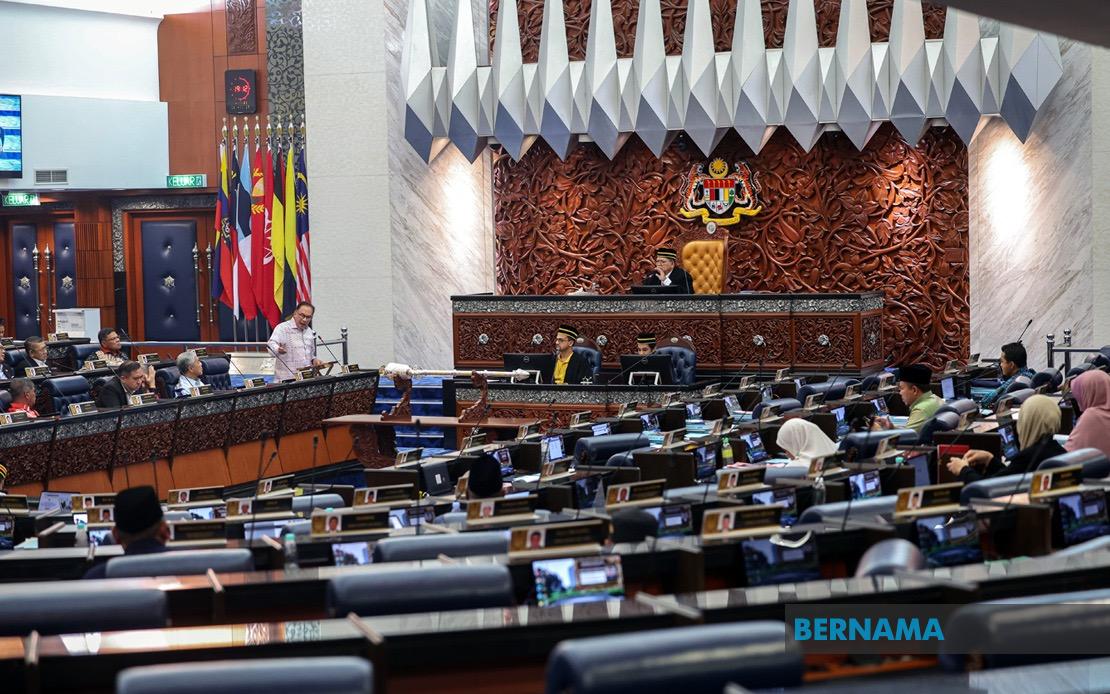
Parliament has given the green light to channel RM14.5 billion in leftover Malaysian Government Investment Issues (MGII) proceeds into the Development Fund, representing a key mechanism through which the government finances its infrastructure and capital spending agenda. The Dewan Rakyat endorsed the technical resolution through a majority voice vote following parliamentary debate, clearing the way for this portion of early-2026 bond issuances to flow toward development expenditure rather than remaining in the Consolidated Loan Account.
The backdrop to this approval involves a substantial financing operation that underscores Malaysia's approach to managing its fiscal obligations. The government has issued an estimated RM95 billion in total MGII during the first five months of 2026, a figure that breaks down into three distinct components addressing different policy objectives. The largest tranche, RM55 billion, serves the technical function of refinancing earlier MGII securities that have matured, essentially replacing old debt with new issuances and maintaining continuity in government funding markets. A further RM2 billion targets the redemption of Malaysian Islamic Treasury Bills (MITB), the government's short-term shariah-compliant debt instruments that appeal to Islamic financial institutions and investors. The remaining RM38 billion fills a portion of the 2026 fiscal deficit—the gap between government spending and revenue that must be bridged through borrowing.
What makes today's approval significant is the breakdown of how these bonds have been deployed. Between January and May 2026, the gross volume of MGII issued reached RM40 billion. Once RM25.5 billion of this was earmarked to refinance maturing obligations, the government identified a net RM14.5 billion available for transfer to the Development Fund. This distinction between gross issuance and net proceeds is crucial: it reflects the reality that much government borrowing simply replaces existing debt rather than expanding the overall debt stock. The remaining MGII issuances for the second half of 2026 will return to parliament for approval, likely following a similar technical process.
Deputy Finance Minister Liew Chin Tong, who presented the resolution, articulated the constitutional framework governing how Malaysia finances its two types of spending. The government is statutorily restricted to borrowing only for development expenditure (DE)—capital investments in infrastructure, facilities, and long-term projects—while operating expenditure (OE) covering salaries, pensions, and day-to-day administration must be funded purely from tax revenue and non-debt receipts. This legal architecture, while imposing discipline on how much can be borrowed, ensures that deficit spending serves nation-building purposes rather than subsidizing recurrent outlays. The Development Fund itself receives money through multiple channels: transfers from the Consolidated Revenue Account when surplus cash exists, proceeds from the Consolidated Loan Account (which holds all borrowed funds), repayments from earlier development loans to other entities, and various development-related revenues.
The composition of government borrowing reveals Malaysia's diversified debt management strategy. Malaysian Government Securities (MGS) represent conventional borrowing, while MGII caters to Islamic finance principles and a growing base of institutional investors seeking shariah-compliant instruments. Treasury Bills provide short-term liquidity management, and external borrowing taps international capital markets. This mix allows the government to access different investor bases, spread refinancing risk across time horizons, and manage debt costs efficiently. The MGII specifically has become an increasingly important component of Malaysia's debt toolkit, offering an alternative that appeals particularly to domestic Islamic financial institutions and international Islamic investors.
A concern raised during parliamentary debate centered on the potential "crowding out" effect in Malaysia's domestic financial markets. This phenomenon occurs when large-scale government bond issuances absorb capital that might otherwise flow to the private sector, potentially raising borrowing costs for businesses and limiting credit availability. Major Malaysian institutional investors, particularly the Employees Provident Fund (EPF) and the Retirement Fund Incorporated (KWAP), hold substantial portfolios of government securities. Liew addressed this concern by noting that the government has actually been reducing the volume of new borrowings year-on-year over the preceding several years, suggesting a deliberate effort to moderate debt accumulation. He further emphasized that government securities issuances serve a beneficial function by providing investment vehicles through which the EPF, pension funds, and other financial institutions can deploy capital domestically and generate returns for their members and beneficiaries.
The investment opportunity argument carries particular weight in Malaysia's economic context. Without domestic government securities markets offering competitive risk-adjusted returns, institutional investors facing pressure to generate yields might redirect capital abroad, potentially weakening demand for ringgit-denominated assets and exerting depreciation pressure on the currency. Government bonds anchored in Malaysia provide a stable, low-risk outlet for the enormous pools of capital managed by institutions like the EPF, which administers retirement savings for millions of Malaysian workers. By absorbing these institutional investments domestically, government bond markets help retain capital within Malaysia's financial system and support currency stability—a consideration of heightened importance for a country highly exposed to exchange rate fluctuations and capital flows.
The governance framework surrounding these bond transfers demonstrates parliamentary oversight of fiscal operations. Rather than allowing the executive to move funds between accounts at will, Malaysia requires specific parliamentary approval for major transfers from the Consolidated Loan Account to the Development Fund. This procedural requirement, though sometimes criticized as creating administrative friction, serves an accountability function by ensuring legislators deliberate on how borrowed funds are deployed. The staggered approval process, with parliamentary votes scheduled for different portions of the year's MGII issuances, prevents the government from front-loading its borrowing and keeps scrutiny distributed across the fiscal year.
For Malaysian readers, the practical implications of this parliamentary action are multifaceted. Development Fund allocations directly influence the pace of infrastructure development, from road networks to hospital facilities to educational institutions. By approving this RM14.5 billion transfer, parliament is effectively endorsing the government's investment priorities for the remainder of 2026. The continued reliance on bond issuances also signals that the government is not yet in a position to fund development entirely from tax revenue, reflecting both the scale of infrastructure ambitions and the gradual revenue base. Over time, if development spending yields productive returns through enhanced economic productivity and tax collection, the need for such borrowing should moderate—a cycle that Malaysian policymakers have traditionally emphasized.
The broader regional and international dimension should not be overlooked. Malaysia's demonstrated ability to issue large volumes of government bonds—both conventional and Islamic—reflects investor confidence in the country's fiscal management and creditworthiness. The successful placement of RM40 billion in MGII during the first five months of the year suggests strong demand from both domestic and international investors, supporting Malaysia's ability to finance development at reasonable cost. For Southeast Asia, where many countries struggle to access capital markets at competitive rates, Malaysia's deep bond markets and regular issuances represent a comparative advantage that policymakers have deliberately cultivated.
Looking ahead, the proposal for parliament to approve the remaining June-to-December 2026 MGII issuances during the next sitting maintains this deliberative approach to government borrowing. Assuming similar patterns, another parliamentary debate and vote would occur, providing another opportunity for legislators to examine the government's debt strategy and development spending priorities. This periodic reapproval mechanism, while potentially cumbersome, ensures that fiscal policy remains subject to legislative accountability rather than becoming an automated executive function. The RM14.5 billion approved today thus represents not merely a technical accounting transaction but an expression of parliamentary confidence in the government's fiscal direction and development agenda for the year ahead.

