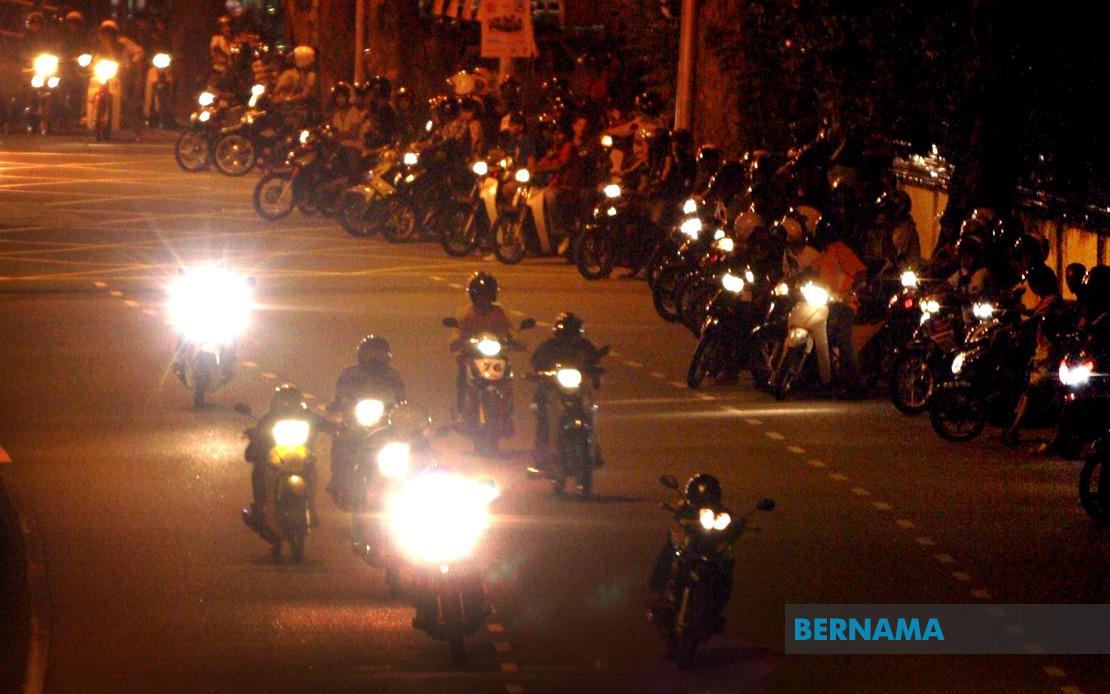
Parliament moved to toughen the legal framework against illegal racing on June 23 as lawmakers from both government and opposition benches debated the Road Transport (Amendment) Act 2026, unveiling a slate of proposals designed to transform how courts and enforcement agencies tackle this persistent public safety crisis. The collective push signals growing frustration among elected representatives with the existing regime, which many view as insufficient given the escalating toll of street racing incidents on Malaysian roads.
At the heart of the debate lay several complementary enforcement strategies, beginning with a call for mandatory rehabilitation intervention alongside traditional criminal sanctions. Khairil Nizam Khirudin of Perikatan Nasional, representing Jerantut, argued that programmes combining disciplinary training and supervised community service should become standard additions to fines and imprisonment, repositioning the justice system to transform offenders rather than merely punishing them. This approach reflects international best practice in which first-time offenders, particularly younger participants, might be redirected away from persistent criminality through structured intervention rather than through incarceration alone.
Equally significant was the proposal to permanently revoke driving licences for convicted illegal racers. Datuk Willie Mongin, representing Puncak Borneo under the Gabungan Parti Sarawak banner, advocated for lifetime licence cancellation alongside steeply escalated financial and custodial penalties, specifically proposing a minimum RM300,000 fine or five years imprisonment. By removing the privilege to operate any motor vehicle, such measures would severely constrain an offender's ability to reoffend and would signal to potential perpetrators that participation carries irreversible personal consequences beyond temporary incarceration.
The expansion of legal definitions to encompass all vehicle types represented another critical dimension of lawmakers' concerns. Wan Razali Wan Nor highlighted that current legislation disproportionately targets motorcyclists while luxury car enthusiasts often escape prosecution under the same gravity of charges. He referenced the Simpang Renggam incident of June 1 in Johor, in which high-performance vehicles claimed multiple lives, demonstrating that catastrophic outcomes extend far beyond motorcycle mishaps. Extending Section 42A to cover all fast vehicles would close a perceived loophole and acknowledge that the underlying danger transcends any particular class of machine.
Another proposal directly targeted the supply chain enabling illegal racing culture. The Ministry of Transport was urged to collaborate with the Ministry of Domestic Trade and Cost of Living to invoke existing legal provisions and, if necessary, draft new regulations to prosecute workshops engaged in unauthorized motorcycle modifications that facilitate street racing. By attacking the infrastructure of customization services, authorities could interrupt the pipeline converting standard machines into performance vehicles capable of dangerously high speeds. Khairil Nizam further suggested holding parents of racing participants legally accountable, attempting to mobilize family structures as enforcement agents.
Shaharizukirnain Abd Kadir introduced a proposal for mandatory vehicle destruction or disposal of heavily modified motorcycles seized during enforcement operations. Rather than returning confiscated machines to owners or storing them indefinitely, destruction would eliminate a pool of specialized equipment and send a stark message that participation forfeits ownership rights. Such measures, increasingly adopted elsewhere to counter street racing, remove the financial incentive to modify vehicles and prevent recirculation of dangerous machines through secondary markets.
The debate extended beyond racing offences to encompass impaired driving, with multiple speakers calling for enhanced protections for accident victims. Zahari Kechik, representing Jeli, proposed establishing formal compensation mechanisms requiring drunk or drug-impaired drivers to cover hospital costs and ongoing victim welfare for persons injured or disabled by their conduct. This victim-centered approach represents a philosophical shift from purely punitive frameworks toward restorative justice principles that recognize harm to civilian bystanders and their entitlement to restitution from responsible parties.
Datuk Seri Dr Ismail Abd Muttalib supported strengthening existing enforcement protocols governing intoxicated drivers, particularly in relation to fatal collisions. The dialogue underscored parliamentary recognition that impaired driving and illegal racing, though distinct offences, often share causal pathways and compound each other's dangers. Vigorous enforcement against driving under the influence of alcohol or drugs complements measures against street racing by addressing overlapping risk factors and populations.
The parliamentary session, which saw participation from twenty-four government and opposition members, reflects broad cross-party consensus that current legal instruments inadequately deter illegal racing and insufficiently protect public safety. The diversity of proposals—spanning deterrence through draconian penalties, reformation through rehabilitation, structural intervention through regulation of modification services, and victim restitution through compensation mechanisms—suggests lawmakers recognize that no single lever will solve the problem.
For Malaysian motorists and policymakers, the debate illuminates the trajectory toward a markedly harsher legal environment for street racers. Permanent licence revocation would constitute a quantum leap beyond present practice, transforming a temporary suspension into an irreversible forfeiture. Rehabilitation programmes signal that the state intends not merely to punish but to reclaim participants from the culture of illegal racing. Enhanced regulation of workshop services acknowledges that institutional enablers require direct attention. Taken together, the proposals represent an escalating commitment to reclaim Malaysian roads from those who treat them as venues for dangerous performance.
The continuation of parliamentary debate into the following day suggested that further refinements and additional perspectives would surface before the Bill advances to subsequent legislative stages. Should these measures progress into law, Malaysian road safety enforcement and judiciary practice will undergo substantial transformation, with repercussions extending throughout the automotive aftermarket, insurance industries, and criminal justice institutions managing traffic offences. The Road Transport (Amendment) Act 2026 promises to redraw the legal battlefield on which authorities contest the phenomenon of street racing in Malaysia and across Southeast Asia.

