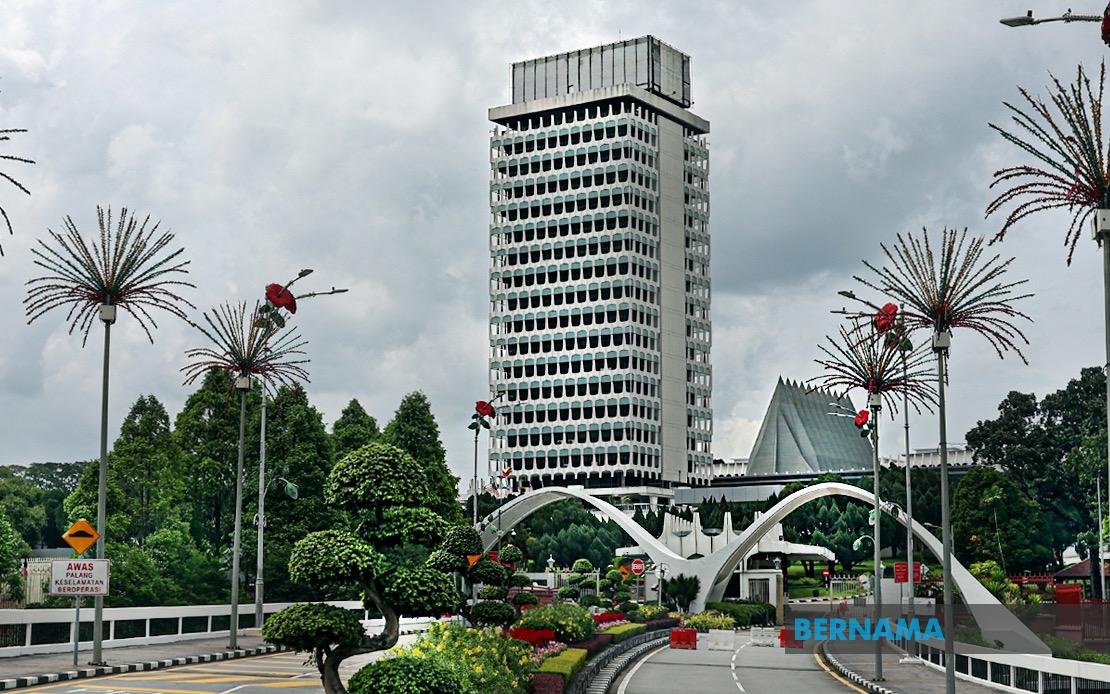
Parliament today will scrutinize three major policy areas that reflect the Government's approach to infrastructure resilience, market regulation, and digital governance. The sitting, which began earlier this month, continues its 16-day session through to July 16, providing lawmakers with an extended opportunity to examine government performance across multiple portfolios. The legislative agenda reveals priorities that touch on everyday concerns for Malaysian households—from the reliability of essential services to fair pricing and child safety online.
Water scarcity represents an acute vulnerability for Malaysia's most developed state. Suhaizan Kaiat, the PH member for Pulai, has tabled a question seeking detailed disclosure of the Government's strategy to bolster Johor's water supply infrastructure over the long term. The scope of the inquiry encompasses multiple dimensions: expansion of dam capacity, modernization of treatment facilities, and integration of recycled water into the distribution network. These three pillars form the backbone of contemporary water management in water-stressed regions globally, and Johor's growth trajectory has placed enormous strain on existing systems. The question signals parliament's recognition that episodic droughts and aging infrastructure pose risks not only to household consumption but to industrial production and agricultural activities that anchor the state's economy.
Johor's water demand trajectory has accelerated sharply over the past two decades. Population growth, expansion of manufacturing zones, and rising living standards have combined to push consumption far beyond levels anticipated when existing reservoirs were designed. Recycled water represents a frontier technology in Southeast Asia's approach to scarcity; Singapore's success with this model has prompted regional interest, though adoption in Malaysia remains limited. The inquiry into dam construction and treatment plant development will likely expose tensions between the capital investment required, land acquisition challenges in densely populated areas, and timeline uncertainties.
The second major item concerns market competition and housing affordability. Datuk Seri Ismail Abd. Muttalib, the PN representative for Maran, has requested that the Domestic Trade and Cost of Living Minister outline steps being taken to reinforce the Malaysia Competition Commission's capacity to track and regulate housing market offerings. His dual query addresses both the surveillance dimension—monitoring price packages and promotional structures—and the investigative dimension, specifically how MyCC detects and prosecutes anti-competitive conduct such as collusion on pricing or artificial scarcity.
Housing affordability has become the dominant domestic policy challenge across urban Malaysia. The intersection of rising construction costs, foreign investment inflows, speculative holding patterns, and limited enforcement has created widespread perception that prices are manipulated rather than market-determined. MyCC's mandate in this sector remains contested; some argue the commission lacks sufficient technical expertise in property markets, while others contend that resources and political will to pursue cases against major developers are inadequate. The parliamentary question serves to extract commitments from government and create a public record of MyCC's investigative methodologies, which may subsequently be evaluated for effectiveness.
Competition authorities across Southeast Asia struggle with housing market oversight. Unlike manufactured goods where price-fixing can be detected through standard cartel investigation techniques, real estate markets involve heterogeneous products, legitimate information asymmetries, and complex financing arrangements that complicate the identification of unlawful coordination. MyCC's performance in this space will have consequences not only for housing costs but for the perception that government can effectively regulate markets in the digital age.
The third topic addresses a regulatory frontier for governments across the region: age verification on social media platforms. Syahredzan Johan, PH member for Bangi, has posed a three-part question to the Communications Minister. First, he seeks clarity on the policy objective underlying mandatory age verification—whether it is primarily aimed at child protection, data security, or some other rationale. Second, he probes the safeguards imposed on licensed service providers regarding the scope of personal data they may access during verification. Third, he inquires about deletion protocols that ensure personal information is not retained beyond the period necessary to confirm age compliance.
This question reflects genuine anxiety across democracies about balancing child safety against privacy rights. Age verification technologies range from simple declaration mechanisms to sophisticated biometric scanning and cross-database matching. Each approach carries different privacy implications and technical challenges. For Malaysian lawmakers, the issue intersects with broader concerns about data localization, consent frameworks, and whether foreign tech platforms should be subject to local privacy standards. The Communications Ministry's response will signal whether Malaysia intends to adopt a prescriptive approach—mandating specific technical standards—or whether it prefers to establish principles and allow platforms operational flexibility.
Social media platforms have resisted stringent age verification requirements, arguing that such systems create friction in user acquisition and raise privacy concerns. However, documented harms to minors from unrestricted platform access—including exposure to predatory behavior, self-harm content, and addictive engagement mechanics—have generated political pressure globally. Malaysia's approach will likely influence how other ASEAN governments approach the question, given the region's shared experience with rapid social media penetration and limited historical regulation of digital spaces.
The parliamentary session's focus on these three policy domains illuminates the Government's operational priorities at the midpoint of its term. Water infrastructure reflects existential concerns about resource adequacy in a populous, tropical nation increasingly vulnerable to climate-driven supply disruptions. Competition policy addresses a core economic grievance—that ordinary Malaysians face artificially elevated living costs due to inadequate market oversight. Digital regulation tackles an emerging governance challenge: how to protect citizens, especially vulnerable populations, in spaces where state capacity has historically lagged technological change. Each question presumes that parliamentary interrogation can drive administrative effectiveness and force greater transparency in policy implementation.

