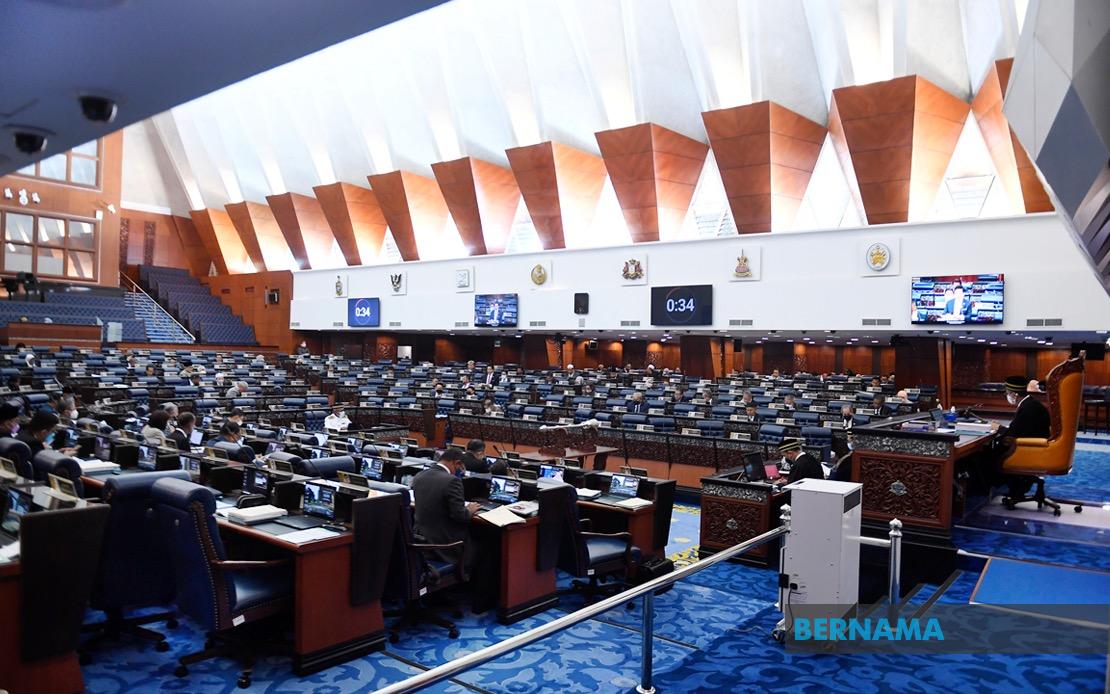
Parliament's lower house will tackle two politically charged issues today that reflect growing tensions between federal and state administrations, as well as concerns about maintaining clean election practices. The Dewan Rakyat agenda centres on the distribution of federal allocations to state governments and the enforcement mechanisms surrounding a ban on announcing government projects after nomination day closes—matters that carry significant implications for how Malaysia conducts its electoral process and manages intergovernmental finances.
The question of federal funding fairness has emerged as a flashpoint in Malaysian politics, particularly among states governed by opposition parties or those feeling marginalised in resource allocation decisions. Datuk Seri Doris Sophia Brodi from GPS representing Sri Aman will press the Prime Minister to address contentions that state governments receive insufficient federal allocations relative to tax revenue they generate. This line of questioning taps into a legitimate governance debate about whether the distribution mechanism adequately accounts for regional economic contributions and development disparities across Malaysia's 13 states and three federal territories. The inquiry also seeks clarity on what specific improvements the MADANI Government intends to implement in its allocation framework, signalling that current arrangements may require reassessment.
Parallel to this, Datuk Seri Dr Shahidan Kassim from PN will interrogate the government about its commitment to enforcing the prohibition on announcing projects or allocations after election nominations close—a rule designed to prevent ruling politicians from using government resources as campaign tools. His specific focus on the upcoming Johor, Melaka, and Negeri Sembilan state elections suggests real concerns that enforcement has been inconsistent or inadequate in previous contests. The mechanics of how such bans are monitored and enforced remain opaque to many observers, creating opportunities for circumvention. Understanding what penalties exist for violations and which agency bears enforcement responsibility will be crucial for assessing whether this safeguard functions as intended.
Beyond these core questions, parliament will address the spread of AI-generated disinformation during what appears to be an election cycle, a concern that has gained urgency across democratic societies. Datuk Seri Ismail Sabri Yaakob will ask the Communications Minister what concrete steps the government is taking to boost media literacy and digital awareness among citizens, particularly regarding deepfakes and manipulated visual content circulating on social media platforms. This reflects a growing recognition that election integrity now extends beyond traditional campaign finance rules to encompass information environment protection. Malaysia's experience with viral misinformation during previous electoral contests underscores why this question matters for maintaining public trust in democratic processes.
The parliament sitting also encompasses questions about infrastructure readiness for emerging economic sectors. Chong Zhemin will examine whether Malaysia's electrical grid can sustain the explosive growth in demand from data centre operators and artificial intelligence companies, which represent potential economic drivers for the nation's digital transformation agenda. This question connects to broader infrastructure planning challenges and the government's ability to attract high-value tech investment while managing environmental concerns. Energy capacity constraints could become a competitive disadvantage if not addressed proactively, particularly as regional competitors enhance their AI ecosystem offerings.
Social safety net schemes will receive scrutiny as well, with questions about the effectiveness of mySalam—a health protection programme targeted at the bottom 40 percent income bracket—and redemption rates for MADANI Book Vouchers. These enquiries signal parliamentary interest in whether government welfare initiatives are actually reaching intended beneficiaries and achieving their stated objectives. Programme uptake and redemption rates often reveal gaps between policy design and practical implementation, particularly among populations with limited digital access or awareness.
Women's workforce participation emerges as another legislative focus, with Datuk Mumtaz Md Nawi questioning the Human Resources Minister about TalentCorp's effectiveness in supporting women returning to employment after career interruptions. Malaysia's female labour force participation rates lag regional peers, and initiatives like the Career Comeback Programme represent attempts to address this demographic challenge. Success or failure of such schemes carries implications for national productivity and household income resilience.
The Cost of Living programme also features prominently, with Datuk Iskandar Dzulkarnain seeking updated figures on Program Jualan Rahmah MADANI implementation across state constituencies and inquiring whether the government will increase frequency of subsidised marketplace operations. This programme represents a tangible government intervention in food price inflation, a concern that directly affects household budgets and political satisfaction across income groups. Frequency and consistency of these markets matter substantially for vulnerable consumers relying on them for affordable groceries.
Following Question Time, parliament will continue debating the Sexual Offences Against Children (Amendment) Bill 2026, legislation addressing a critical child protection gap. The house will also consider amendments proposed by the Dewan Negara to the Employment Insurance System (Amendment) Bill 2025—indicating significant policy evolution in social protection—and examine the Cyber Crime Bill 2026, which shapes Malaysia's legal framework for addressing digital offences and maintains relevance given rising online fraud and harassment concerns.
Collectively, today's agenda reflects parliament's effort to balance electoral integrity safeguards, intergovernmental fiscal fairness, emerging technological challenges, and social protection adequacy. These questions suggest opposition parliamentarians and their allies perceive gaps between government rhetoric and operational implementation across multiple policy domains. Whether responses address underlying concerns or provide formulaic assurances will reveal the government's willingness to engage substantively with legitimate governance questions during what appears to be an active electoral period.

