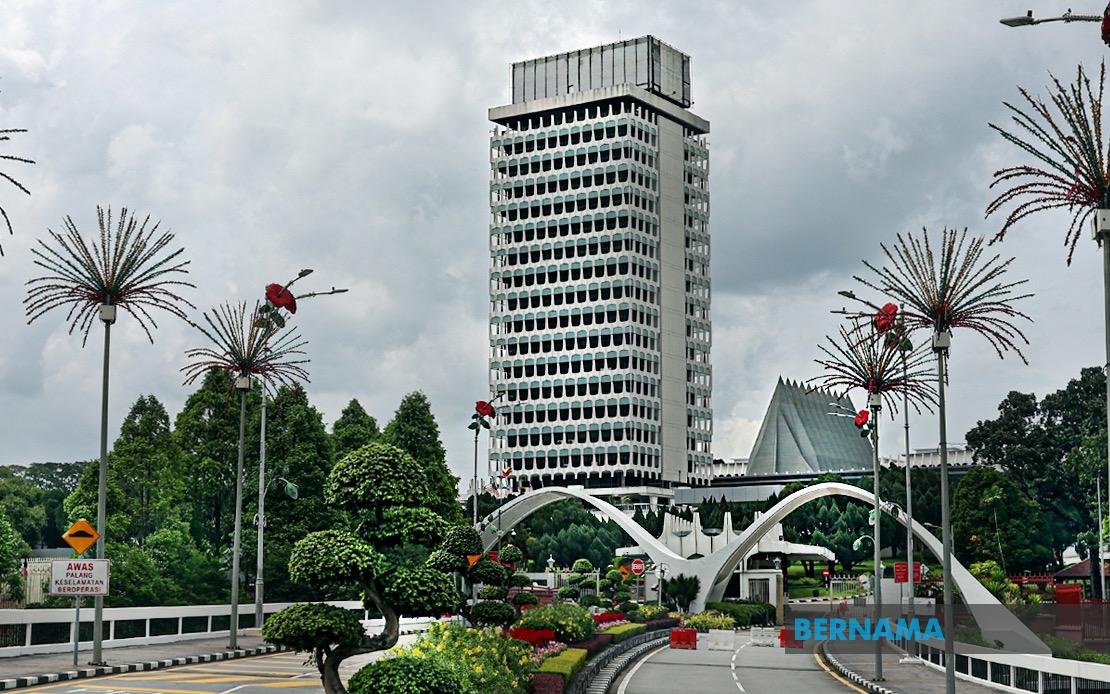
Parliament convened on June 25 to examine three interconnected policy challenges facing Malaysia: the progress of renewable energy infrastructure, the nation's diplomatic stance towards Myanmar, and the economic fallout from surging energy costs and global uncertainty. The parliamentary agenda, drawn from the sitting's Order Paper, reveals lawmakers across the political spectrum pressing ministers on implementation timelines, subsidy mechanisms, and strategic positioning in a volatile regional environment.
The Corporate Renewable Energy Supply Scheme (CRESS) will attract immediate parliamentary attention as Rodziah Ismail, representing the Pakatan Harapan-held constituency of Ampang, seeks detailed answers from the Minister of Energy Transition and Water Transformation. Her questioning will focus on how widely the scheme has been adopted among industrial participants and what practical barriers may be slowing uptake. Beyond the headline CRESS figures, the Ampang MP intends to probe the findings from a critical System Access Charge (SAC) rate review, raising a matter of acute concern for Malaysia's ambitions to position itself as a competitive regional data centre hub. The rate structure directly influences operating expenses for data centres, a factor that could either accelerate or impede Malaysia's ability to attract multinational technology investment. Her questions also encompass two complementary initiatives: the Corporate Green Power Programme (CGPP) and Battery Energy Storage Systems (BESS), suggesting that parliamentary scrutiny is now joining the disparate threads of energy policy into a coherent examination of Malaysia's renewable transition infrastructure.
The global energy crisis and its cascading economic consequences will occupy a significant portion of parliamentary debate. Mohd Syahir Che Sulaiman, the Perikatan Nasional representative for Bachok, will challenge the Minister of Economy to articulate what steps the National Economic Action Council has undertaken to cushion the impact of rising unemployment and shrinking business activity. This line of questioning acknowledges a reality increasingly visible in Malaysian economic data: the energy shock has rippled far beyond utility bills into job markets and business confidence. Investors and entrepreneurs are reassessing expansion plans, workers in energy-intensive sectors face redundancy threats, and smaller enterprises struggle with margin compression. The parliamentary record will demand concrete evidence of mitigation measures and their measurable outcomes, holding the government accountable for economic stewardship during a period of external shocks.
Fuel subsidy policy and its design mechanism will also receive scrutiny, reflecting enduring tensions in how Malaysia allocates public resources. Datuk Seri Hasni Mohammad, representing Simpang Renggam under the Barisan Nasional banner, will interrogate the Finance Minister on the rationale underpinning the standardisation of fuel subsidy targeting through MyKad verification. His questioning zeroes in on whether the existing 200-litre entitlement for both petrol and diesel adequately meets consumer needs, a question that resonates beyond Parliament into towns and villages where commuting distances and commercial vehicle use vary markedly. The subsidy targeting mechanism represents the government's effort to channel assistance efficiently, yet questions about adequacy suggest that the calibration may not align with actual usage patterns across Malaysia's diverse geography.
Malaysia's diplomatic approach towards Myanmar, formulated through the lens of the Five-Point Consensus (5PC), will command significant foreign policy attention. William Leong Jee Keen, the Pakatan Harapan MP for Selayang, will press the Foreign Minister on how the Five-Point Consensus framework—the regional diplomatic initiative aimed at de-escalating Myanmar's internal crisis—translates into concrete Malaysian foreign policy positions and actions. Since the Myanmar military coup in February 2021, ASEAN's Five-Point Consensus has served as the organisation's official roadmap for engagement, yet critics contend that implementation remains fragmented and inconsistent. The parliamentary question seeks clarity on whether Malaysia's diplomatic messaging and bilateral conduct align with the principles articulated under the 5PC framework, a matter of considerable importance for Malaysia's credibility within ASEAN and with Myanmar's diverse stakeholders.
Data sovereignty and cybersecurity resilience will intersect with Malaysia's digital ambitions in another line of parliamentary inquiry. Datuk Seri Amirudin Shari, representing Gombak under Pakatan Harapan, will question the Digital Minister on mechanisms to align state-level digital infrastructure projects—exemplified by Selangor's Dark Fiber Network—with national data sovereignty objectives. This question reflects the growing realisation that as Malaysia pursues becoming an AI-ready nation by 2030, safeguarding sensitive data and ensuring that digital infrastructure does not inadvertently create vulnerabilities to foreign surveillance or data extraction has become paramount. The alignment between state initiatives and federal security imperatives is not merely technical; it carries implications for national resilience and competitive advantage in an increasingly digital economy where data represents a strategic asset.
Educational curriculum standards and coordination between federal and state religious authorities will emerge as another parliamentary concern. Datuk Idris Ahmad, the Perikatan Nasional member for Bagan Serai, will seek the Prime Minister's assessment of how effectively the Islamic Education curriculum contributes to holistic student development and whether coordination mechanisms between federal authorities and state Islamic Religious Councils ensure consistent educational quality nationwide. This question acknowledges the constitutional complexity of education in Malaysia, where religious education falls partially under state jurisdiction, creating potential coordination challenges in maintaining standards.
The Malaysia Agreement 1963 (MA63) implementation and the political settlement between peninsular Malaysia and the states of Sabah and Sarawak will occupy parliamentary time through a question from Isnaraissah Munirah Majilis, representing the Warisan party in Kota Belud. Her inquiry into the current progress of MA63 implementation and the anticipated timeline for increasing parliamentary representation for Sabah and Sarawak to 35 per cent of total seats nationwide addresses a longstanding constitutional issue with deep historical roots. The agreement that brought the two Bornean states into the Malaysian federation carries specific commitments regarding autonomy and representation. The question reflects periodic reassertions by these states of constitutional protections that some view as progressively eroded through federal policy decisions made over decades.
A Public Accounts Committee (PAC) briefing will also feature prominently, examining the escalating costs of private healthcare and insurance premiums under the purview of the Finance Ministry, Health Ministry, and Bank Negara Malaysia. This briefing promises to illuminate the complex interplay between private sector healthcare inflation and public health policy, touching on affordability, access equity, and the adequacy of financial regulatory oversight in the healthcare sector. Rising private healthcare costs have emerged as a policy concern because they disproportionately affect middle-income Malaysians who fall outside the net of public healthcare subsidies but cannot easily absorb steep premium increases.
The parliamentary sitting will progress to continue debating the Prisons (Amendment) Bill 2026, a legislative initiative that presumably addresses reforms to Malaysia's correctional system. The breadth of topics before Parliament—from energy infrastructure to Myanmar diplomacy to healthcare costs—reflects the multifaceted challenges confronting Malaysia as it navigates concurrent transitions: an energy transition towards renewable sources, a digital transformation requiring data sovereignty safeguards, regional diplomatic pressures in Southeast Asia, and economic pressures forcing recalibration of public spending priorities. The 16-day sitting, scheduled to run from June 22 through July 16, will test the government's ability to articulate coherent policy responses across these intersecting domains while the opposition seeks accountability for implementation progress and policy effectiveness.

