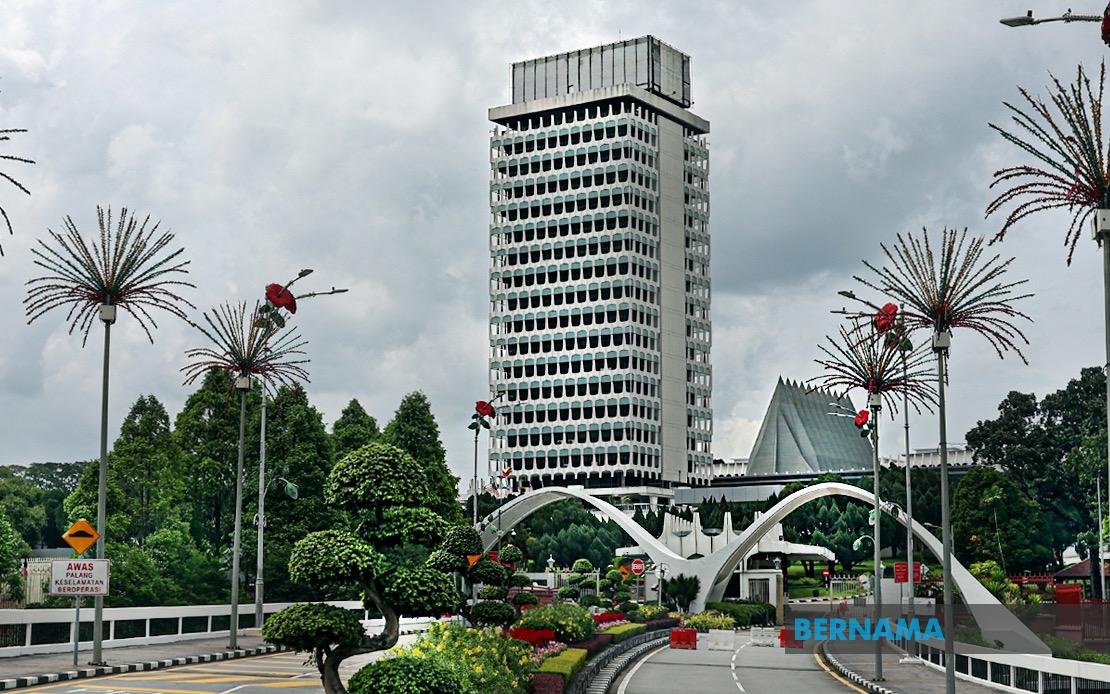
The Dewan Rakyat's third week of sitting delivered substantial parliamentary business, with lawmakers grappling with economic regulation, agricultural oversight, and increasingly contentious questions about the government's commitment to media freedom. Two competition-related bills secured passage while deliberations ranged across food security, national defence procurement, and human rights monitoring, reflecting the breadth of challenges confronting Malaysia's governance agenda as the year progresses.
The centrepiece legislative achievement was the passage of the Competition (Amendment) Bill 2026 and its companion, the Competition Commission (Amendment) Bill 2026. These measures represent a calibrated governmental response to evolving market dynamics, particularly the dominance of digital platforms reshaping Malaysia's economy. The amendments target anti-competitive behaviour by tightening enforcement mechanisms, acknowledging that traditional competition frameworks designed for brick-and-mortar commerce prove insufficient in the age of algorithm-driven marketplaces. For Malaysian consumers and small businesses already grappling with platform monopolies, these legislative updates signal at least procedural recognition that unregulated digital concentration warrants regulatory attention.
Parallel parliamentary action addressed the nation's rice sector through tabling of the Control of Padi and Rice (Amendment) Bill 2026 for first reading. This legislation significantly escalates penalties against industry malpractice, raising maximum fines to RM1 million and strengthening regulatory authority over producers and distributors. The move reflects longstanding concerns about rice supply chain integrity, particularly given rice's essential role in Malaysian food security and its sensitive political dimensions. Enhanced penalties and tighter oversight frameworks acknowledge that voluntary compliance has proven inadequate, necessitating more stringent government intervention in a sector where public confidence directly influences domestic stability.
Parliamentary attention extended to the Human Rights Commission of Malaysia with formal tabling and substantive debate of SUHAKAM's 2024 Annual Report. This exercise proved consequential beyond ceremonial significance; lawmakers leveraged the platform to advance specific human rights recommendations and hold government agencies accountable for documented concerns. The subsequent engagement across eleven ministries—spanning Home Affairs, Health, Foreign Affairs, Finance, and the Prime Minister's Department—underscored the government's attempt to project responsiveness to rights advocacy, though critics note such parliamentary theatre often precedes slow administrative implementation.
Prime Minister Datuk Seri Anwar Ibrahim's ministerial question session revealed his administration's strategic messaging priorities: championing micro, small and medium enterprises as economic drivers while managing international criticism regarding press freedoms. On the MSME front, the government emphasised improving financial institutions' efficiency in processing loans and credit applications, tackling persistent complaints that lending discrimination impedes the sector's expansion. This represents tacit acknowledgment that Malaysia's MSME ecosystem, which employs millions across urban and rural areas, requires both policy attention and institutional behavioural change to realise its economic potential.
The prime minister's remarks on Malaysia's declining World Press Freedom Index ranking proved more defensive and revealing. Acknowledging the decline whilst deflecting blame, Anwar characterised enforcement actions against media organisations as surgically targeted rather than broadly restrictive. He insisted that government action against content touching on religion, race, the royal institution, and alleged national security threats did not constitute press suppression but rather legitimate boundary-setting. This framing fundamentally disputes international assessment frameworks, suggesting Malaysia's government views certain speech categories as legitimately subject to state enforcement regardless of their political implications.
A substantive procedural safeguard emerged during the question session: Anwar announced that complaints against journalists from recognised news organisations would no longer trigger automatic investigation or enforcement action but must first receive review by the Malaysian Media Council (MMC). For press freedom advocates, this modest reform offers incremental protection against weaponisation of investigation procedures, though critics note the MMC's composition and independence remain contested. The policy signals that the government recognises excessive enforcement discretion generates international criticism whilst attempting to maintain its claimed authority to regulate speech it deems harmful.
Parliamentary deliberations extended to public health infrastructure with discussion of accelerating digitalisation across government healthcare facilities. This technical governance matter carries substantial significance for Malaysia's ageing population and growing non-communicable disease burden. Simultaneously, Special Select Committee reports addressed organ donation policy and alarming trends in abuse and violence cases, where documented incidents increased substantially over the six-year period from 2020 onwards. These deliberations underscored how parliamentary time allocation reflects government priorities: simultaneously advancing digital modernisation whilst confronting social pathologies that suggest underlying governance challenges.
Defence procurement decisions drew parliamentary attention, specifically the replacement of Naval Strike Missile systems aboard Littoral Combat Ships. This acquisition debate sits within Malaysia's broader security architecture alongside seizures of vape products suspected of containing synthetic drug compounds—matters reflecting how Parliament encompasses everything from strategic weapons procurement to street-level substance enforcement. The vape seizures particularly interest Malaysian policymakers concerned about youth drug abuse patterns and unregulated product importation undermining public health objectives.
Financial accountability concerns surfaced when Deputy Finance Minister Liew Chin Tong disclosed the government's total liability arising from 1Malaysia Development Berhad scandals: RM51.4 billion in cumulative obligations encompassing both settled and outstanding debts. This staggering figure—representing approximately 4% of annual federal government revenue—demonstrates how the 1MDB affair's consequences persistently intrude upon parliamentary business and government finances. The disclosure underscores that despite extensive investigations, convictions, and asset recoveries, Malaysia's taxpayers continue absorbing substantial costs from the prior administration's alleged mismanagement.
Parlimentary operations themselves warranted attention when Dewan Rakyat Speaker Tan Sri Dr Johari Abdul urged lawmakers toward more serious health screening practices following a colleague's admission to the National Heart Institute for treatment. This administrative reminder, seemingly minor, reflects broader demographic realities: as Malaysian lawmakers age, health contingencies affecting legislative capacity become increasingly relevant to parliamentary continuity and governance stability.
With one sitting week remaining before the Second Meeting of the Fifth Session of the 15th Parliament concludes on July 16, the legislative agenda demonstrates how contemporary Malaysian governance navigates economic regulation, agricultural security, digital transformation, human rights accountability, and health infrastructure simultaneously. Whether parliamentary deliberations translate into effective implementation remains Malaysia's persistent governance challenge, particularly regarding enforcement of newly amended laws and meaningful institutional behavioural change across government agencies.

