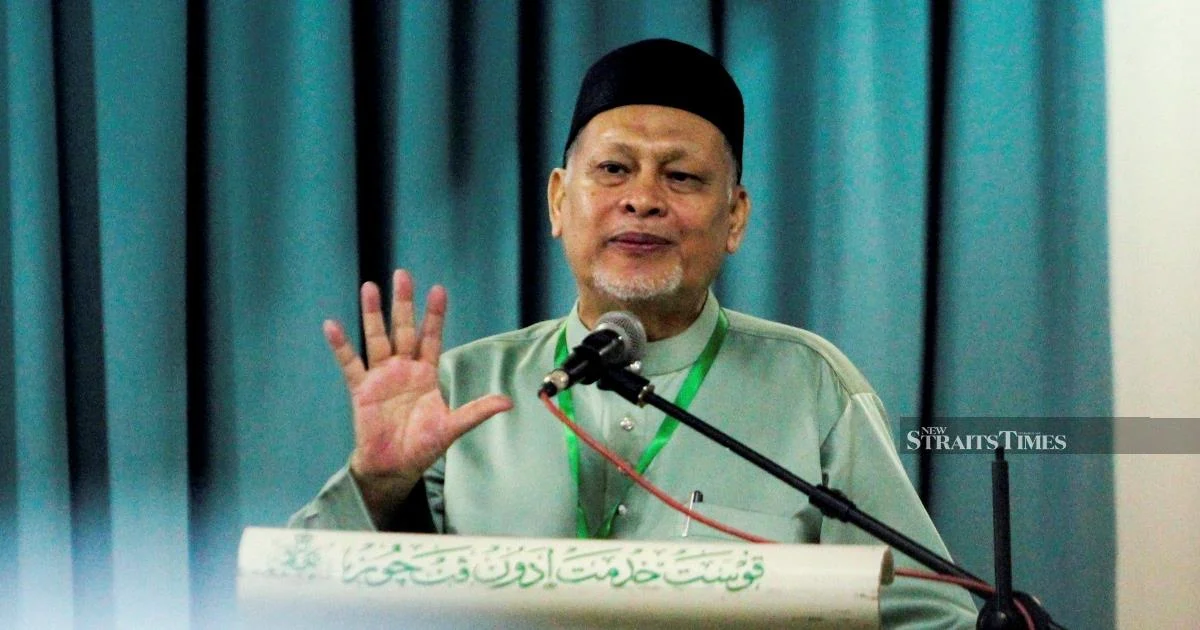
The Islamic party PAS has publicly criticised Tan Sri Muhyiddin Yassin's announcement regarding Bersatu's electoral strategy for the upcoming Johor and Negri Sembilan state elections, characterising the move as premature and rash. The rebuke marks an escalation in internal tensions within the Perikatan Nasional coalition, which has already faced considerable strain from competing ambitions among its constituent parties.
Muhyiddin, who chairs Bersatu, declared that his party would contest the state elections under the Perikatan Nasional banner. However, PAS leaders argue that such consequential decisions require broader discussion within the coalition framework before being publicly announced. The criticism suggests that the three-party alliance—comprising PAS, Bersatu, and Gerakan—lacks sufficient coordination on electoral matters despite their formal coalition status.
For Malaysian political observers, the spat underscores a persistent vulnerability within opposition alliances. Since PAS withdrew from the DAP-led Pakatan Rakyat coalition in 2015, the party has attempted various alignments, including the 2018 electoral partnership with Bersatu and other parties that contributed to Barisan Nasional's historic defeat. Yet sustaining unity among parties with divergent ideological leanings and organisational cultures remains challenging.
The timing of Muhyiddin's announcement raises questions about coalition decision-making processes. In Malaysia's state-level politics, the choice of electoral symbols carries symbolic weight beyond mere branding. The Perikatan Nasional logo represents the broader coalition's collective identity, and its deployment in specific state contests carries implications for how voters perceive coalition cohesion and strategic clarity. When individual party leaders announce such decisions unilaterally, they risk alienating coalition partners and suggesting that consultation mechanisms have broken down.
Bersatu's position within Perikatan Nasional has evolved considerably since the coalition's formation ahead of the 2022 general election. As the party founded by Muhyiddin himself, Bersatu holds particular organisational significance despite holding fewer parliamentary seats than PAS. The relationship between the two parties reflects broader power dynamics within the coalition, with each seeking to maximise electoral advantage and political influence at the national and state levels.
For Johor and Negri Sembilan specifically, the elections represent important battlegrounds in Malaysia's broader political realignment. Johor, historically a Barisan Nasional stronghold with significant Malay and Muslim-majority constituencies, offers potential gains for Perikatan Nasional if the coalition presents a unified front. Negri Sembilan, meanwhile, presents a more competitive landscape where coalition partners might harbour individual ambitions. PAS's caution about hasty public declarations likely reflects concern that Bersatu's unilateral moves could complicate coalition electoral calculations in these states.
The incident also reflects deeper structural questions about how Malaysia's opposition coalitions function. Unlike Barisan Nasional, which operated under a formal, hierarchical framework with clear decision-making authority concentrated at the centre, Perikatan Nasional comprises parties that retain substantial autonomous decision-making capacity. This decentralisation offers flexibility but creates coordination challenges, particularly when senior figures make public commitments without consulting partners.
PAS, as the largest component of Perikatan Nasional by parliamentary representation, has particular interest in ensuring that coalition decisions reflect its interests. The party's political strategy emphasises its Islamic credentials and appeal to Malay-Muslim voters, a demographic that overlaps significantly with Bersatu's support base. Competition between the two parties for the same voter segments could intensify if they pursue divergent electoral strategies or messaging.
The controversy demonstrates how coalition politics in Malaysia remains fragile and contingent upon continuous negotiation and consensus-building. Public disagreements, even if characterised as constructive criticism, signal to voters and observers that the partnership may lack the discipline and coordination necessary to govern effectively should they achieve electoral victory. This perception could affect voter confidence and turnout decisions across Malaysia's increasingly competitive political landscape.
Looking forward, the situation suggests that Perikatan Nasional will face significant pressure to clarify and formalise its decision-making processes before launching major electoral campaigns. Without clearer protocols governing how coalition decisions are made and announced, similar disputes will likely recur, potentially weakening the coalition's overall electoral performance. The coming weeks will prove critical in determining whether the three parties can resolve their differences and present a unified front for the state elections.

