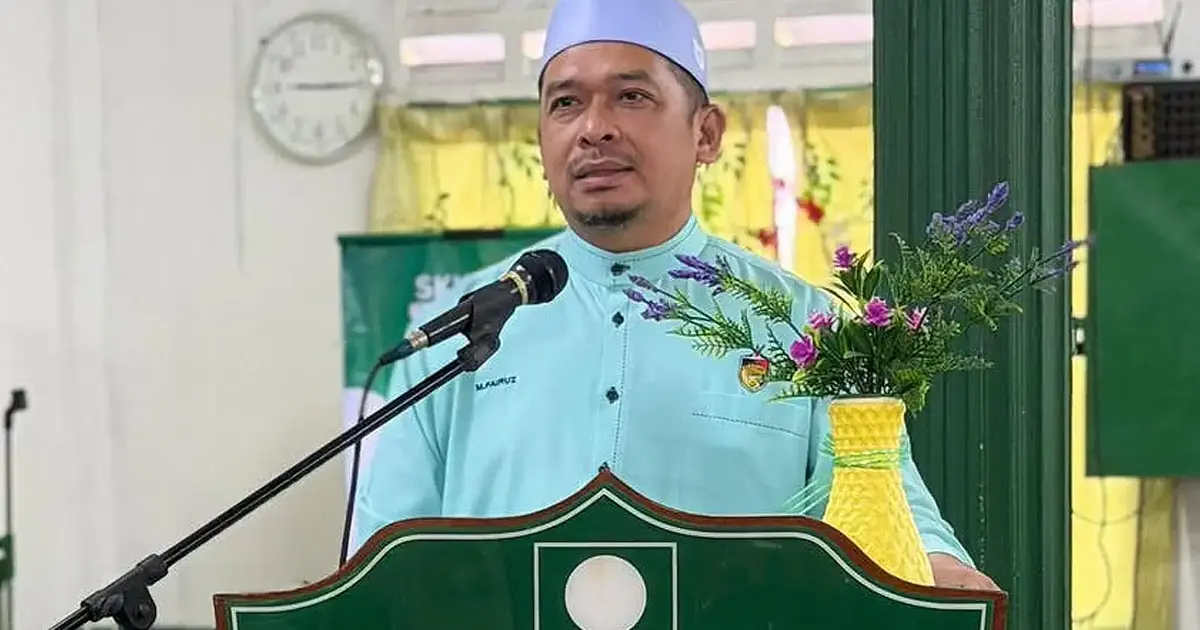
The Democratic Action Party's historical grip on several Negeri Sembilan state seats faces a fresh challenge from the Pan-Malaysian Islamic Party, which has identified opposition-held constituencies with significant Malay voter concentrations as prime targets for the upcoming state election. State PAS chief Fairuz Isa has articulated a deliberate campaign strategy aimed at constituencies where Malay voters account for at least 40 per cent of the electorate, signalling a calculated shift in how the Islamist party intends to expand its representation in the state assembly.
This tactical repositioning represents a notable evolution in Negeri Sembilan's political landscape. Historically, DAP has dominated several state seats through traditional strongholds of non-Malay urban voters and Chinese-majority constituencies. The party's electoral machinery has long been anchored in areas with significant Chinese and Indian populations, allowing it to maintain consistent control over specific seats across multiple election cycles. PAS's new offensive directly challenges this established equilibrium by identifying electoral opportunities within Malay communities that DAP has either taken for granted or failed to adequately service.
The significance of Fairuz Isa's statement extends beyond simple seat-hunting. By explicitly targeting constituencies with 40 per cent Malay voters, PAS is essentially acknowledging demographic realities that present vulnerabilities in DAP's current coalition and electoral positioning. These constituencies likely represent areas where Malay Muslim concerns—particularly on religious governance, Islamic education, and community welfare—may not be adequately reflected in DAP's policy platform. PAS positions itself as the natural alternative to articulate these specific communal interests.
Negeri Sembilan's political composition makes such strategic targeting particularly relevant. The state has traditionally been a three-cornered contest between UMNO-led coalitions, DAP, and to a lesser extent, other BN and PH components. PAS's entrance into competitive mode in these specific constituencies could fundamentally alter seat distribution and coalition mathematics at the state level. If successful in even a handful of such seats, PAS could shift the balance of power in the state assembly substantially.
The electoral logic behind this approach reflects broader dynamics within Malaysia's Islamic political landscape. PAS has consistently sought to consolidate Malay-Muslim support as its core electoral base, particularly in areas where religious identity and governance remain salient political considerations. Constituencies with 40 per cent Malay composition present a threshold where Malay voters constitute a substantial bloc capable of determining electoral outcomes, yet may not represent the overwhelming majorities where UMNO has traditionally dominated.
DAP's vulnerability in these targeted constituencies likely stems from several factors. First, the party's historical emphasis on secular governance, rule of law, and anti-corruption messaging, while appealing to diverse urban voters, may not resonate as powerfully with Malay Muslim communities prioritising religious representation and Islamic-aligned policies. Second, DAP's coalition partnerships and state government performances in Negeri Sembilan may not have effectively addressed specific Malay community grievances or development needs. Third, the party's limited presence among Malay candidates and representatives could create a perception gap in addressing Malay-specific policy concerns.
PAS's strategy also reflects the party's broader repositioning in Malaysian politics post-2020. Once confined primarily to Kelantan and Terengganu state strongholds, PAS has increasingly pursued a peninsula-wide expansion strategy, competing directly in constituencies previously considered either UMNO or DAP territory. This represents a significant departure from earlier political accommodation between different Malay-Muslim parties. The willingness to challenge DAP directly in constituencies with substantial Malay voters indicates PAS's confidence in its ability to appeal to this demographic across diverse regions.
For Negeri Sembilan voters, particularly those in the targeted constituencies, this development signals a sharpening of electoral choice along religious and communal lines. Voters in these areas will likely face starker policy differentiation between DAP's secular, multi-racial governance philosophy and PAS's Islamic governance framework. This polarisation could increase voter turnout among Malay communities while potentially reducing crossover voting patterns that previously characterised these constituencies.
The state election timeline remains unclear, but PAS's explicit statement of intent provides months for campaign preparation and ground organising. DAP will likely respond by either reinforcing its presence among Malay voters through targeted programming and candidate selection, or alternatively, by consolidating support among its traditional voter base whilst accepting likely losses in marginal Malay-plurality constituencies. The outcome of this contest will significantly determine Negeri Sembilan's political direction for the next electoral cycle.
Moreover, this Negeri Sembilan development carries implications beyond the state. It demonstrates how PAS's electoral ambitions are expanding systematically into peninsular heartlands, challenging the established dominance of both UMNO and opposition parties in constituencies previously considered secure. For Malaysia's broader political ecosystem, this represents a meaningful realignment worth monitoring closely, particularly given the party's growing organisational capacity and willingness to contest across diverse demographic terrains.

