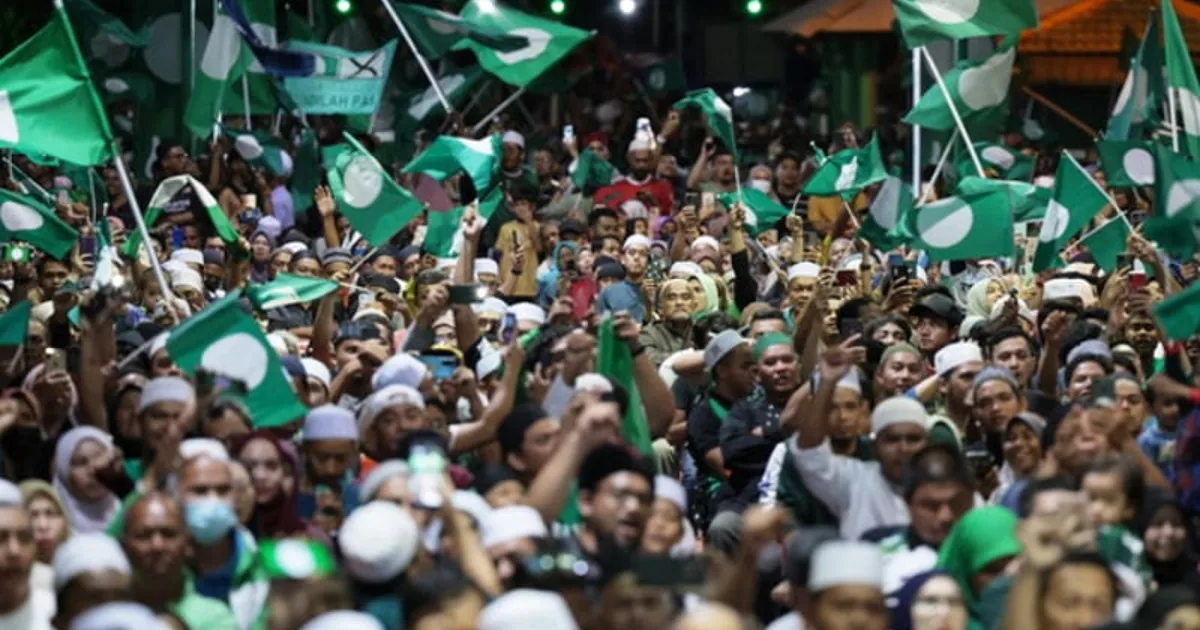
The Islamic Party of Malaysia has made a strategic decision to redeploy its election machinery away from constituencies where Bersatu is mounting campaigns, according to party sources familiar with the coalition's internal arrangements. The move represents a calculated effort to optimise resources within the Perikatan Nasional framework, which has sought to present a united front against rival political combinations in recent electoral contests.
Under this recalibration, PAS will concentrate its organisational strength and volunteer networks in areas where the party holds direct candidacies or where other Perikatan Nasional component parties are fielding contenders. The strategy reflects a pragmatic division of electoral territory within the coalition, designed to avoid duplication of campaign efforts and to maximise the combined vote-winning potential across contested regions. This represents the kind of internal coordination that coalition partners typically undertake before major ballot exercises, though explicit public discussion of such arrangements remains uncommon in Malaysian political discourse.
The decision carries particular significance given PAS's formidable grassroots infrastructure, honed through decades of community engagement and religious organising across Malaysia. The party commands considerable capacity in ground mobilisation, membership activation, and voter outreach—resources that could substantially influence outcomes in marginal seats. By consciously stepping back from Bersatu-contested constituencies, PAS is essentially gifting its organisational advantage to its coalition ally in those specific battlegrounds.
Bersatu, the newer component of Perikatan Nasional formed following internal upheaval within the United Malays National Organisation, has comparatively underdeveloped party machinery in many regions. The party emerged from former Prime Minister Muhyiddin Yassin's political reorganisation and has been building membership and volunteer networks since its establishment. PAS's withdrawal of competing campaign efforts effectively creates space for Bersatu to operate without internal coalition friction and provides the younger party with a clearer path to mobilise voters in designated constituencies.
This arrangement underscores the coalition's commitment to presenting a consolidated challenge to rival political blocs. In Malaysia's multi-party landscape, where vote-splitting among ideologically aligned or ethnically-based parties can dilute electoral competitiveness, coalition partners frequently negotiate such understandings to concentrate their combined strengths. The exclusivity arrangement between PAS and Bersatu suggests a degree of maturity in coalition management, despite occasional public tensions that have surfaced between component parties.
For Perikatan Nasional broadly, such resource coordination addresses a persistent vulnerability that has hampered its electoral performance relative to larger established coalitions. The Barisan Nasional, despite recent electoral losses, retains formidable institutional machinery across constituencies nationwide. The Democratic Action Party and Amanah, which form part of the Pakatan Harapan coalition alongside Anwar Ibrahim's People's Justice Party, similarly command substantial organisational networks. Perikatan Nasional's comparative newness as a coalition meant it entered recent contests operating at an institutional disadvantage, making strategic alignment of partner resources increasingly essential.
The reallocation also reflects internal coalition dynamics that have periodically generated friction between component parties. Previous electoral contests saw instances where coalition members' competing candidacies in the same constituencies generated confusion among voters and complicated campaign messaging. By establishing clearer territorial divisions, particularly between PAS and Bersatu, the arrangement aims to eliminate such counterproductive competition and ensure that campaign resources flow toward shared strategic objectives rather than fragmenting across overlapping organisational efforts.
For Malaysian voters in constituencies where PAS is withdrawing its machinery, the practical implication is reduced visible campaign activity from the Islamic party in those areas during the election period. Voters accustomed to PAS's characteristic door-to-door organising, ceramah events, and community mobilisation programmes may notice a diminished presence. Conversely, in constituencies where both PAS and other Perikatan Nasional partners maintain candidacies, campaign intensity should remain substantial, potentially translating into higher voter engagement and contested battles.
The strategy also carries implications for how Perikatan Nasional positions itself relative to competing coalitions. By demonstrating disciplined internal coordination, the coalition can present itself as a cohesive alternative administration capable of unified governance. This contrasts with narratives about Pakatan Harapan and Barisan Nasional featuring frequent disputes over ministerial allocations, policy direction, and resource distribution. Coalition cohesion, whether genuine or merely performative, influences voter perceptions of administrative competence and stability—factors increasingly important in Malaysian electoral calculus.
Critics of such arrangements contend that internal coalition negotiations limiting candidate competition inevitably reduce voter choice and distort democratic competition. The practice restricts voter options to whoever the coalition partners have collectively designated, potentially excluding independent candidates or alternative viewpoints from consideration. These concerns reflect broader tensions within Malaysia's democratic evolution, where coalition imperatives sometimes supersede individualistic political expression or broader democratic principles.
The PAS reallocation decision ultimately reflects the reality that contemporary Malaysian electoral competition increasingly revolves around bloc-level contests rather than purely individual candidate or party matchups. Perikatan Nasional's resource coordination represents a necessary adaptation to this environment, though it also illustrates how coalition politics can consolidate power around larger structures at the potential expense of democratic pluralism and voter autonomy in candidate selection.

