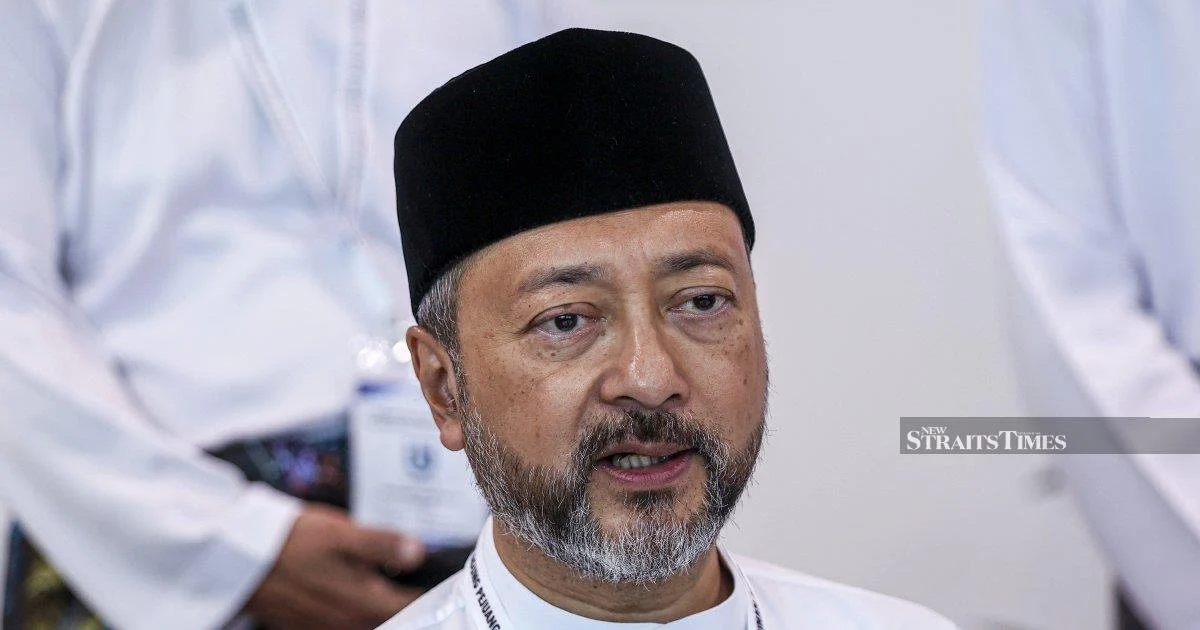
Parti Pejuang Tanah Air's decision to join Perikatan Nasional signals a deepening realignment within Malaysia's opposition landscape, with party leadership presenting the development as part of a comprehensive effort to forge stronger political unity. Datuk Seri Mukhriz Mahathir, who leads Pejuang, framed the formal admission into the coalition as a watershed moment that extends beyond simple electoral arithmetic, instead emphasising the parties' shared commitment to addressing systemic challenges facing the nation.
The entrance of Pejuang into Perikatan Nasional, which already comprises PAS, Perikatan Semananjung Malaysia, and other component parties, fundamentally reshapes the opposition's organisational structure. By incorporating Mukhriz's party, the coalition gains additional parliamentary representation and expands its geographic footprint, particularly within Kedah where Pejuang has cultivated significant grassroots support. This consolidation addresses longstanding concerns among opposition figures about fragmentation that previously hindered coordinated policy responses and electoral coordination.
Mukhriz's rhetoric emphasises that the merger responds to what he characterises as escalating national difficulties requiring unified political action. The framing suggests that Pejuang's leadership views entry into Perikatan Nasional not merely as a tactical manoeuvre to strengthen electoral prospects, but rather as a principled alignment around shared policy objectives. This narrative proves strategically important for legitimising the move among Pejuang's base, many of whom harbour residual loyalty to UMNO or maintain ideological reservations about formal partnerships with Islamist-oriented parties like PAS.
The timing of Pejuang's formal admission carries significance given Malaysia's current political trajectory. With general elections potentially looming within the next two years, opposition coalitions face mounting pressure to present themselves as credible governing alternatives. Perikatan Nasional's expansion signals confidence that the coalition possesses sufficient coherence to function as an effective opposition force capable of articulating consistent policy positions across diverse constituencies. The inclusion of Pejuang, which occupies centrist positioning, theoretically broadens the coalition's appeal beyond PAS's traditional base.
For Malaysian voters and observers, Pejuang's integration warrants close examination regarding ideological consistency and governance philosophy. While Perikatan Nasional's component parties share opposition to the current administration, significant differences exist regarding approach to religious governance, federalism, and economic policy. Pejuang's historical positioning as a moderate conservative party with secular-nationalist underpinnings potentially introduces internal tensions within a coalition heavily influenced by PAS's Islamist framework. How these parties negotiate policy differences without fracturing will determine whether unity proves durable or remains primarily electoral in character.
The broader Southeast Asian context amplifies relevance of Malaysia's opposition consolidation efforts. Across the region, opposition coalitions face comparable challenges in maintaining organisational cohesion while advancing distinct agendas. Thailand, Singapore, and Indonesia have all witnessed opposition fragmentation undermining political effectiveness, cautioning Malaysian political actors about the fragility of multi-party arrangements absent robust institutional frameworks and compromise mechanisms. Perikatan Nasional's success or failure in integrating disparate partners will resonate beyond Malaysia's borders.
For international observers and foreign governments, Pejuang's entry into Perikatan Nasional requires assessment regarding implications for Malaysia's foreign policy direction and strategic alignment. The coalition's composition influences potential shifts in diplomatic posturing, particularly regarding relationships with China, the United States, and other major powers where component parties harbour distinct preferences. Any future Perikatan Nasional-led government would face considerable pressure from diverse coalition partners regarding these critical dimensions of statecraft.
Mukhriz's emphasis on addressing national challenges reflects acknowledgment that Malaysian voters increasingly prioritise concrete policy solutions over personalised political narratives. Economic pressures, inflation, housing affordability, and education quality represent tangible concerns that shape electoral behaviour. By highlighting Pejuang's commitment to tackling these issues through coalition participation, party leadership appeals to pragmatism rather than purely partisan sentiment. This positioning may prove decisive in attracting floating voters dissatisfied with current governance but uncertain regarding opposition credibility.
The admission process itself carries procedural implications for Perikatan Nasional's institutional development. Integrating new members requires establishing mechanisms for dispute resolution, resource allocation, and decision-making protocols that accommodate diverse interests. Whether Perikatan Nasional develops robust internal governance structures or remains primarily a coordination mechanism among largely autonomous parties will determine its resilience under pressure. Previous Malaysian coalition experiences suggest that inadequate institutional design frequently precipitates sudden collapse when intra-party tensions escalate.
Looking forward, Pejuang's trajectory within Perikatan Nasional will warrant monitoring regarding membership retention and internal politics. Component parties occasionally experience defections when their interests diverge from coalition priorities, particularly if electoral fortunes deteriorate or perceived bargaining power shifts. Mukhriz's leadership will face continuous pressure to demonstrate that Pejuang's membership yields tangible benefits for party members and supporters, requiring visible influence within coalition decision-making structures and credible advancement of party-specific policy priorities.
The consolidation also reflects longer-term demographic and generational shifts within Malaysian politics. Mukhriz represents a younger generation of opposition leadership compared to his father Mahathir, signalling potential changes in opposition party culture and governing philosophy. Whether Perikatan Nasional leverages this generational renewal to revitalise political discourse or defaults to established patterns of patronage and personality-driven politics remains an open question with profound implications for Malaysia's democratic trajectory.

