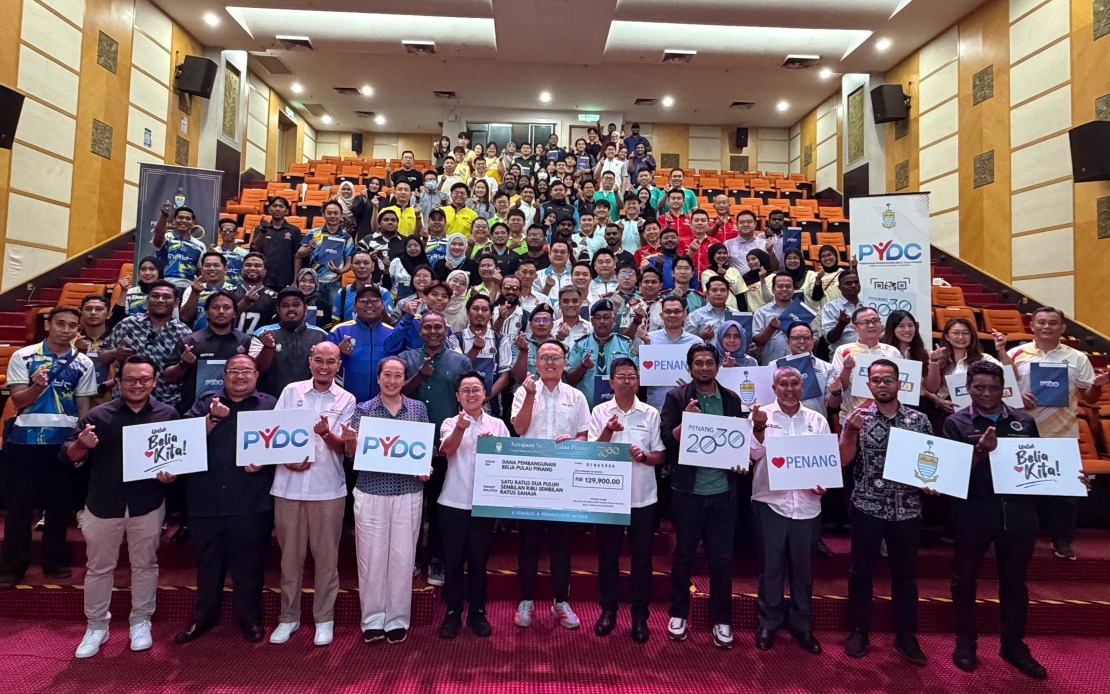
The Penang state government has greenlit funding totalling RM129,900 to facilitate 68 youth development initiatives across the state this year, demonstrating a continued commitment to nurturing the younger generation through structured programming. The allocation, drawn from a broader RM200,000 youth investment approved during a State Executive Council Meeting, will be distributed among 48 registered associations operating within Penang's jurisdictional boundaries. This targeted approach reflects the state's recognition that strategic support for youth-led organisations remains essential for building a more engaged and capable population.
Daniel Gooi Zi Sen, chairman of the Penang Youth, Sports and Health Committee, framed the financial commitment as considerably more than a straightforward disbursement of public monies. Speaking in a statement released from George Town, Gooi characterised the funds as embodying a form of institutional confidence, granting youth associations the freedom to translate their concepts, imaginative thinking, and practical ambitions into tangible community-serving activities. This perspective aligns with evolving best practices in youth development policy, where funding mechanisms prioritise empowerment and autonomy rather than prescriptive top-down programme design.
The 68 programmes encompass a deliberately broad spectrum of developmental domains designed to equip young people with diverse competencies required in contemporary labour markets and civic life. Skills acquisition initiatives feature prominently within the portfolio, addressing technical and vocational training that enhances employability prospects. Complementing this focus are concentrated efforts in what administrators term marketability—essentially strengthening participants' capacity to navigate professional environments and secure meaningful work. Volunteerism components embed civic responsibility principles, encouraging youth to contribute time and effort toward collective wellbeing, whilst leadership training modules prepare emerging leaders for roles of influence and decision-making within their respective communities.
Gooi's public statements emphasised that recipient organisations must navigate their programme implementation with unwavering adherence to integrity, transparency, and rigorous financial management. These stipulations are particularly significant given the accountability expectations that accompany public funding allocation. By establishing these governance principles upfront, the committee signals to beneficiary associations that while creative autonomy is granted, it remains bounded by expectations of ethical conduct and responsible stewardship of taxpayer resources. This dual emphasis on trust coupled with accountability represents a sophisticated approach to youth funding distribution.
A critical dimension of Gooi's messaging involves reframing how programme success should be evaluated. Rather than reducing achievement to mere activity completion—the number of workshops held, participants registered, or events executed—he advocates for outcomes-oriented assessment frameworks that track sustained behavioural change, skill consolidation, and meaningful shifts in participants' trajectories. This represents a departure from purely quantitative metrics that often dominate programme reporting, instead prioritising longitudinal impact assessment that captures whether interventions produce lasting advantages for individuals and their broader social networks.
For Malaysian youth development practitioners and policymakers, Penang's approach offers instructive lessons about balancing centralised resource allocation with decentralised programme delivery. By channelling funds through grassroots associations rather than implementing state-designed programmes directly, the government leverages existing community infrastructure and allows organisations with deep local knowledge to shape initiatives responsive to their constituents' specific circumstances. This methodology distributes both responsibility and opportunity, creating incentive structures that reward effective grassroots organisations whilst maintaining state oversight through financial compliance requirements.
The emphasis on long-term community impact suggests growing sophistication in how state governments conceptualise youth development's societal value. Rather than viewing youth programmes narrowly as interventions for individual skill-building, this framing acknowledges interconnections between participant transformation and broader social wellbeing. Young people equipped with marketable skills, civic consciousness, and leadership capabilities become agents of positive change within their families, workplaces, and neighbourhoods, producing ripple effects that extend well beyond programme participants themselves.
For regional observers, Penang's allocation methodology provides a model for other Malaysian states considering youth development investments. The combination of substantial funding (RM200,000 across the state), distributed support for multiple organisations (48 beneficiaries), diverse programming tracks, and explicit governance standards creates a scalable framework adaptable to different state contexts. States facing constraints in youth unemployment, civic engagement deficits, or leadership pipeline concerns might examine how Penang's approach simultaneously builds organisational capacity while advancing specific youth outcomes.
The timing of this announcement, occurring mid-year, allows recipient associations adequate runway to plan and execute their initiatives before financial year-end reporting deadlines. Forty-eight organisations receiving support represent a substantial cross-section of Penang's youth sector, suggesting the allocation process likely involved competitive vetting and that selected groups met predetermined quality and reach criteria. This selectivity, while potentially disappointing to unfunded organisations, helps concentrate resources where implementation capacity and community connections are demonstrably strongest.
Looking forward, how effectively these 68 programmes translate allocations into measurable participant outcomes will determine whether Penang's model becomes replicable across other jurisdictions. Youth development investments only generate genuine returns when programmes achieve meaningful skill transfer, employment placement, sustained civic participation, or demonstrated leadership emergence among participants. The committee's stated priority for impact-focused evaluation creates accountability mechanisms that should illuminate whether this year's RM129,900 investment yields dividends commensurate with its fiscal outlay and institutional expectations.
%22%2F%3E%3C%2Fpattern%3E%3C%2Fdefs%3E%3Crect%20width%3D%22100%25%22%20height%3D%22100%25%22%20fill%3D%22url(%23ph5bjwng)%22%2F%3E%3Crect%20width%3D%22100%25%22%20height%3D%22100%25%22%20fill%3D%22url(%23ph5bjwnp)%22%2F%3E%3Ctext%20x%3D%2250%25%22%20y%3D%2250%25%22%20text-anchor%3D%22middle%22%20dominant-baseline%3D%22central%22%20fill%3D%22rgba(255%2C255%2C255%2C0.95)%22%20font-family%3D%22Georgia%2C%20'Times%20New%20Roman'%2C%20serif%22%20font-weight%3D%22700%22%20font-size%3D%22226%22%20letter-spacing%3D%22-0.02em%22%3EHamzah%3C%2Ftext%3E%3C%2Fsvg%3E)
%22%2F%3E%3C%2Fpattern%3E%3C%2Fdefs%3E%3Crect%20width%3D%22100%25%22%20height%3D%22100%25%22%20fill%3D%22url(%23ph5pue1g)%22%2F%3E%3Crect%20width%3D%22100%25%22%20height%3D%22100%25%22%20fill%3D%22url(%23ph5pue1p)%22%2F%3E%3Ctext%20x%3D%2250%25%22%20y%3D%2250%25%22%20text-anchor%3D%22middle%22%20dominant-baseline%3D%22central%22%20fill%3D%22rgba(255%2C255%2C255%2C0.95)%22%20font-family%3D%22Georgia%2C%20'Times%20New%20Roman'%2C%20serif%22%20font-weight%3D%22700%22%20font-size%3D%22170%22%20letter-spacing%3D%22-0.02em%22%3ETambirat%3C%2Ftext%3E%3C%2Fsvg%3E)
%22%2F%3E%3C%2Fpattern%3E%3C%2Fdefs%3E%3Crect%20width%3D%22100%25%22%20height%3D%22100%25%22%20fill%3D%22url(%23ph444f3g)%22%2F%3E%3Crect%20width%3D%22100%25%22%20height%3D%22100%25%22%20fill%3D%22url(%23ph444f3p)%22%2F%3E%3Ctext%20x%3D%2250%25%22%20y%3D%2250%25%22%20text-anchor%3D%22middle%22%20dominant-baseline%3D%22central%22%20fill%3D%22rgba(255%2C255%2C255%2C0.95)%22%20font-family%3D%22Georgia%2C%20'Times%20New%20Roman'%2C%20serif%22%20font-weight%3D%22700%22%20font-size%3D%22194%22%20letter-spacing%3D%22-0.02em%22%3EBintulu%3C%2Ftext%3E%3C%2Fsvg%3E)